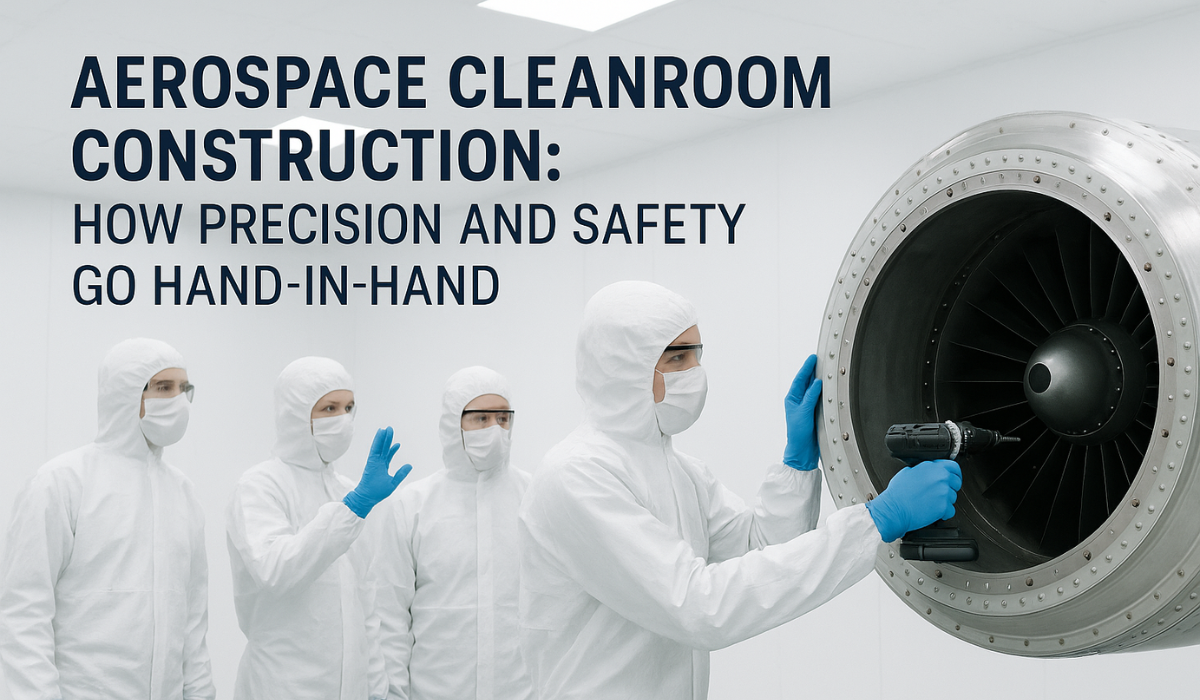
In aerospace manufacturing, there’s no room for error.
From satellite components and spacecraft sensors to aircraft electronics and propulsion systems, even the smallest speck of dust can affect performance, reliability, or safety.
That’s why aerospace cleanroom construction is one of the most precise and safety-driven forms of engineering in the world.
At Ultrapure Technology, we’ve been designing and building ISO-certified aerospace cleanrooms for over 30 years.
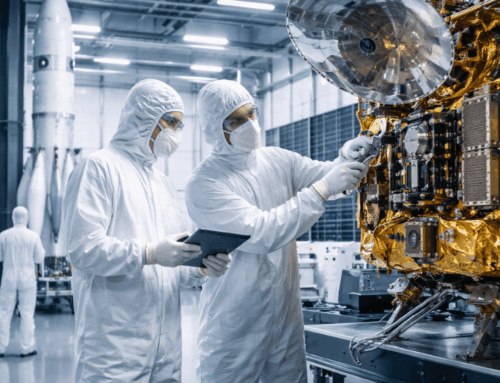
These advanced environments ensure that every component — from microchips to composite materials — is built under exact conditions for quality, reliability, and mission success.
In this article, we’ll explore why aerospace companies need cleanrooms, how they differ from other industries, and how Ultrapure Technology ensures both precision and safety go hand-in-hand in every project.
Why Cleanrooms Are Essential for Aerospace Manufacturing
The aerospace industry deals with components that must perform flawlessly in extreme conditions — from deep space to high-altitude flight.
Tiny contaminants like dust, moisture, or oils can damage sensors, optics, and fuel systems, leading to costly malfunctions.
Cleanrooms create a controlled environment where every variable — air quality, temperature, humidity, and pressure — is precisely managed.
Aerospace cleanrooms are essential for:
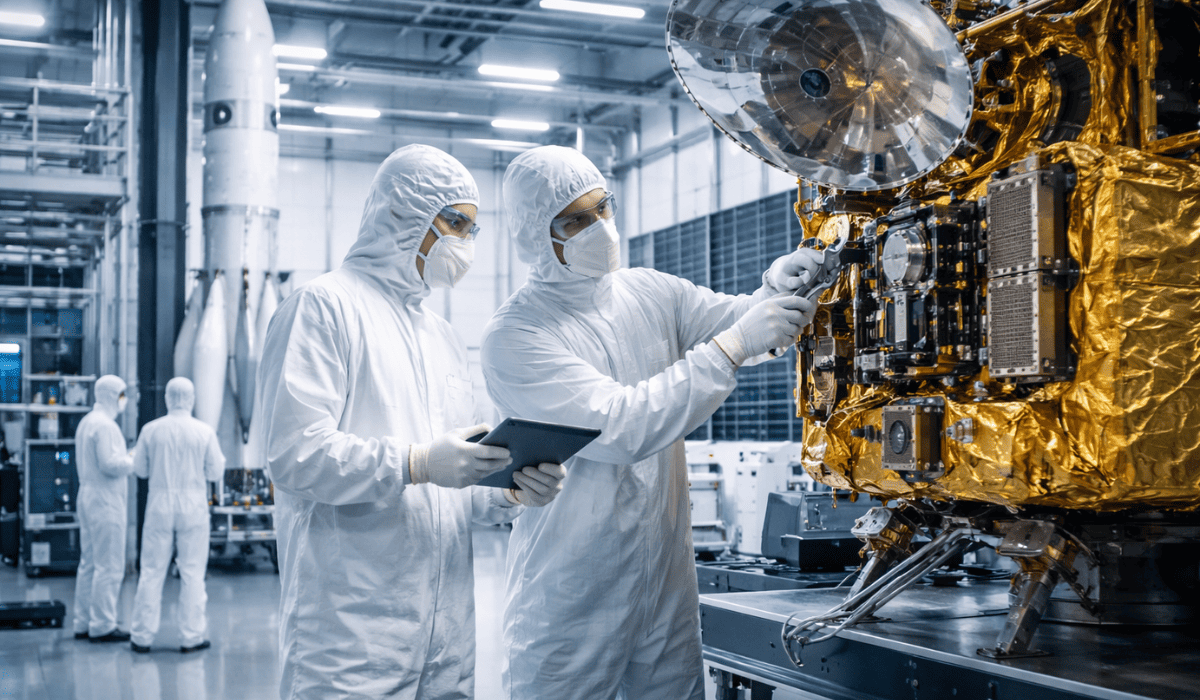
- Satellite and spacecraft assembly
- Avionics and sensor production
- Optical instrument calibration
- Fuel and propulsion system testing
- Composites and materials fabrication
By controlling air cleanliness, airflow, and temperature, cleanrooms protect high-value aerospace components from contamination and ensure long-term operational safety.
Key Standards for Aerospace Cleanroom Construction
Cleanroom construction for aerospace follows the same international standards used in pharmaceuticals and microelectronics — but with stricter mechanical and safety requirements.
Here are the most important standards:
1. ISO 14644 Cleanroom Classification
Aerospace cleanrooms are typically built to meet ISO Class 5–8 standards under ISO 14644-1, depending on the level of sensitivity.
- ISO Class 5: Used for optics, sensors, and propulsion components.
- ISO Class 7–8: Common for final assembly or composite layup areas.
Each class defines how many particles are allowed per cubic meter of air — ensuring the air is up to 10,000 times cleaner than normal atmospheric conditions.
2. NASA and DoD Standards
In addition to ISO, aerospace cleanrooms must often comply with NASA’s Technical Standards (NTS) or Department of Defense (DoD) regulations, which add extra layers of safety for aerospace-grade production.
These may include:
- Outgassing control (materials must not emit vapors).
- ESD safety (protection for electronic and optical parts).
- FOD prevention (Foreign Object Debris control for assembly areas).
3. AS9100 and GMP Guidelines
Many aerospace facilities also follow AS9100 — the aerospace version of ISO 9001 — and Good Manufacturing Practice (GMP) standards. These ensure quality, traceability, and compliance in every step of production and maintenance.
What Makes Aerospace Cleanroom Construction Different
Aerospace cleanrooms share the same foundation as other industries — particle control, airflow, and environmental balance — but their safety and precision requirements go much further. Let’s break down what makes them unique.
1. Strict Particle and FOD Control
Aerospace environments deal with microscopic tolerances. A single dust particle or metal shaving can cause circuit failure, optical distortion, or fuel blockage.
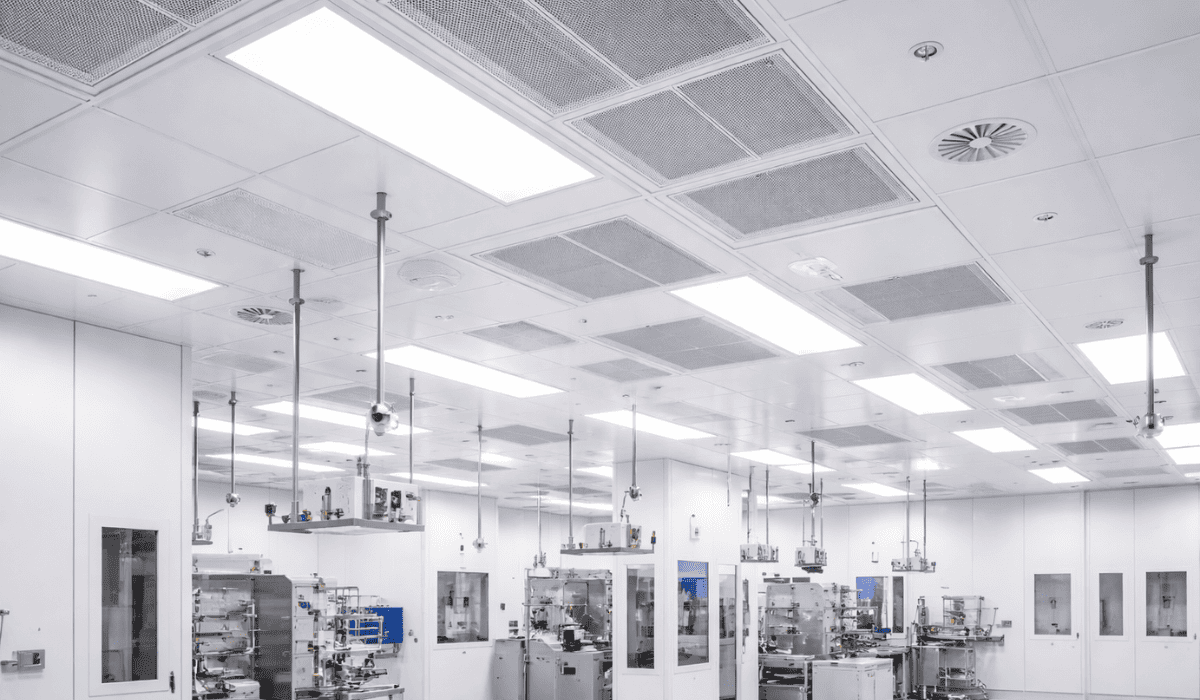
Cleanrooms use HEPA and ULPA filtration to remove particles down to 0.12 microns — smaller than most bacteria.
Special FOD prevention systems also track and eliminate loose materials like screws, fibers, or tool residue.
All equipment, materials, and personnel must follow strict entry and gowning protocols to maintain a zero-contamination environment.
2. Temperature and Humidity Stability
Aerospace materials, such as carbon composites and aluminum alloys, expand and contract with temperature changes.
That’s why aerospace cleanrooms maintain tight temperature and humidity controls:
- Temperature: ±0.5°C
- Humidity: 40–50% relative humidity
Consistent conditions prevent warping, cracking, and material fatigue — ensuring parts fit perfectly when assembled in flight or vacuum environments.mo
3. Vibration and Acoustic Isolation
Aerospace testing and calibration often involve ultra-sensitive instruments like gyroscopes, accelerometers, and optical sensors.
Even small vibrations from HVAC systems, machinery, or foot traffic can distort readings.
To counter this, aerospace cleanrooms feature:
- Vibration-dampening flooring systems
- Acoustically insulated walls and ceilings
- Seismically isolated equipment mounts
These design elements ensure precision measurements remain stable and accurate.
4. ESD (Electrostatic Discharge) Protection
Static electricity is a major threat to aerospace electronics.
A single discharge can destroy sensors, damage microcircuits, or create undetectable flaws.
To prevent this, aerospace cleanrooms include:
- Conductive flooring and benches
- Grounded tools and electrical systems
- ESD-safe clothing for workers
- Controlled humidity to minimize static buildup
Every element is engineered to maintain a static-free zone for sensitive electronic components.
5. Fire, Chemical, and Explosion Safety
Many aerospace manufacturing processes use flammable adhesives, solvents, and resins.
To keep operators safe, cleanroom construction includes:
- Fire-rated wall panels and ceiling systems
- Explosion-proof lighting and ventilation
- Gas monitoring and suppression systems
- Chemical-resistant surfaces and flooring
These safety features protect both personnel and expensive equipment from potential hazards.
The Aerospace Cleanroom Construction Process
Designing and building a cleanroom for aerospace applications requires close coordination between engineers, safety experts, and facility managers. Here’s how Ultrapure Technology brings it all together.
Step 1 – Consultation and Design
We begin with a site and process analysis to understand your production flow, contamination risks, and performance requirements.
Our design team then creates a detailed plan including:
- Airflow mapping and zoning
- Temperature and humidity control systems
- Safety and ESD protection layouts
- Material and equipment placement for efficiency
Each design is customized to your facility, mission type, and ISO classification goals.
Step 2 – Engineering and Material Selection
Every aerospace cleanroom must balance cleanliness and durability.
We select low-outgassing, non-shedding materials such as aluminum composite panels, stainless steel framing, and epoxy flooring.
All materials meet NASA outgassing and AS9100 standards, ensuring no unwanted chemical emissions.
Step 3 – Construction and Integration
Ultrapure’s expert technicians assemble modular cleanroom structures on-site, integrating HVAC, filtration, and electrical systems simultaneously.
Every joint, panel, and seal is precision-fitted to prevent air leaks or particle accumulation.
Lighting, fire suppression, and ESD systems are also installed and tested during this stage.
Step 4 – Testing and Certification
Once construction is complete, the cleanroom undergoes full performance validation, including:
- Particle count and airflow testing (ISO 14644 compliance)
- Pressure differential verification
- Temperature and humidity mapping
- ESD and safety system validation
- FOD and outgassing testing
We then provide documentation and certification confirming your cleanroom meets or exceeds all regulatory and performance standards.
Why Choose Ultrapure Technology for Aerospace Cleanrooms
At Ultrapure Technology, we design and build aerospace cleanrooms that perform flawlessly in the most demanding environments.
Here’s why aerospace companies nationwide trust us:
- Turnkey design-build services — from layout to certification.
- Custom modular systems for rapid construction and scalability.
- Compliance with ISO 14644, AS9100, NASA, and DoD standards.
- In-house engineers and certified technicians.
- Proven track record: 500+ cleanroom installations across aerospace, defense, and R&D facilities.
Every cleanroom we build is backed by decades of experience, advanced engineering, and a commitment to long-term reliability.
Final Thoughts
Aerospace innovation depends on precision — and that precision starts with the environment.
A single dust particle or static discharge can compromise years of work, which is why cleanrooms are essential to aerospace success.
At Ultrapure Technology, we specialize in turnkey aerospace cleanroom construction that combines ISO-certified performance with safety and compliance.
From design and materials to validation and certification, we build environments where technology can truly take flight.
If your mission demands precision, reliability, and complete contamination control, we’re ready to help.
Contact Ultrapure Technology today to start your aerospace cleanroom consultation.
FAQs
Why do aerospace manufacturers need cleanrooms?
Aerospace components — from sensors to propulsion systems — must operate under extreme precision. Cleanrooms protect them from contamination caused by dust, oil, or static, which can lead to equipment failure or mission risk. These controlled environments ensure consistent quality and safety during production, testing, and assembly of aerospace-grade parts.
What ISO class is required for aerospace cleanrooms?
Most aerospace cleanrooms fall between ISO Class 5 and ISO Class 8, depending on the manufacturing stage. Optical and sensor assembly often requires ISO 5, while final assembly and composite work can operate under ISO 7 or 8. Ultrapure Technology designs and validates each facility to meet the right class for its specific aerospace processes.
How are aerospace cleanrooms different from other industries?
Unlike pharmaceutical or electronics cleanrooms, aerospace cleanrooms focus heavily on safety, ESD, and FOD prevention. They’re designed to handle sensitive materials, static-free environments, and explosion-resistant systems. They also follow additional aerospace regulations like AS9100, NASA, and DoD standards for quality and safety assurance.
What materials are used in aerospace cleanroom construction?
Aerospace cleanrooms use non-shedding, low-outgassing materials like aluminum composite panels, stainless steel supports, and epoxy flooring. These materials resist corrosion, chemical damage, and static buildup. They’re chosen to ensure cleanliness, safety, and compliance with aerospace and NASA material standards.
How does Ultrapure Technology ensure compliance and performance?
Ultrapure Technology follows ISO 14644, AS9100, and NASA cleanroom guidelines for every project. We handle the full design-build process, including material selection, HVAC design, ESD protection, and fire safety integration. Each cleanroom undergoes particle, airflow, and pressure testing before final certification — guaranteeing performance and compliance.