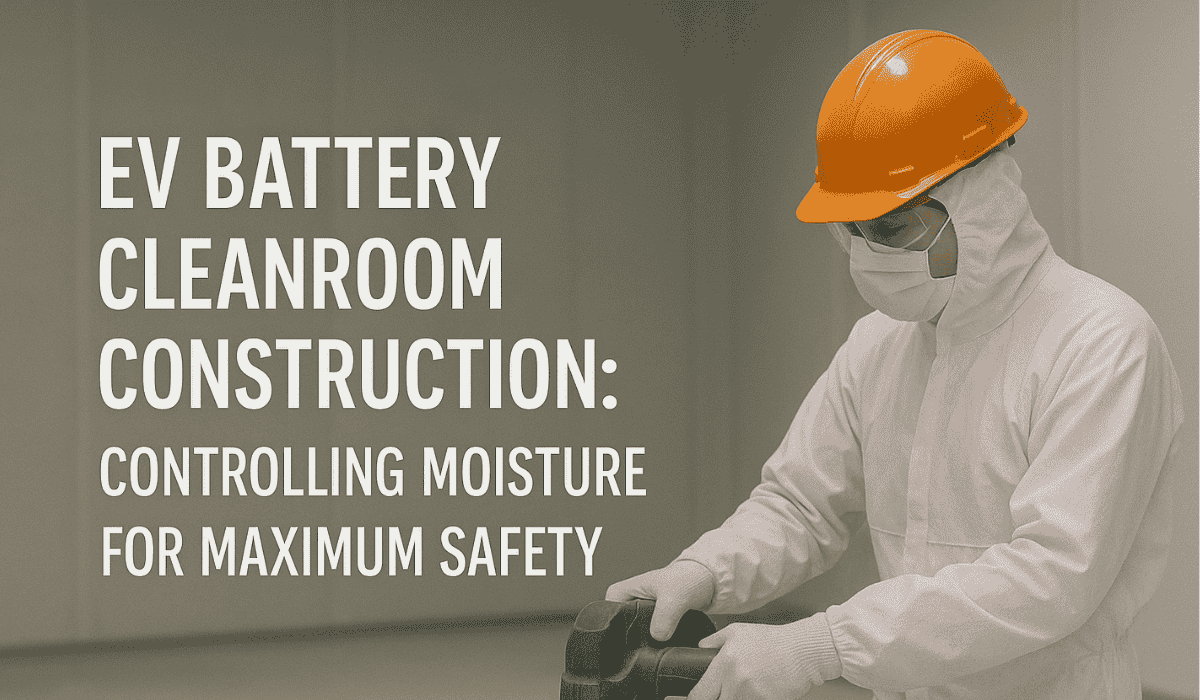
In the fast-growing electric vehicle (EV) industry, one of the biggest challenges isn’t just producing powerful batteries — it’s keeping moisture and contamination completely out of the production process.
A single droplet of water or airborne particle can react with lithium components, causing defects, reduced battery life, or even safety hazards.
That’s why EV battery cleanroom construction is one of the most demanding forms of engineering in modern manufacturing.
At Ultrapure Technology, we’ve spent decades designing ultra-dry, particle-free cleanrooms that meet the strict environmental standards of lithium battery and energy-storage production.
In this guide, we’ll explore how EV battery cleanrooms work, why moisture control is so critical, and what makes their construction different from any other cleanroom environment.
Why EV Battery Manufacturing Requires a Cleanroom
EV batteries rely on lithium, nickel, and cobalt compounds that are highly reactive to moisture and oxygen.
Even tiny traces of humidity can cause dangerous reactions, leading to corrosion, instability, or short circuits inside battery cells.
During production, especially in electrode coating and cell assembly, the environment must remain ultra-dry and particle-free to maintain chemical stability and product quality.
That’s where cleanrooms come in — they provide a sealed, temperature-controlled space where:
- Air is continuously filtered and dehumidified.
- Particles, dust, and oil vapors are eliminated.
- Humidity is kept below 1% or a dew point of –40°C or lower.
Simply put, EV batteries can only be safely and efficiently produced in a properly engineered cleanroom environment.
What Makes EV Battery Cleanroom Construction Unique
While pharmaceutical or semiconductor cleanrooms focus on particles or static, EV battery cleanrooms focus on moisture control above all else.
Every component, from walls to air ducts, must resist humidity and condensation.
Let’s look at what sets them apart.
1. Ultra-Dry Room Design
EV battery facilities use dry rooms, which are specialized cleanrooms designed to keep air moisture extremely low — typically below 1% relative humidity.
These environments rely on powerful desiccant dehumidifiers and closed-loop HVAC systems that continuously remove moisture from the air.
Walls, floors, and ceilings are made from moisture-resistant materials with vapor-tight seals to prevent any leaks or condensation.
Maintaining this dryness is crucial for safety and for achieving the long-term performance EV customers expect.
2. Advanced Air Filtration and Airflow
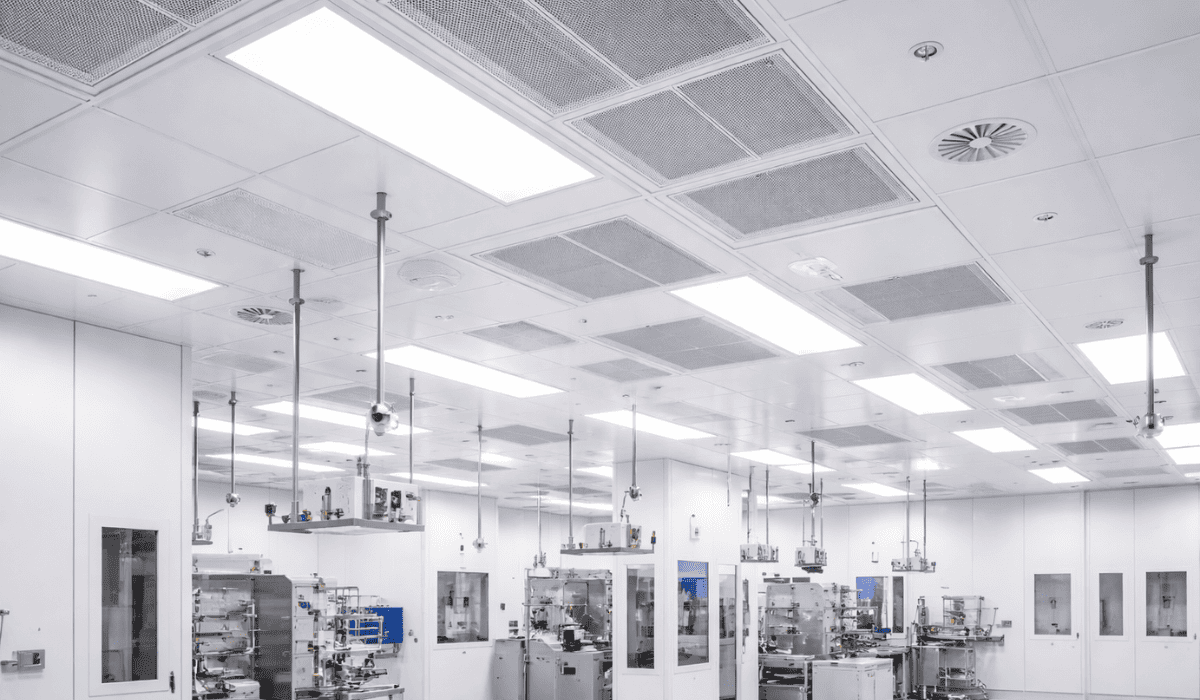
EV battery cleanrooms still follow ISO 14644 air cleanliness classifications, usually between ISO Class 6 and ISO Class 8, depending on the process.
Air passes through HEPA or ULPA filters, which remove up to 99.999% of dust particles.
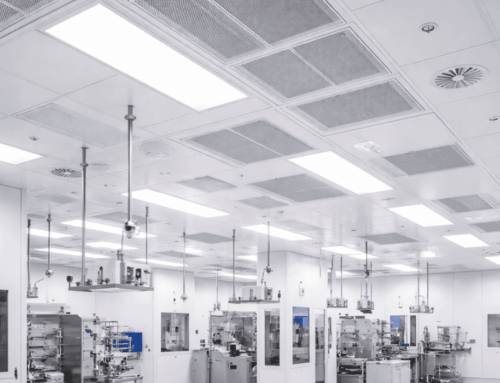
Laminar airflow ensures clean, dry air moves smoothly from the ceiling to the floor, continuously flushing out contaminants.
Pressure differentials are carefully balanced so clean, dry air flows into critical areas and never the other way around.
3. Temperature and Humidity Precision
EV battery production requires not only low humidity but also tight temperature control to protect chemical stability.
Typical ranges include:
- Temperature: 20°C–25°C (±0.5°C)
- Humidity: Below 1% RH or dew point ≤ –40°C
Achieving this requires custom HVAC systems with desiccant wheels, air dryers, and insulated ducting to maintain consistent conditions across every zone — from electrode mixing to cell assembly.
4. Static and Particle Control
Like microelectronics, EV battery cleanrooms must also manage electrostatic discharge (ESD), which can damage materials or ignite vapors.
Floors, workstations, and equipment are grounded and coated with conductive finishes to dissipate static safely.
Workers wear ESD-safe clothing, gloves, and footwear.
At the same time, airflow, filtration, and positive pressure protect sensitive materials from dust and particles that could compromise quality.
5. Chemical Resistance and Safety Systems
Many EV battery processes use solvents, adhesives, and electrolyte solutions that require careful handling.
That’s why cleanroom construction materials must be chemical-resistant and corrosion-proof, such as stainless steel, epoxy flooring, and aluminum composite panels.
Additional safety systems — including explosion-proof lighting, gas detection sensors, and emergency ventilation — are built into the design to meet OSHA and NFPA standards.
How EV Battery Cleanroom Construction Works
Building a moisture-controlled cleanroom is a complex process that blends engineering, environmental science, and safety planning. Here’s how the process unfolds at Ultrapure Technology.
Step 1 – Consultation and Planning
Every project starts with understanding your production needs — electrode coating, module assembly, or full-scale cell manufacturing.
Our engineers evaluate site conditions, production volumes, and regulatory requirements to determine your target dew point, ISO class, and layout.
Step 2 – Design and Engineering
We design a detailed 3D model that maps airflow, filtration, and moisture control systems.
This includes selecting dehumidifiers, airlocks, and vapor-tight materials to meet your environmental goals.
Our modular cleanroom designs allow for quick installation and scalability as your battery line expands.
Step 3 – Material Selection and Construction
Construction uses vapor-barrier wall panels, sealed ceilings, and epoxy or vinyl flooring that resist moisture.
HVAC ducts and joints are insulated to prevent condensation.
We also integrate ESD grounding, fire suppression, and gas safety systems directly into the build — ensuring compliance and performance.
Step 4 – Testing, Commissioning, and Validation
Once installation is complete, our team conducts full testing and certification to verify:
- Dew point and humidity stability
- Particle count (ISO compliance)
- Airflow uniformity and pressure differentials
- Temperature consistency across zones
Only after these tests pass do we issue full validation reports, making your cleanroom production-ready and audit-ready.
Benefits of Proper EV Battery Cleanroom Construction
When built correctly, an EV battery cleanroom becomes more than a workspace — it becomes a competitive advantage.
Here’s why:
- Improved Battery Safety: Eliminating moisture prevents chemical reactions that can cause swelling, leaks, or fires.
- Longer Battery Life: Controlled humidity ensures consistent material performance and higher energy density.
- Higher Yield: Fewer defects during coating and assembly mean less waste and greater efficiency.
- Regulatory Compliance: Meets ISO, GMP, and environmental safety standards.
- Scalability: Modular designs support expansion for future battery lines or technology upgrades.
With Ultrapure’s design-build approach, every cleanroom is optimized for performance, compliance, and long-term reliability.
Why Choose Ultrapure Technology
Building a moisture-free environment requires specialized expertise. At Ultrapure Technology, we bring over 30 years of experience designing ISO-certified, ultra-dry cleanrooms for advanced manufacturing.
Our advantages include:
- Turnkey Design-Build Services: From planning to certification, handled in-house.
- Custom Dry Room Engineering: Achieve dew points down to –40°C or lower.
- Certified Compliance: ISO 14644, GMP, and NFPA adherence.
- Modular Scalability: Expand or relocate cleanrooms with minimal downtime.
- Proven Track Record: 500+ cleanroom installations across the U.S.
We understand that battery production demands more than clean air — it requires precise, moisture-controlled engineering that guarantees safety and consistency.
Final Thoughts
The future of electric vehicles depends on reliable, high-quality batteries — and that starts with the environment where those batteries are built.
A properly constructed EV battery cleanroom ensures complete control over humidity, air quality, and static — protecting your materials, your workforce, and your reputation.
At Ultrapure Technology, we design and build turnkey EV battery cleanrooms that combine advanced drying technology, ISO-certified filtration, and safety systems to meet the toughest industry standards.
If you’re planning to expand or launch a battery manufacturing facility, we can help you create a cleanroom that delivers maximum safety, energy efficiency, and compliance from day one.
Contact Ultrapure Technology today to start your EV cleanroom consultation.
FAQs
Why is moisture control so important in EV battery cleanrooms?
Moisture reacts with lithium and electrolyte materials, creating gas, corrosion, or internal short circuits. Even minimal humidity can compromise cell performance or cause fires. EV battery cleanrooms maintain dew points as low as –40°C, ensuring ultra-dry conditions that prevent contamination, chemical reactions, and safety risks throughout the production process.
What’s the difference between a dry room and a standard cleanroom?
A dry room is a type of cleanroom focused specifically on humidity control rather than sterility. It uses dehumidifiers, vapor-tight walls, and sealed HVAC systems to maintain ultra-low moisture levels — often below 1% RH. Standard cleanrooms control particles, but dry rooms are designed for industries like lithium battery manufacturing, where moisture poses the biggest threat.
What ISO class is used for EV battery cleanrooms?
Most EV battery cleanrooms operate between ISO Class 6 and ISO Class 8, depending on the production stage. Electrode coating and cell assembly areas require stricter air quality, while packaging and storage zones can be slightly less controlled. Each section of the facility is designed to balance cleanliness with humidity protection for maximum efficiency and compliance.
Can modular cleanrooms be used for EV battery production?
Yes. Modular cleanrooms are a smart choice for EV battery manufacturers because they can be installed quickly and expanded easily. Ultrapure Technology designs modular dry rooms with integrated dehumidification and HVAC systems that meet ISO and dew-point requirements. They provide flexibility, scalability, and long-term cost savings without compromising moisture control.
How does Ultrapure Technology ensure compliance and safety in EV cleanroom projects?
Ultrapure Technology follows ISO 14644, GMP, and NFPA standards to build safe, efficient, and compliant cleanrooms. Every project includes full humidity validation, air quality testing, and safety system integration, such as gas detection and fire protection. Our certified technicians ensure each EV battery cleanroom meets both environmental and safety performance goals before handover.
What cleanroom construction considerations are critical for EV battery manufacturing?
Cleanroom construction for EV batteries requires ultra-dry walls, sealed HVAC systems, and modular layouts that prevent moisture infiltration. Proper material selection, airflow design, and ESD-safe finishes ensure ISO compliance, reduce contamination risks, and support safe, high-yield battery production.
Why is working with certified cleanroom manufacturers important for battery facilities?
Partnering with experienced cleanroom manufacturers guarantees that your EV battery cleanroom meets ISO, GMP, and NFPA standards. Certified manufacturers handle modular design, installation, and validation, ensuring moisture control, airflow precision, and long-term compliance for safe and efficient production.