Cleanroom doors are a critical component of controlled environments, directly influencing contamination control, pressure stability, and operational efficiency.
In contrast to standard doors, cleanroom doors are engineered to maintain airtight seals, support cleanroom zoning, and withstand rigorous cleaning protocols without compromising performance.
From pharmaceutical manufacturing and biotechnology labs to semiconductor fabrication and aerospace facilities, door design plays a vital role in preserving cleanroom integrity.
Selecting the right door systems ensures compliance with ISO cleanroom door requirements and GMP cleanroom doors standards while supporting smooth personnel and material flow.
What Are Cleanroom Doors and Why They Matter
Cleanroom doors are specialized entry and exit systems designed to prevent contamination while maintaining environmental control.
They differ significantly from conventional doors in construction, materials, sealing mechanisms, and integration with cleanroom walls and HVAC systems.
Ceiling systems and HVAC often receive primary attention, but doors are one of the most frequently used interfaces in a cleanroom.
Each opening event introduces potential risk, making proper door selection essential for maintaining pressure differentials and minimizing particle transfer.
The Role of Doors in Cleanroom Contamination Control
Contamination control doors are designed to reduce particle migration during entry and exit.
Flush surfaces, sealed edges, and controlled door operation help limit turbulence and prevent contaminants from moving between cleanroom zones.
Doors also support cleanroom segregation strategies by maintaining defined pressure cascades.
Key Features of Cleanroom Doors
Cleanroom door features are engineered to support performance, durability, and compliance within controlled environments.
Airtight Construction and Sealing Systems
Airtight cleanroom doors rely on precision sealing to prevent air leakage and pressure loss.
Cleanroom door seals typically use continuous gaskets that compress evenly when closed, ensuring consistent airtight performance.
These seals play a direct role in cleanroom pressure control doors by maintaining required pressure differentials.
Flush and Smooth Surface Design
Flush surfaces eliminate crevices where particles can collect.
Smooth, non-porous finishes support effective cleaning and disinfection, reducing microbial growth and simplifying maintenance routines.
This design is essential for GMP cleanroom doors and sterile applications.
Integrated Vision Panels and Pass-Through Options
Vision panels allow visibility without opening doors, improving workflow efficiency and safety.
Integrated pass-through features support material transfer while minimizing door operation frequency, further reducing contamination risks.
Cleanroom Door Specifications Explained
Cleanroom door specifications define how doors perform under controlled conditions.
These specifications ensure compatibility with cleanroom classifications, cleaning protocols, and operational demands.
ISO Cleanroom Door Requirements
ISO cleanroom door requirements emphasize airtight performance, low particle emission, and material compatibility.
Doors must support the cleanroom’s ISO classification by minimizing leakage and maintaining consistent airflow patterns.
GMP Cleanroom Doors and Regulatory Expectations
GMP cleanroom doors must withstand frequent cleaning with harsh disinfectants while maintaining surface integrity.
Documentation, traceability, and validation readiness are also essential, particularly in pharmaceutical and biotechnology environments.
Fire Ratings and Safety Compliance
Cleanroom doors often require fire-rated construction without compromising cleanability or sealing performance.
Emergency egress and safety compliance must align with building codes while preserving cleanroom integrity.
Types of Cleanroom Doors
Cleanroom door types are selected based on space constraints, workflow patterns, and contamination control requirements.
Cleanroom Swing Doors
Cleanroom swing doors are commonly used due to their simplicity and reliability.
When properly sealed and installed, they provide excellent airtight performance. These doors are suitable for many controlled environments where space allows.
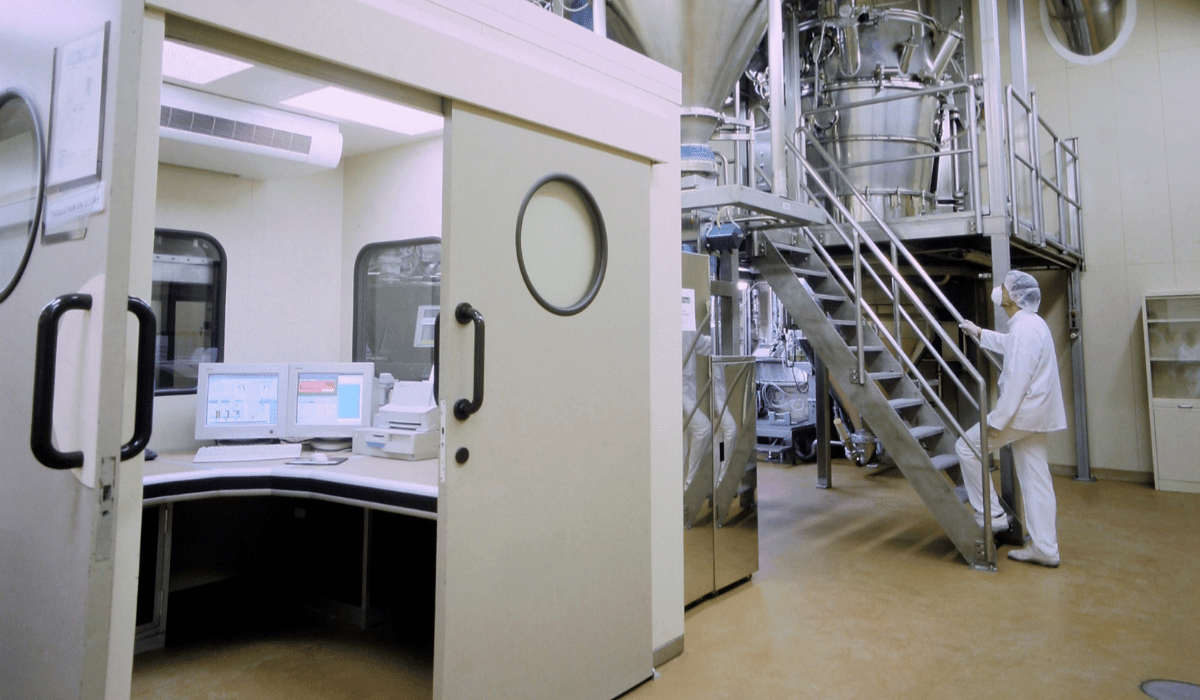
Cleanroom Sliding Doors
Cleanroom sliding doors are ideal for areas with limited clearance.
Their design supports smooth operation and automation, reducing physical contact and supporting hygiene-focused workflows.
Hermetic Cleanroom Doors
Hermetic cleanroom doors provide the highest level of sealing performance.
These doors are commonly used in sterile processing, pharmaceutical cleanroom doors, and high-containment environments where maximum airtightness is required.
Cleanroom Door Materials and Construction
Cleanroom door materials are selected for durability, corrosion resistance, and cleanability to ensure long-term performance in controlled environments.
Cleanroom doors are exposed to frequent operation, pressure differentials, and aggressive cleaning protocols, material selection directly impacts compliance, maintenance requirements, and contamination control.
The construction of cleanroom doors must also support airtight sealing, structural stability, and compatibility with cleanroom wall systems.
Materials are chosen not only for their physical properties but also for their ability to maintain smooth, non-porous surfaces over time.
Common Cleanroom Door Materials
Different cleanroom applications require different material solutions.
Each material supports specific cleanroom classifications and operational demands.
Stainless Steel
Stainless steel is widely used for cleanroom doors due to its exceptional chemical resistance and long service life.
It withstands repeated exposure to disinfectants and cleaning agents without corrosion or surface degradation.
Stainless steel doors are commonly used in pharmaceutical, healthcare, and high-hygiene environments.
Powder-Coated Steel
Powder-coated steel offers a cost-effective balance between durability and performance.
The coating provides corrosion protection while maintaining a smooth, cleanable surface.
These doors are suitable for many controlled environments where chemical exposure is moderate and budget considerations are important.
Aluminum and Composite Panels
Aluminum and composite panel doors provide lightweight performance without sacrificing structural integrity.
These materials are often selected for modular cleanrooms and applications where ease of installation and flexibility are priorities.
Composite materials can also be engineered for enhanced moisture resistance.
Each material supports different cleanroom classifications and operational demands, making proper selection essential during the design phase.
Surface Finishes and Cleanability
Surface finishes play a critical role in cleanroom door performance.
Finishes must resist corrosion, scratching, and chemical exposure while maintaining a smooth, non-porous surface.
Rough or textured finishes are avoided due to their tendency to trap particles and microorganisms.
Smooth finishes reduce cleaning time and support consistent contamination control by allowing effective disinfection.
Over time, high-quality finishes help maintain door integrity, reduce maintenance effort, and support ongoing ISO and GMP compliance.
Cleanroom Pressure Control and Airflow Management Through Door Systems
Cleanroom pressure control doors play a critical role in maintaining stable pressure cascades between adjacent rooms and cleanroom zones.
Properly designed door systems help ensure that air flows in the intended direction, protecting higher-grade spaces from contamination originating in lower-grade or uncontrolled areas.
Even minor pressure disruptions caused by poorly designed or improperly operated doors can compromise cleanroom performance.
Door operation must be carefully engineered so it does not disrupt airflow balance or allow uncontrolled air exchange.
High-quality cleanroom doors use airtight seals, controlled closing mechanisms, and precision alignment to limit pressure loss during opening and closing.
These features help preserve laminar airflow patterns and prevent turbulence that can draw contaminants into sensitive environments.
Cleanroom doors also support airflow management by coordinating with HVAC systems.
Door sizing, opening speed, and sealing performance must align with air supply and return rates to maintain consistent pressure differentials.
In high-classification cleanrooms, even small variations in door performance can impact particle counts and environmental stability.
Door Interlocking Systems and Airlocks for Pressure Stability
Door interlocking systems prevent the simultaneous opening of multiple doors within airlocks, protecting pressure stability and reducing contamination risk.
By allowing only one door to open at a time, interlocks maintain directional airflow and prevent pressure equalization between cleanroom zones.
These systems are commonly used in pharmaceutical and semiconductor facilities where contamination control is critical.
Airlocks equipped with interlocked cleanroom doors provide a controlled transition space for personnel and materials, minimizing particle transfer and supporting strict pressure cascades.
Interlocking doors also enhance compliance by ensuring consistent operational procedures and reducing reliance on manual controls.
In facilities with multiple cleanroom classifications, interlocks play an essential role in maintaining zoning integrity.
When integrated with access control and monitoring systems, door interlocks further strengthen cleanroom reliability, safety, and long-term performance.
Cleanroom Door Hardware and Automation
Cleanroom door hardware must be non-shedding, corrosion-resistant, and compatible with cleaning protocols.
Hinges, Closers, and Handles
Specialized hardware ensures smooth operation while minimizing particle generation.
Flush-mounted handles and concealed closers support cleanroom hygiene standards.
Automatic and Hands-Free Door Systems
Automation reduces physical contact, supporting hygiene and workflow efficiency.
Hands-free operation is increasingly common in GMP cleanroom doors and healthcare environments.
Cleanroom Door Installation and Integration
Cleanroom door installation requires precision to ensure airtight performance and proper alignment with wall systems. Even minor gaps can compromise contamination control.
Wall Interface and Sealing Details
Doors must integrate seamlessly with cleanroom wall panels.
Proper sealing prevents leakage and maintains cleanroom zoning integrity.
Retrofitting Doors in Existing Cleanrooms
Upgrading cleanroom doors requires careful planning to minimize downtime and maintain compliance during installation.
Cleanroom Door Applications by Industry
Pharmaceutical and Biotechnology Facilities
Pharmaceutical cleanroom doors prioritize sterility, cleanability, and regulatory compliance.
Hermetic doors and interlocking systems are commonly used.
Semiconductor and Electronics Manufacturing
Semiconductor environments require doors that minimize particle generation and support precise airflow control.
Healthcare, Research, and Aerospace Cleanrooms
These facilities rely on cleanroom doors that balance safety, precision, and contamination control while supporting specialized workflows.
Unique Benefits of High-Quality Cleanroom Doors
Well-designed cleanroom doors deliver long-term benefits by supporting regulatory compliance, contamination control, and efficient day-to-day operations.
Unlike standard doors, high-quality cleanroom doors are engineered to perform reliably in controlled environments where pressure balance, airflow stability, and cleanliness must be maintained at all times.
Enhanced Regulatory Compliance and Validation Support
One of the most significant advantages is improved compliance with ISO and GMP standards.
Precision sealing, smooth surfaces, and durable materials help ensure cleanroom doors meet inspection and validation requirements.
These features reduce the risk of non-compliance caused by air leakage, particle accumulation, or surface degradation over time.
Reduced Contamination Risk Across Cleanroom Zones
High-quality cleanroom doors play a critical role in reducing contamination risk.
Airtight construction and effective door seals limit uncontrolled air exchange between cleanroom zones.
Flush designs minimize turbulence during door operation, preventing particles from being drawn into sensitive areas.
Improved Workflow Efficiency and Operational Safety
Operational efficiency is another key benefit.
Smooth-opening mechanisms, optional automation, and integrated vision panels support faster movement of personnel and materials without compromising cleanroom conditions.
Controlled closing systems help maintain pressure stability while improving safety.
Lower Maintenance and Long-Term Cost Efficiency
From a lifecycle perspective, investing in premium cleanroom door systems leads to lower maintenance and operational costs.
Durable materials resist corrosion, repeated cleaning, and chemical exposure, reducing the need for frequent repairs or replacements.
Reliable sealing performance minimizes downtime and service interruptions.
Increased Cleanroom Reliability and System Performance
High-quality cleanroom doors enhance long-term cleanroom reliability.
Consistent door performance supports stable airflow patterns and pressure cascades, which are essential for maintaining cleanroom classification.
This reliability protects sensitive processes and extends the lifespan of the controlled environment.
Conclusion
Cleanroom doors are essential infrastructure that directly affects contamination control, pressure stability, and compliance.
From cleanroom door specifications and materials to door types and installation, every decision impacts cleanroom performance.
Selecting the right doors early in design ensures long-term reliability and regulatory success.
Expert Cleanroom Door Design and Installation Services You Can Trust
At Ultrpure Technology, we design and install high-performance cleanroom doors and windows that align with ISO standards, GMP requirements, and industry-specific needs.
Our solutions integrate seamlessly with cleanroom walls, ceilings, and HVAC systems to support contamination control and long-term compliance.
To discuss your cleanroom door solutions and project requirements, contact us today to speak with our experts.
Frequently Asked Questions
What are cleanroom doors and how are they different from standard doors?
Cleanroom doors are engineered specifically for controlled environments where contamination control and pressure stability are critical. They feature airtight seals, smooth surfaces, and specialized materials that prevent particle generation. Standard doors lack the construction and sealing required to meet cleanroom compliance standards.
How do cleanroom doors help maintain contamination control?
Cleanroom doors reduce contamination by limiting air leakage and minimizing turbulence during opening and closing. Flush surfaces and sealed edges prevent particle buildup and microbial growth. Proper door design supports cleanroom zoning and controlled airflow movement.
What specifications are important when selecting cleanroom doors?
Cleanroom door specifications include airtight performance, material compatibility, surface smoothness, and sealing efficiency. Doors must align with ISO cleanroom door requirements and GMP cleanroom doors standards. Fire ratings and safety compliance may also be required depending on facility use.
What types of cleanroom doors are commonly used?
Common cleanroom door types include swing doors, sliding doors, and hermetic cleanroom doors. Swing doors are widely used for general access, while sliding doors save space in tight layouts. Hermetic doors provide enhanced sealing for sterile and high-containment environments.