When it comes to cleanroom construction, precision isn’t optional — it’s everything.
You’re not just building four walls and a roof. You’re creating a controlled environment that determines product safety, research accuracy, and regulatory compliance.
That’s why hiring a certified cleanroom contractor isn’t just a preference — it’s a requirement. Certified contractors understand cleanroom standards, materials, and environmental systems down to the smallest particle.
At Ultrapure Technology, we’ve spent more than three decades delivering ISO- and GMP-compliant cleanrooms across industries like pharmaceuticals, biotechnology, aerospace, medical devices, semiconductors, and EV battery production.
But what exactly makes a cleanroom contractor “certified”? And why does it matter so much for your project’s success? Let’s break it down.
What Does “Certified” Mean in Cleanroom Construction?
In the cleanroom world, “certified” doesn’t mean just licensed or insured — it refers to a builder’s demonstrated ability to meet international cleanroom standards for air cleanliness, materials, and performance.
A certified cleanroom contractor has:
- Specialized training in ISO 14644 standards and validation procedures.
- Experience with GMP (Good Manufacturing Practice) and FDA compliance for pharmaceutical and biotech facilities.
- Proven quality control and documentation processes.
- A track record of cleanrooms that have passed third-party certification testing.
Think of certification as a stamp of trust. It tells you that the contractor not only understands how to build, but how to engineer a space that meets measurable contamination and performance benchmarks.
Why Cleanroom Certification Matters
A cleanroom that isn’t built or validated correctly can lead to more than operational setbacks — it can lead to compliance violations, costly downtime, or product recalls.
Hiring a certified cleanroom company ensures:
- Compliance Confidence – Your cleanroom meets ISO, GMP, and FDA standards.
- Quality Assurance – Materials, filtration, and HVAC systems are installed to spec.
- Safety – Proper airflow, humidity, and particle control prevent contamination.
- Long-Term Value – Certified construction reduces maintenance issues and revalidation costs.
In other words, certification protects your investment — and your reputation.
The Standards Every Certified Cleanroom Contractor Must Know
To be considered “certified,” a cleanroom contractor must understand and follow several key standards that define performance and compliance.
Let’s look at the most critical ones:
ISO 14644 (International Cleanroom Standard)
This is the foundation of all cleanroom classification. It defines cleanliness by the number of particles per cubic meter of air at specific sizes.
For example:
- ISO Class 5: <3,520 particles/m³
- ISO Class 7: <352,000 particles/m³
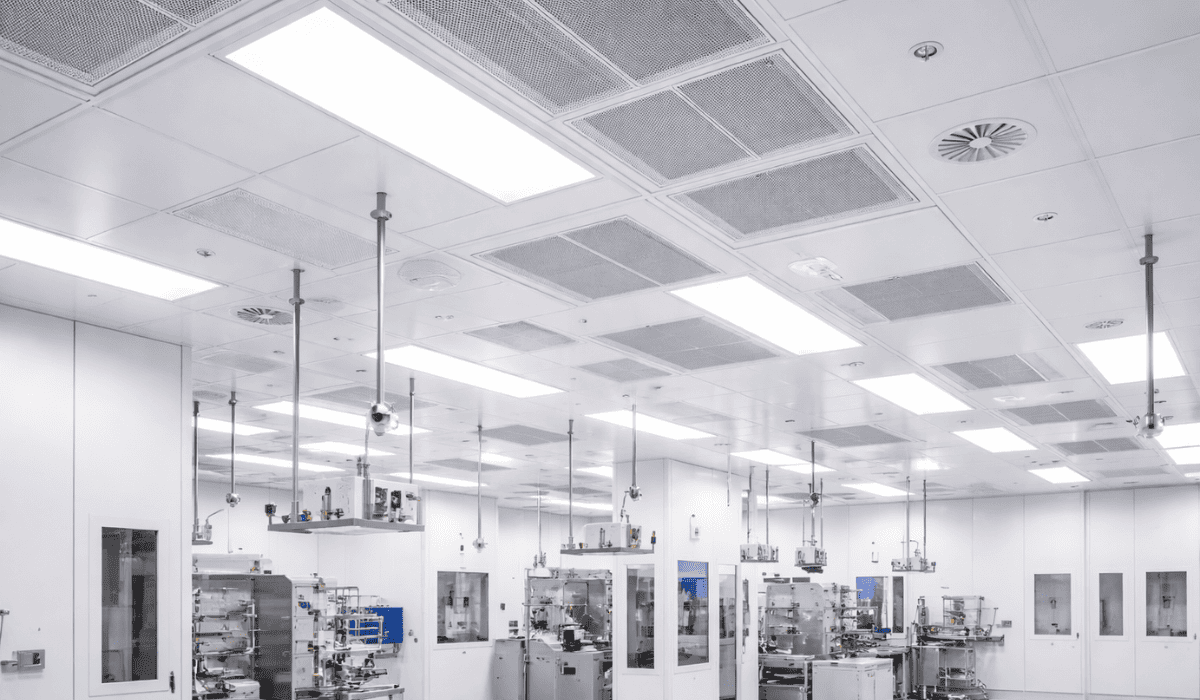
Certified contractors understand how to design and construct to these thresholds — from air changes per hour to HEPA/ULPA filter placement and laminar airflow patterns.
GMP (Good Manufacturing Practice)
GMP applies mainly to pharmaceutical and biotech facilities. It governs everything from surface finishes to airlocks and pressure differentials.
A GMP-compliant cleanroom ensures product safety and traceability, helping you pass FDA or EU regulatory inspections.
USP 797 & USP 800
These standards apply to compounding pharmacies and drug handling environments. They specify conditions for sterile and hazardous material handling.
Certified contractors like Ultrapure understand how to design spaces that separate hazardous and non-hazardous operations safely.
ISO 9001 Quality Management
This certification ensures the contractor’s internal processes — from project management to material procurement — are standardized and traceable for consistent results.
Key Qualifications That Define a Certified Cleanroom Contractor
Not every general contractor can build a cleanroom. It takes specialized expertise, equipment, and a disciplined team.
Here’s what separates a certified cleanroom company from a traditional builder:
1. Specialized Training and Experience
Certified contractors have engineers, designers, and field technicians trained in cleanroom-specific disciplines — airflow dynamics, filtration, pressure balancing, and cleanroom validation.
At Ultrapure Technology, every team member involved in cleanroom construction undergoes regular training in ISO and GMP standards.
2. Proven Project History
Experience speaks volumes. A certified cleanroom contractor has completed multiple validated cleanroom projects across industries.
Ultrapure has built over 500 cleanrooms in the U.S. — from pharmaceutical facilities to semiconductor labs — each passing third-party testing with verified certification results.
3. In-House Design and Engineering
True certification involves integration. A cleanroom isn’t just a construction project — it’s an engineered system.
That’s why certified contractors offer design-build services — combining architectural design, mechanical engineering, and regulatory compliance under one roof.
4. Quality Assurance and Documentation
Certification requires traceability. From materials used to filter specifications and pressure maps, everything must be documented.
Ultrapure maintains a complete Quality Assurance System (QAS) for each project — covering submittals, inspections, validation results, and as-built drawings.
5. Third-Party Validation
After construction, every certified contractor must undergo independent testing and certification by accredited agencies.
This includes particle counts, airflow tests, pressure differential readings, and HEPA integrity testing. Only after passing these can a facility be deemed “certified clean.”
Integrating Cleanroom Construction and Installation Expertise
Building a certified cleanroom requires more than planning, it demands precision in both cleanroom construction and cleanroom installation.
From the selection of modular wall systems to the placement of HEPA filters, each component must be assembled according to strict ISO and GMP standards. A certified contractor ensures that construction and installation are seamlessly coordinated, preventing contamination risks and maintaining consistent airflow, pressure, and filtration performance.
Proper installation is especially critical for sensitive industries like pharmaceuticals and semiconductors, where even minor deviations can compromise product quality.
By combining expert construction with meticulous installation, certified contractors like Ultrapure Technology deliver turnkey solutions that meet regulatory requirements and support long-term operational excellence.
What Happens If You Hire a Non-Certified Cleanroom Contractor?
Here’s the reality: cutting corners in cleanroom construction almost always costs more in the end.
Hiring an uncertified contractor might seem cheaper up front, but the risks are huge:
- Regulatory Failure: Your cleanroom may not meet ISO or GMP standards.
- Production Downtime: You may need costly rework or retrofits.
- Validation Delays: Failing third-party testing delays your launch or operation.
- Maintenance Issues: Incorrect airflow or materials can cause contamination and system inefficiency.
We’ve seen cases where clients had to tear down and rebuild non-compliant spaces built by unqualified contractors — doubling both cost and timeline.
Certification isn’t paperwork. It’s protection.
How Ultrapure Technology Ensures Certified Quality in Every Project
At Ultrapure Technology, “certified” isn’t a label — it’s a commitment.
Every cleanroom we design and build is engineered to meet or exceed ISO 14644, GMP, and FDA standards. Here’s how we guarantee that level of quality:
Integrated Design-Build Process
Our team handles every step — from initial layout design and airflow modeling to construction and validation. This integrated approach minimizes errors, reduces hand-offs, and keeps all teams aligned with certification standards.
Modular, Single-Pass, and Softwall Options
Depending on your application, we recommend the cleanroom system that best fits your classification and flexibility needs — from modular hardwall installations to single-pass and softwall solutions for dynamic environments.
Expert Validation and Testing
Before we hand over your cleanroom, our certified technicians perform:
- Particle count verification
- HEPA and ULPA filter leak testing
- Pressure differential testing
- Temperature and humidity validation
- Airflow pattern visualization
Each cleanroom receives a detailed certification report that you can present to auditors or regulators confidently.
Long-Term Maintenance and Re-Certification
Our service doesn’t end at handover. We provide annual revalidation, maintenance, and filter replacement programs to ensure your facility stays compliant over its entire lifecycle.
Certified Cleanroom Contractors Serve Every Industry
Certification requirements may vary, but the need for precision is universal. Certified cleanroom builders like Ultrapure Technology serve:
- Pharmaceutical & Biotech: GMP and FDA-compliant cleanrooms for drug manufacturing and research.
- Medical Devices: ISO 7 and ISO 8 cleanrooms for assembly and sterilization.
- Semiconductors & Microelectronics: ISO 5 and ISO 6 environments for chip fabrication.
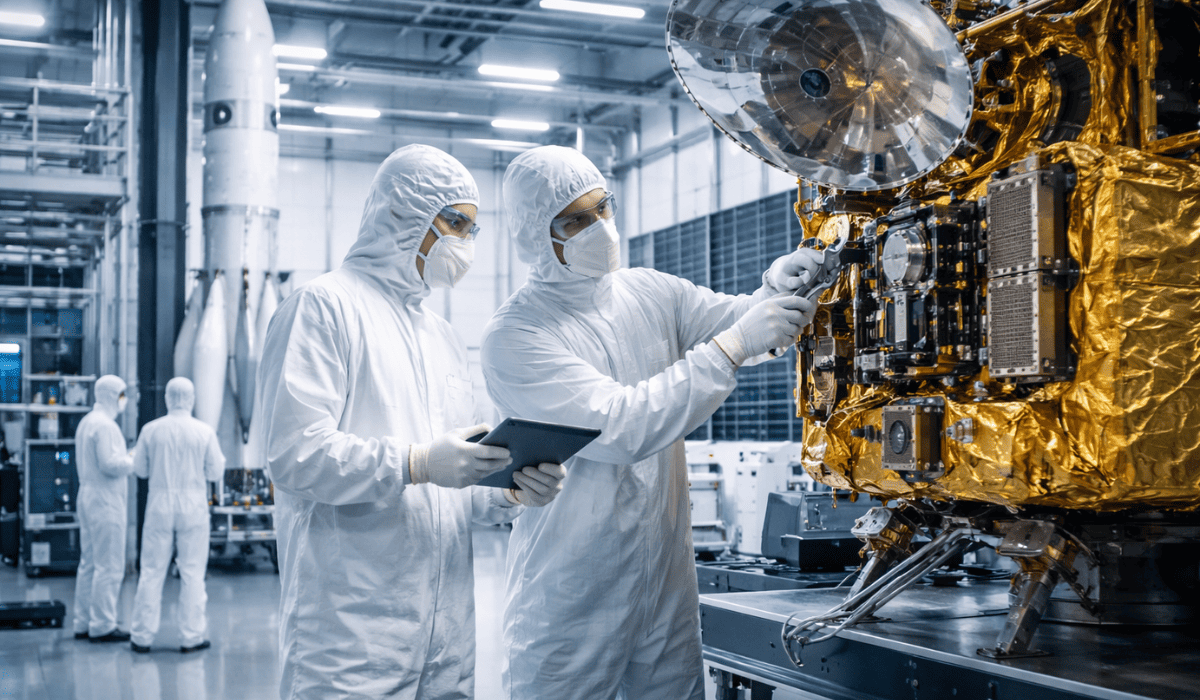
- Aerospace: Controlled environments for precision optics and satellite manufacturing.
- EV Battery & Energy Storage: Ultra-dry rooms for lithium-ion production.
- R&D & University Labs: Flexible modular cleanrooms for innovation and testing.
Each industry demands strict performance — and only certified contractors have the expertise to meet those expectations.
Why Choose a Certified Cleanroom Contractor Like Ultrapure Technology
Choosing a certified contractor isn’t just about compliance — it’s about peace of mind. Here’s what sets Ultrapure apart:
- 30+ Years of Experience across regulated industries.
- 500+ Cleanrooms Built Nationwide, all ISO and GMP certified.
- In-House Design, Construction, and Validation Teams for full accountability.
- Proven Compliance with ISO 14644, GMP, FDA, and USP standards.
- Comprehensive Documentation and Support for audits and inspections.
When you partner with Ultrapure, you get more than a builder — you get a partner dedicated to precision, reliability, and certification at every stage.
Final Thoughts
In the world of controlled environments, certification is the difference between success and setback. It ensures your cleanroom is safe, compliant, and built to perform — not just on day one, but for years to come.
A certified cleanroom contractor understands how every element — air, pressure, filtration, and materials — works together to protect your products and people.
At Ultrapure Technology, we take that responsibility seriously. From design and construction to validation and re-certification, we deliver turnkey cleanroom solutions that meet the highest global standards.
If you’re planning a new cleanroom or upgrading an existing facility, choose a partner who’s already certified to build it right — Contact Ultrapure Technology.
Frequently Asked Questions (FAQs)
What does it mean when a cleanroom contractor is “certified”?
A certified cleanroom contractor is a company trained and qualified to design, build, and validate cleanrooms according to international standards such as ISO 14644, GMP, and FDA requirements. Certification means the contractor has proven knowledge of airflow design, filtration systems, contamination control, and validation procedures — ensuring the cleanroom will perform exactly as required.
Why is it important to hire a certified cleanroom contractor?
Hiring a certified contractor ensures that your cleanroom will meet all compliance and safety standards. It prevents costly mistakes, failed inspections, and operational downtime. Certified builders like Ultrapure Technology guarantee that every component — from HEPA filters to wall panels — is installed correctly and tested to pass third-party certification.
What are ISO 14644 cleanroom standards?
ISO 14644 is the global standard that classifies cleanrooms based on the number and size of airborne particles allowed per cubic meter of air. For example, an ISO Class 5 cleanroom is cleaner than ISO Class 7. Certified cleanroom contractors use these standards to design HVAC systems, filtration, and airflow layouts that keep contamination within specified limits.
How is a cleanroom certified after construction?
After the build is complete, the contractor performs validation testing — measuring airflow velocity, particle counts, humidity, temperature, and pressure differentials. If all results meet ISO and GMP specifications, a third-party agency issues an official cleanroom certification verifying compliance. Ultrapure Technology provides full documentation after every validation.
What industries require certified cleanroom contractors?
Certified cleanroom construction is essential in industries where contamination can affect quality or safety — such as pharmaceuticals, biotechnology, medical devices, aerospace, semiconductors, EV batteries, and life science research. Each industry has unique compliance requirements, which only certified contractors are trained to meet.