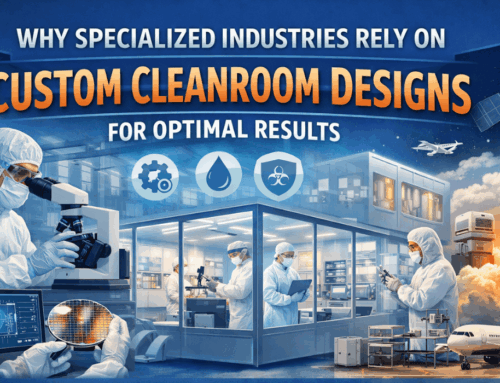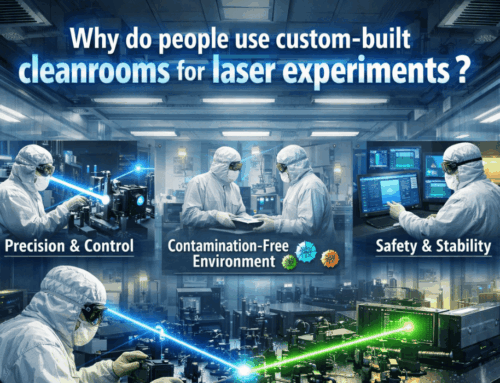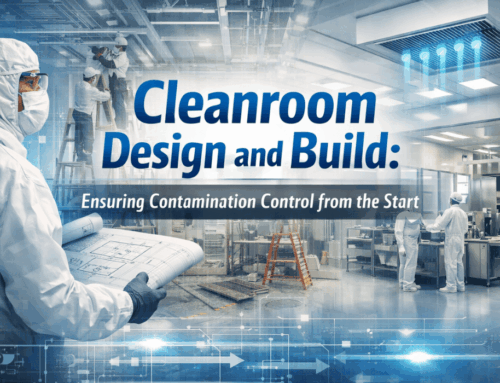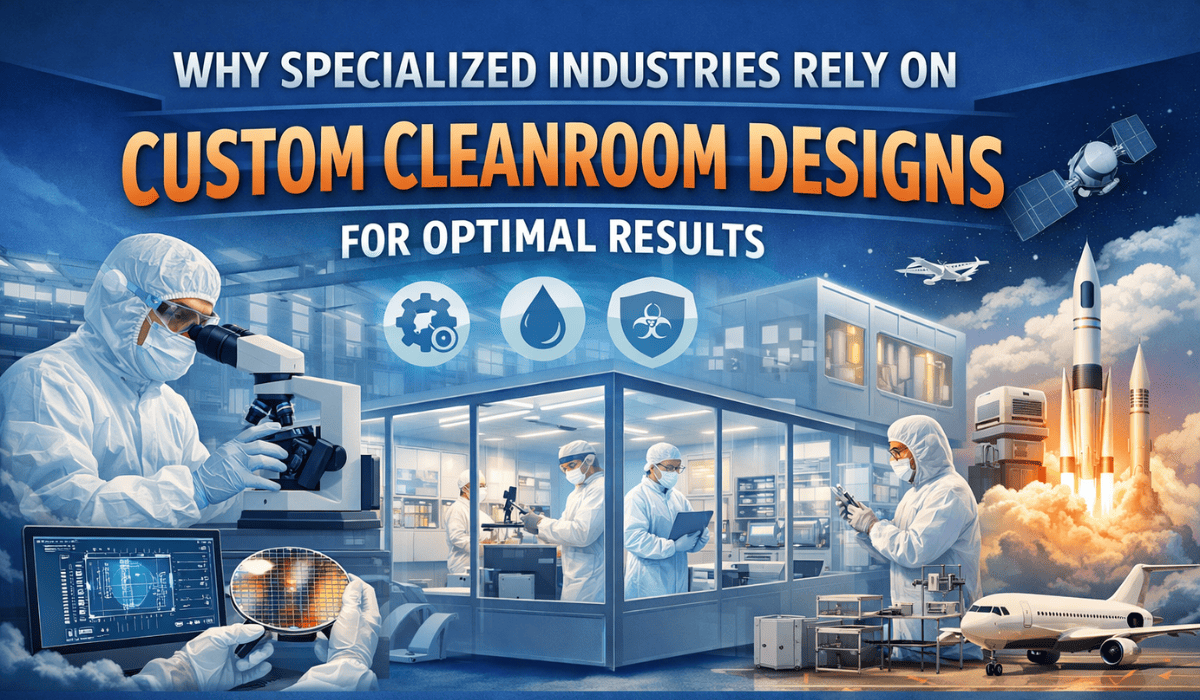
Industries in Suwanee, GA invest in cleanroom design to ensure their products meet safety, quality, and regulatory compliance standards.
These industries typically include
- Microelectronics
- Pharmaceuticals or Aerospace
- Medical device manufacturing
- Biotech
- Food processing
- Agriculture
- Military
- Automotive and more.
All of these sectors require a controlled environment to avoid regulatory issues, contamination, and costly downtime.
Designing a cleanroom is pivotal because small mistakes can impact operational efficiency, cause batch contamination, product failures, FDA warnings, and loss of revenue.
Whether you are planning to upgrade an existing cleanroom or planning to invest in a new cleanroom design, this article is suitable for you.
We will understand the top cleanroom design mistakes, discuss why these mistakes happen and what are the necessary steps to save time, money, and avoid long-term risks.
What are the Top 8 Mistakes to Avoid When Selecting Cleanroom Design?
1. Not Choosing the Right Cleanroom Contractor
Choosing an untrained contractor for the cleanroom design process makes it difficult to control the environment and puts your products at risk.
Cleanrooms are designed to ensure:
- proper airflow management
- maintain stable humidity and temperature levels
- Impurity prevention.
Unprofessional contractors often lack the skills to handle these critical elements carefully.
As a result, your cleanroom may expect issues, like pressure fluctuations, poor validation tests, and fail to meet compliance needs.
Hiring a professional cleanroom design company is necessary because experts begin with an inspection and offer the following benefits:
- They check the existing conditions of the environment.
- Based on the parameters, like class, size, and temperature, experts prepare a solid drawing.
- Focus on an effective Cleanroom strategy to ensure that your environment works well and complies with safety standards.
From material selection, airflow design to future maintenance, cleanroom design specialists help you achieve long-term success for your products and equipment and avoid costly errors.
2. Not Understanding the Federal Standard or ISO Classification
One of the cleanroom design mistakes is not understanding of required Federal standard classification or ISO standards.
The classification of cleanrooms is done by the total number of particles in a given air volume.
- The ISO 146444-1 calculates the number of particles per cubic meter
- The FED STD 209E counts the total number of particles per cubic foot.
There are a set of rules for cleanroom classification, which helps you determine how clean the environment must be. With proper classification, you can know:
- How many times the air changes per hour
- Types of Filters needed (ULPA or HEPA)
- The capacity and the power of the HVAC system
- Pressure requirements (positive or negative)
- The material that won’t shed particles.
Understanding cleanroom classification is essential to prevent products from contamination and regulatory and compliance issues.
Different industries in Suwanee requires varied cleanroom classes
- Pharmaceutical labs require ISO Class 5 to 7
- Electronics manufacturers often need ISO Class 6 or 7
As a business, if you select the wrong cleanroom class, it may lead to expensive upgrades, costly redesigns, and equipment changes.
3. Ignoring HVAC and Airflow Requirements
Poor airflow planning is the common issue in cleanroom design. Managing air change rates and providing laminar flow is critical to prevent contamination.
There is a need to maintain balance in cleanroom zones and protect the entire system against failure.
Cleanliness supports proper air circulation. If the room is unhygienic and dirty, particles interfere with the filtration and the cleanroom’s airflow system.
What happen when not meet HVAC and airflow needs:
- Accumulated particles and dust block filters and make them less effective.
- Tiny particles minimize the cleanliness level of a cleanroom.
- Too much contamination in ULPA/HEPA filters ensure poor airflow management.
- If the room is not clean, the system has to struggle with air changes per hour.
- Air pressure becomes unstable
4. Choosing a Traditional Stick-built Model
Stick-built model is an alternative to modular cleanroom design.
Relying on stick-built construction ensures affordability and simplicity.
The materials used in stick-built cleanrooms are not durable.
However, considering a modular cleanroom design is important for sensitive products.
Modular designs are ideal for environments where the fully clean and controlled environment is needed.
Industries, like medicines, electronics, biotech, and medical devices often choose modular cleanroom facilities to inspect their products against pollutants and ensure their safety and purity.
5. Poor Layout Planning and Process
A smart cleanroom boosts productivity, supports compliance, and controls contamination.
A poorly planned layout increases contamination risks, disrupts workflows, and slows down production.
A common mistake is having a small gown room, which frustrates workers and wastes their time.
If the gown room is big, people don’t have to wait for one another.
6. Not Investing in Cleaning and Maintenance
Daily cleaning and ongoing maintenance are crucial for the better functionality of a cleanroom.
During the design phase, maintenance is ignored, but it is essential to reduce downtime, future repair needs, and contamination risks.
Hiring a certified cleanroom design company makes sure that the cleanroom is built for easy maintenance.
Specialists also provide maintenance options for components, like fans, filters, and HVAC units during the design phase.
7. Avoiding Testing and Validation
Even a perfectly cleanroom construction company fails if it is not tested and validated properly.
Companies in Suwanee working with FDA, ISO, or GMP standards must provide documented validation evidence.
Companies with experience in cleanroom perform several validation steps to meet performance and design standards.
- Installation Qualification
- Performance Qualification
- Operational Qualification
- Additional tests like particle counting
- Airflow visualization
Delaying validation tests can result in contamination risks and compliance failures.
Proper validation guarantees that the cleanroom is safe, efficient, and fully-compliant.
8. Using Wrong Materials and Finishes
Cleanroom construction materials should be easy to clean, resistant to microbial growth, and non-shedding.
Choosing inappropriate materials like peelable paint instead of epoxy, porous surfaces, installing non-covered flooring can produce contaminants over time.
Many projects select non-cleanroom ceilings or equipment and use fixtures that are resistant to dust, making cleanroom conditions worse.
Materials used in the cleanroom should be free from chemicals.
The surface, floors, walls, and ceilings in a cleanroom must be durable and clean.
Why Cleanroom Design Mistakes Happen
1. Lack of experience:
Cleanrooms require skilled experts with engineering experience to look for critical factors, such as material selection, pressure balance, and airflow.
Hiring the wrong contractor for the cleanroom design can cause failure in ISO, FDA, or GMP standards.
2. Budget constraints:
Sometimes businesses choose low-quality material and invest in poorly designed cleanrooms to save money.
Instead of choosing modular systems, they use stick-built models and experience rework and long-term costs.
3. Poor coordination between teams:
Cleanroom design requires proper coordination between engineers, architects, facility managers, or HVAC experts.
Misinterpretation or weak communication results in workflow problems, layout issues, and non-compliance
4. No future planning:
Cleanrooms need to be upgraded from time to time.
Designers that focus on current needs and have no plan for future, lead to expensive modifications and outdated systems.
5. Focusing on the Deadline:
Rushing the project can encourage teams to skip steps, such as proper layout planning, testing, or validation, resulting in compliance failures or weak performance.
Stay Safe with UltraPure Technology
UltraPure Technology is the best cleanroom construction specialist with nearly 32 years of expertise in modular cleanroom design, full-service design, and cost-effective controlled environments.
We have experienced cleanroom professionals to design, build, or upgrade your cleanroom.
Our experts strictly adhere to the ISO or FDA standards.
We also provide tailored cleanroom solutions for every business need.
Contact us today to get your future-ready and compliant cleanroom.
Frequently Asked Question
Why is Flexibility Important in the Cleanroom Design?
Flexible cleanrooms allow industries to adjust workflows without rebuilding the entire space. A Cleanroom design with flexibility comes with usefulness, maintains efficient cleanliness levels, and supports workflow management.
What is a successful Cleanroom design?
A successful cleanroom design is easy to clean, capable of maintaining safety and product quality in a controlled environment. It supports efficient workflows, meets regulatory standards (FDA, ISO< GMP, or other industry rules), and provides long-term adaptability.
What is a Modular Cleanroom Design?
A modular cleanroom is a type of cleanroom designed using standardized and prefabricated components and panels for easy installation in a controlled environment. Modular cleanrooms are easy to relocate, expanded, and modified. They are scalable systems that allow faster adjustments to lighting, utilities, and HVAC. Also, modular cleanroom designs meet GMP or ISO standards.
Why Cleanliness is Important in a Cleanroom?
Cleanliness is important in a cleanroom because it protects equipment, products, and processes from contamination. Failure to maintain the cleanroom’s cleanliness can damage sensitive components, leave particles like dust and microbes, and ruin experiments.
What is special in cleanrooms?
Cleanrooms are highly-controlled environments that protect sensitive electronic components, medicines, and scientific research equipment from contamination. The success of cleanrooms depends on the quality of the materials used in its design, the air quality, and its ability to control humidity and temperature levels. The Performance of cleanrooms rely on the proper airflow engineering, high-quality design, durability, and the use of non-shedding materials.
How do top cleanroom design services address airflow mistakes in pharmaceutical manufacturing?
A leading cleanroom design company has advanced modeling tools, comprehensive knowledge of filter placement, stringent regulatory standards, with engineering expertise to address airflow mistakes in pharmaceutical manufacturing. Expert cleanroom designers use CFD airflow simulations to identify dead zones, track particle moment and visualize turbulence.