Maintaining long-term air quality and performance in a cleanroom is crucial for industries where contamination can jeopardize product quality, operational efficiency, and regulatory compliance.
Cleanrooms are specialized environments designed to control airborne particles, temperature, humidity, and pressure, ensuring a sterile or near-sterile workspace.
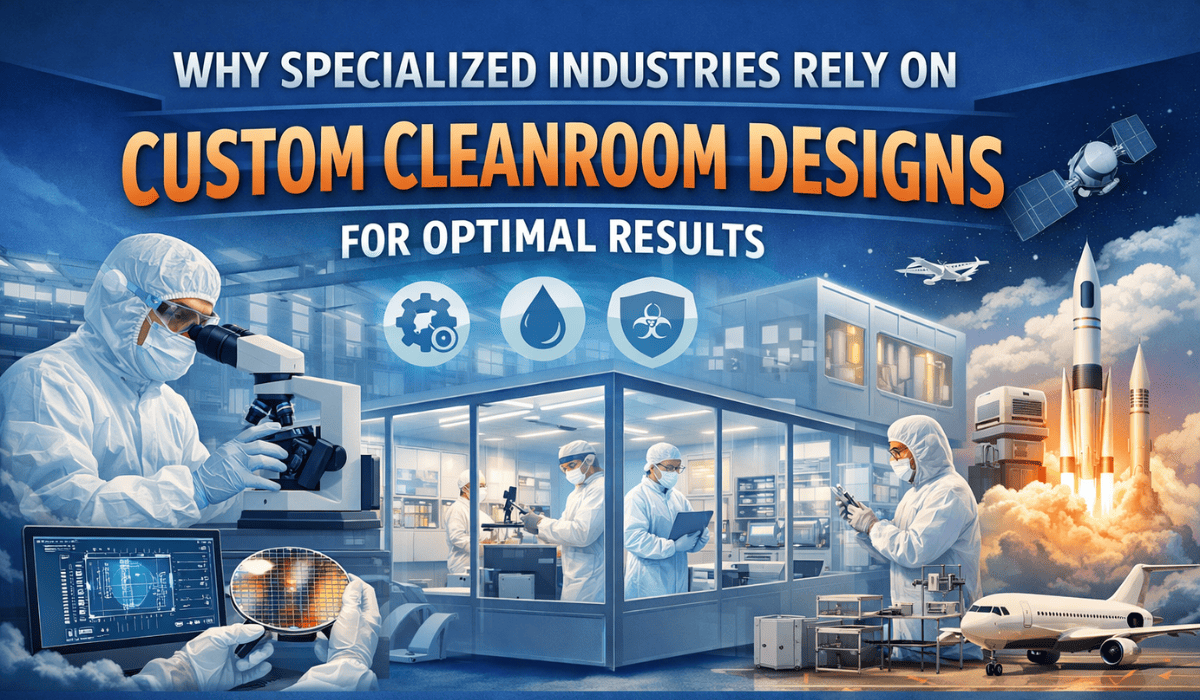
Industries such as pharmaceuticals, biotechnology, semiconductor manufacturing, aerospace, and medical device production rely heavily on cleanrooms to produce high-quality, safe products.
Achieving and maintaining optimal cleanroom conditions is a continuous effort that combines advanced engineering, meticulous maintenance, and strict operational protocols.
In this article, we explore the strategies and practices cleanroom specialists employ to ensure long-term air quality and overall performance.
Understanding Cleanroom Air Quality and Performance
Cleanroom air quality is measured primarily by the concentration of airborne particles, microbial contamination, and the overall environmental parameters such as temperature, humidity, and differential pressure.
Cleanrooms are classified based on ISO standards (ISO 14644-1), which categorize rooms by the maximum allowable number of particles per cubic meter of air.
For example, an ISO Class 5 cleanroom allows only 3,520 particles of size 0.5 microns per cubic meter.
Performance, on the other hand, goes beyond air quality.
It encompasses the cleanroom’s ability to maintain stable environmental conditions, provide consistent airflow, and prevent contamination during production processes.
For cleanroom specialists, maintaining both air quality and performance is a multi-faceted challenge requiring technical expertise, preventive maintenance, and rigorous monitoring.
The Role of Air Filtration Systems
At the heart of cleanroom air quality management are filtration systems.
High-Efficiency Particulate Air (HEPA) filters or Ultra-Low Penetration Air (ULPA) filters capture particles down to 0.3 microns or smaller, effectively removing dust, microbes, and other contaminants from the air.
Filter Installation and Quality Assurance
Specialists ensure that filters are correctly installed without leaks, using techniques like duct blinding and filter integrity testing.
Proper sealing prevents unfiltered air from bypassing the system and compromising cleanroom conditions.
Regular Filter Replacement and Testing
HEPA and ULPA filters degrade over time due to particle accumulation and airflow resistance.
Specialists adhere to strict replacement schedules, often guided by pressure differential readings across the filter, which indicate when a filter is nearing capacity.
Routine testing, such as the DOP (Dispersed Oil Particulate) test, verifies filter efficiency and confirms that the air leaving the filter meets required cleanroom standards.
HVAC Systems and Airflow Management
A cleanroom’s Heating, Ventilation, and Air Conditioning (HVAC) system is pivotal for maintaining air quality.
Cleanroom specialists design and maintain airflow patterns, temperature, and humidity to meet operational requirements.
Laminar Flow Systems
Many cleanrooms utilize laminar airflow systems, which create a unidirectional flow of filtered air to sweep away contaminants.
Specialists regularly inspect airflow velocities and distribution to ensure that air moves uniformly across workspaces, preventing the formation of stagnant zones where particles can accumulate.
Pressurization and Differential Pressure Monitoring
Cleanrooms are often maintained at higher pressure than adjacent spaces to prevent the ingress of contaminants.
Continuous monitoring of differential pressure ensures that positive pressure is consistently maintained, reducing the risk of particle contamination from surrounding areas.
Environmental Control
Temperature and humidity can influence particle behavior and microbial growth.
HVAC systems in cleanrooms are equipped with advanced sensors and control units.
Specialists calibrate and maintain these systems to keep environmental parameters within specified tolerances, preventing equipment malfunctions and contamination risks.
Routine Cleaning and Surface Maintenance
Airborne particle control is only one aspect of cleanroom maintenance.
Surface cleanliness is equally vital.
Specialists develop and follow strict cleaning protocols using approved cleaning agents, techniques, and schedules.
Cleaning Protocols and Frequency
High-touch areas, walls, ceilings, and floors are cleaned regularly to remove dust, microbial contamination, and residues.
Microfiber wipes, sterile mops, and automated cleaning systems are often employed to reduce particle generation during cleaning.
Equipment Cleaning and Decontamination
Specialists routinely decontaminate production equipment, work surfaces, and tools.
UV sterilization, chemical disinfectants, and autoclaving are common methods to minimize microbial contamination in critical areas.
Minimizing Human Contamination
Personnel are the largest source of contamination in cleanrooms.
Specialists enforce strict gowning protocols, including sterile suits, gloves, masks, and hairnets.
Controlled entry procedures, such as air showers and gowning rooms, ensure that individuals do not compromise the controlled environment.
Monitoring and Testing for Long-Term Assurance
Maintaining cleanroom performance over time requires continuous monitoring and validation.
Specialists rely on a combination of real-time sensors, scheduled testing, and data analysis to ensure air quality standards are consistently met.
Particle Monitoring
Automated particle counters continuously measure airborne particle levels.
These devices can detect deviations from acceptable limits, triggering immediate corrective actions to prevent contamination events.
Microbial Testing
Regular microbial sampling, including air, surface, and personnel monitoring, helps detect the presence of bacteria, fungi, and other microorganisms.
Sampling results guide adjustments in cleaning protocols and environmental controls.
Environmental Monitoring Systems (EMS)
EMS integrates multiple sensors to track temperature, humidity, pressure, and particle counts in real time.
Specialists use EMS data to anticipate trends, identify potential risks, and make data-driven adjustments to maintain consistent cleanroom performance.
Cleanroom Environmental Service for Continuous Air Quality Control
A professional cleanroom environmental service helps facilities move from simple data collection to active air quality control.
Environmental monitoring systems can collect valuable information, but the data must be reviewed, interpreted, and connected to real cleanroom performance.
Over time, monitoring trends may reveal early signs of airflow imbalance, filter loading, pressure drift, temperature variation, humidity instability, or operational changes inside the cleanroom.
These issues may not always cause an immediate failure, but they can slowly reduce cleanroom reliability if they are not addressed.
Cleanroom specialists use environmental data to understand how the room behaves under real operating conditions.
This includes reviewing patterns during production shifts, cleaning cycles, door activity, equipment use, and seasonal changes.
The goal is not only to detect problems after they happen, but to identify small changes before they become larger performance issues.
This type of cleanroom environmental service is especially valuable for facilities that need documented evidence of control.
Consistent data review helps support internal quality programs, audit preparation, and long-term contamination control.
A professional cleanroom environmental service helps facilities move from simple data collection to active air quality control.
Environmental monitoring systems can collect valuable information, but the data must be reviewed, interpreted, and connected to real cleanroom performance.
Over time, monitoring trends may reveal early signs of airflow imbalance, filter loading, pressure drift, temperature variation, humidity instability, or operational changes inside the cleanroom.
These issues may not always cause an immediate failure, but they can slowly reduce cleanroom reliability if they are not addressed.
Cleanroom specialists use environmental data to understand how the room behaves under real operating conditions.
This includes reviewing patterns during production shifts, cleaning cycles, door activity, equipment use, and seasonal changes.
The goal is not only to detect problems after they happen, but to identify small changes before they become larger performance issues.
This type of cleanroom environmental service is especially valuable for facilities that need documented evidence of control. Consistent data review helps support internal quality programs, audit preparation, and long-term contamination control.
Preventive Maintenance and Calibration
A proactive approach to maintenance ensures long-term cleanroom performance.
Specialists schedule preventive maintenance for HVAC systems, air filters, equipment, and monitoring devices.
Routine Equipment Checks
Regular inspection of blowers, dampers, fans, and filters prevents unexpected failures that could compromise air quality.
Lubrication, alignment, and mechanical checks extend equipment life and maintain performance.
Calibration of Sensors and Instruments
Monitoring instruments, including particle counters and pressure sensors, must be calibrated periodically to ensure accurate readings.
Miscalibrated devices can give a false sense of security, potentially allowing contamination to go undetected.
Documentation and Compliance
Preventive maintenance activities are meticulously documented to comply with regulatory standards, such as ISO, FDA, and GMP.
Detailed records allow for trend analysis and help demonstrate adherence to industry guidelines during audits.
Cleanroom Facility Services That Protect Long-Term Uptime
Cleanroom facility services help ensure that critical cleanroom systems continue performing after the original installation or certification is complete.
After some time, filters load with particles, sensors drift, seals age, dampers shift, and equipment experiences normal wear.
If these changes are not managed, the cleanroom may gradually move away from its required performance range.
Professional facility support helps keep cleanroom systems aligned with operational needs.
This may include scheduled inspections, performance reviews, system balancing, filter testing coordination, calibration support, and documentation review. The purpose is to reduce unexpected failures and support a stable production environment.
Cleanroom specialists also help connect maintenance activities to the cleanroom’s risk profile. A high-control pharmaceutical, biotechnology, semiconductor, aerospace, or medical device environment may require a more structured service plan than a lower-risk controlled space.
The service approach should match the cleanroom classification, production process, equipment sensitivity, and compliance requirements.
When cleanroom facility services are planned correctly, they support both uptime and quality. Instead of waiting for a failed test, alarm, or contamination event, facilities can maintain a more proactive approach to performance control.
Staff Training and Operational Discipline
Long-term cleanroom performance depends not only on technical systems but also on the people who operate within it.
Cleanroom specialists implement rigorous training programs to instill discipline and best practices.
Contamination Control Training
Personnel are trained in proper gowning, equipment handling, cleaning procedures, and workflow management to minimize particle generation and microbial contamination.
Standard Operating Procedures (SOPs)
Strict SOPs govern every activity in the cleanroom, from material transfer to waste disposal.
Specialists regularly review and update these procedures to reflect technological advancements and lessons learned from previous contamination events.
Audits and Performance Reviews
Regular internal audits assess compliance with protocols and identify areas for improvement.
Staff performance is evaluated, and refresher training is provided to maintain a culture of contamination awareness and accountability.
Advanced Technologies for Long-Term Performance
Cleanroom specialists increasingly rely on advanced technologies to enhance air quality and operational efficiency.
Automated Cleaning Systems
Robotic cleaning systems can perform routine tasks without human intervention, reducing the risk of contamination while maintaining consistent cleanliness levels.
Air Quality Modeling and Simulation
Computational fluid dynamics (CFD) modeling allows specialists to simulate airflow patterns and particle movement, optimizing cleanroom layout and HVAC performance for long-term stability.
Smart Monitoring Systems
Integration of IoT-based sensors and predictive analytics enables proactive maintenance.
These systems detect subtle changes in air quality or equipment performance, allowing corrective actions before standards are compromised.
Why Choose the Right Cleanroom Solutions for Existing Facilities
Not every cleanroom performance issue requires a full rebuild. In many cases, the right cleanroom solutions can improve reliability, monitoring, airflow stability, or maintenance efficiency within an existing facility.
For example, a cleanroom may need improved environmental monitoring, better documentation processes, airflow review, filter integrity testing, HVAC balancing, pressure relationship evaluation, or updated maintenance planning.
The best solution depends on the reason the cleanroom is underperforming.
Cleanroom specialists begin by identifying the actual source of the problem.
A particle count issue may be related to airflow, filter bypass, personnel activity, cleaning procedures, equipment placement, or pressure instability.
Without a proper assessment, a facility may invest in the wrong fix and continue seeing the same performance concerns.
A professional cleanroom company like UltraPure Technology can help evaluate the cleanroom as a complete system. This includes the physical room, air handling system, filtration, monitoring approach, maintenance schedule, operational procedures, and documentation.
By looking at the full environment, the recommended solution is more likely to support long-term performance instead of only addressing a surface-level issue.
Conclusion
Maintaining long-term air quality and performance in cleanrooms is a complex, ongoing process that requires a combination of engineering excellence, procedural rigor, and operational discipline.
Cleanroom specialists manage advanced filtration systems, HVAC controls, surface cleaning, environmental monitoring, preventive maintenance, and staff training to ensure that critical environments remain compliant with stringent standards.
By adopting proactive strategies, leveraging technology, and fostering a culture of contamination awareness, specialists can sustain the performance and reliability of cleanrooms over the long term.
A well-maintained cleanroom is more than just a sterile space—it is a cornerstone of quality assurance, regulatory compliance, and operational efficiency.
Industries that invest in robust cleanroom management practices benefit from enhanced product quality, reduced contamination risk, and a safer, more controlled working environment.
FAQs
What is the primary goal of cleanroom specialists in maintaining air quality?
The main goal is to control airborne particles, microbial contamination, temperature, humidity, and pressure to ensure a sterile or near-sterile environment. This prevents contamination that could compromise product quality, regulatory compliance, and operational efficiency.
How often are cleanroom air filters replaced?
HEPA and ULPA filters are typically inspected regularly, with replacements guided by pressure differential readings across the filter. Depending on usage and environmental conditions, filters may be replaced every 6 to 18 months or sooner if performance decreases.
How do cleanroom specialists monitor airborne particles?
Specialists use automated particle counters and environmental monitoring systems to continuously measure particle levels. Alerts are generated if particle counts exceed acceptable thresholds, allowing for immediate corrective action.
Why is airflow management important in a cleanroom?
Uniform airflow ensures contaminants are efficiently removed and prevents the formation of stagnant zones. Laminar flow systems, along with controlled pressurization, help maintain a consistent environment essential for cleanroom performance.
How is microbial contamination controlled in cleanrooms?
Microbial control involves regular surface cleaning, decontamination of equipment, and personnel hygiene. UV sterilization, chemical disinfectants, and strict gowning protocols reduce the risk of bacteria, fungi, and other microorganisms entering the cleanroom.
What role does preventive maintenance play in cleanroom performance?
Preventive maintenance ensures that HVAC systems, filters, sensors, and equipment operate optimally. Scheduled inspections, lubrication, calibration, and repairs prevent unexpected failures that could compromise air quality and cleanroom performance.
How do cleanroom specialists manage human contamination?
Personnel are trained in gowning, hygiene, and contamination control protocols. Entry procedures like air showers, cleanroom suits, masks, gloves, and hairnets minimize particle shedding and microbial contamination from staff.
How are environmental parameters like temperature and humidity controlled?
HVAC systems equipped with sensors and control units continuously monitor and adjust temperature and humidity. Cleanroom specialists calibrate these systems to maintain precise conditions, which prevents microbial growth and protects sensitive processes.