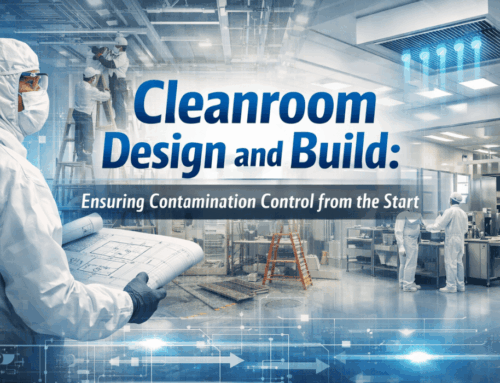
Cleanroom design challenges are one of the leading causes of compliance failures, operational inefficiencies, and costly redesigns across regulated industries.
Cleanrooms are engineered to meet strict ISO and GMP standards; many projects fall short not because of flawed concepts, but due to gaps between design assumptions and real-world use.
Beyond engineering specifications, effective contamination control in cleanrooms depends on aligning facility layout, HVAC performance, and daily procedures.
This is especially critical when teams face GMP cleanroom design challenges, where audit readiness and process protection must be maintained simultaneously.
Cleanroom environments must control particles, airflow, pressure, humidity, and human behavior simultaneously.
When any one of these elements is overlooked, contamination risks increase and certification becomes harder to maintain.
This article explores the most common cleanroom construction challenges, explains why they occur, and outlines how a disciplined design approach prevents long-term performance issues.
8 Cleanroom Design Challenges and How We Avoid Them
Cleanroom design challenges rarely occur in isolation.
Most failures result from a combination of planning gaps, execution misalignment, and design decisions that do not fully account for real operational conditions.
From cleanroom HVAC design issues and airflow instability to material selection errors and layout inefficiencies, these problems often emerge long after construction is complete when remediation is costly and disruptive.
Understanding these common cleanroom design mistakes allows facilities to address risks early, align design with operational workflows, and avoid cleanroom operational failures that compromise ISO cleanroom compliance and GMP performance.
Addressing cleanroom design errors early also reduces rework during buildout and prevents avoidable disruptions during commissioning.
Poor Contamination Control Planning
Contamination control failures often begin during early planning stages.
Designers may focus heavily on room classification while underestimating how people, materials, and equipment move through the space.
Personnel traffic, material transfer routes, and equipment placement all contribute to particle generation.
When these factors are not clearly defined, contamination risks increase even in technically compliant rooms.
How We Avoid This
We begin every project with a contamination risk assessment that evaluates operational workflows, not just room specs.
Clear zoning, defined personnel paths, and separated material flows reduce cross-contamination risks and support consistent cleanroom performance.
Inadequate Airflow and Pressure Control
Cleanroom airflow and pressure control are among the most misunderstood aspects of cleanroom design.
Incorrect air change rates, poorly positioned diffusers, or unstable pressure cascades can create turbulence that spreads contaminants instead of removing them.
Cleanroom HVAC design issues often arise when airflow planning is disconnected from room layout and equipment heat loads.
How We Avoid This
Airflow planning is integrated with spatial design from the start.
Pressure hierarchies are clearly defined, return air paths are optimized, and airflow patterns are engineered to support laminar movement where required.
This ensures stable pressure differentials and predictable contamination control.
Selecting the Wrong Materials and Finishes
Cleanroom material selection directly affects cleanliness, durability, and maintenance.
Porous wall systems, particle-shedding finishes, or incompatible sealants can undermine contamination control despite proper airflow.
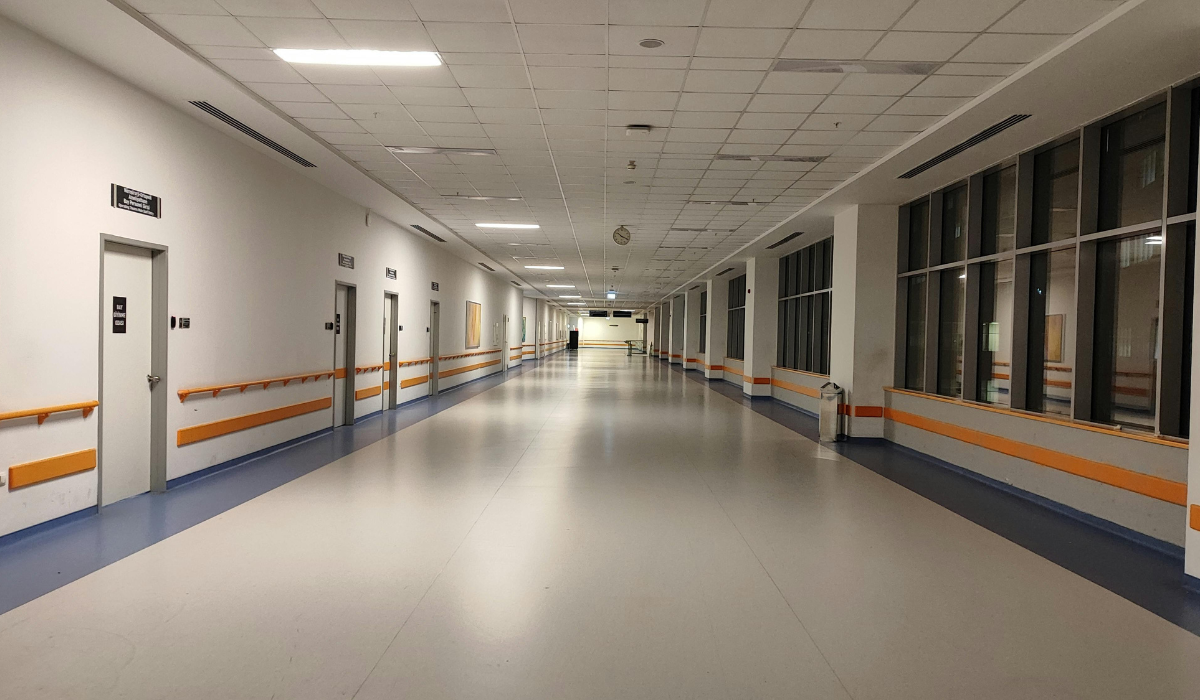
Over time, frequent cleaning and chemical exposure can degrade poorly chosen materials, creating long-term compliance risks.
How We Avoid This
We specify non-shedding, cleanroom-rated materials with seamless transitions between walls, ceilings, and floors.
Chemical-resistant finishes and sealed penetrations support rigorous cleaning protocols and extend the cleanroom’s usable lifespan.
Designing for Compliance Instead of Operations
One of the most common cleanroom design mistakes is focusing solely on passing audits rather than supporting daily operations.
While ISO cleanroom compliance is essential, designs that ignore workflow efficiency often lead to operational shortcuts that increase contamination risks.
Overly complex layouts, difficult-to-clean surfaces, and restricted access points can hinder productivity.
Many of these issues stem from avoidable planning errors, as outlined in UltraPure Technology’s guide on top cleanroom design mistakes to avoid, which highlights how early decisions directly impact long-term compliance and performance.
How We Avoid This
Our approach balances regulatory compliance with usability.
Cleanrooms are designed to support efficient workflows, routine cleaning, and maintenance access while remaining audit-ready.
This alignment reduces operator error and improves long-term reliability.
Poor Cleanroom Layout and Space Planning
Cleanroom layout planning affects everything from gowning efficiency to material staging and equipment servicing.
Insufficient gowning areas, congested corridors, or poorly planned adjacencies can disrupt workflows and increase contamination exposure.
Rigid layouts also limit scalability when production needs change.
How We Avoid This
Layouts are developed around real operational sequences.
Gowning, staging, processing, and support areas are clearly separated, with space allocated for future expansion.
Modular cleanroom systems allow flexibility without compromising classification.
Ignoring Validation and Certification Early
Cleanroom validation and certification problems often emerge when testing requirements are addressed too late in the project.
Design elements that cannot be properly tested or documented lead to delays, rework, and increased costs.
Without a defined plan for cleanroom validation and certification, even well-built spaces may struggle to achieve consistent test results and regulatory approval.
Late-stage corrections are not only expensive but also disruptive to production timelines.
How We Avoid This
Validation requirements are built into the design from day one.
Airflow testing, particle monitoring, and documentation needs are planned early, supporting smooth certification and reducing approval delays.
Underestimating Operational Discipline
Even the best cleanroom design cannot compensate for poor operational discipline.
Improper gowning, inconsistent cleaning routines, and uncontrolled material handling remain major contributors to cleanroom operational failures.
Designs that do not account for human behavior often struggle to maintain classification.
How We Avoid This
We design spaces that encourage correct behavior through intuitive layouts, clear zoning, and defined workflows.
Cleanroom design best practices are aligned with SOPs, training programs, and hygiene protocols to support consistent compliance.
Lack of Flexibility for Future Needs
Technology, regulations, and production demands evolve over time.
Cleanrooms designed without adaptability often require costly renovations to accommodate new equipment or higher classifications.
Rigid construction increases downtime and long-term operational costs.
How We Avoid This
Flexible and modular cleanroom systems allow for future changes without full reconstruction.
Ceiling grids, wall panels, and utility access are designed to support upgrades, expansions, and evolving regulatory expectations.
How a Design-Build Approach Solves Cleanroom Challenges
A fragmented project structure often contributes to cleanroom project execution issues.
When design, engineering, and construction teams operate independently, coordination gaps lead to errors and rework.
A unified cleanroom design and build approach streamlines responsibility, improves communication, and ensures design intent is preserved through installation.
This reduces change orders, shortens timelines, and delivers predictable outcomes.
Conclusion
Cleanroom design challenges are rarely accidental.
Most failures stem from early decisions that overlook operational realities, material behavior, airflow dynamics, or validation requirements.
Addressing these risks requires more than technical compliance.
It demands experience, coordination, and foresight.
By integrating contamination control, airflow engineering, material selection, validation planning, and operational discipline into a single strategy, cleanrooms can achieve consistent performance and long-term compliance.
The right approach not only protects certification but also supports productivity and scalability.
Build a Cleanroom That Performs Beyond Certification
Cleanroom success depends on more than meeting ISO or GMP requirements.
It requires environments engineered for real-world performance, operational discipline, and long-term compliance.
UltraPure Technology partners with regulated facilities to design and support cleanroom solutions that control contamination, protect critical processes, and withstand daily operational demands.
From early-stage planning and contamination risk assessment to validation-ready design and ongoing environmental control support, our team helps eliminate common cleanroom design challenges before they impact performance or audits.
Whether you are planning a new cleanroom, upgrading an existing space, or addressing compliance gaps, UltraPure Technology delivers solutions built for consistency, reliability, and regulatory confidence.
Connect with our design specialists to plan a cleanroom that supports compliance, efficiency, and long-term operational success.
We help you avoid costly redesigns, compliance delays, and operational inefficiencies.
We understand the full lifecycle of cleanroom environments, from design and construction to validation and daily use, and have a proactive approach to ensure reliable performance.
FAQs
What are the most common cleanroom design challenges?
Common cleanroom design challenges include poor airflow planning, inadequate contamination control, incorrect material selection, and inefficient layouts. These issues often stem from focusing only on compliance instead of real operational needs. When overlooked early, they lead to long-term performance and certification problems.
Why does airflow design cause so many cleanroom failures?
Airflow governs how particles are removed from the cleanroom environment. Poor diffuser placement, unstable pressure control, or turbulent airflow can spread contamination instead of containing it. Even compliant air change rates fail if airflow behavior is not properly engineered.
How does cleanroom layout planning affect contamination control?
Layout planning determines how people, materials, and equipment move through the cleanroom. Poor zoning or congested workflows increase particle generation and cross-contamination risk. Efficient layouts support smooth operations while reinforcing contamination control practices.
What materials are best suited for cleanroom construction?
Cleanrooms require non-shedding, non-porous, and chemical-resistant materials. Surfaces must withstand frequent cleaning without degrading or releasing particles. Proper material selection ensures durability, easier maintenance, and long-term compliance with cleanliness standards.
Why is designing only for compliance a problem?
Designing strictly to pass audits often ignores how the cleanroom will be used daily. This can result in inefficient workflows, difficult cleaning access, and operator shortcuts. A successful cleanroom balances ISO and GMP compliance with practical, real-world functionality.
When should validation be considered during a cleanroom project?
Validation should be addressed during the earliest design stages. Planning for testing, monitoring, and documentation upfront prevents costly redesigns later. Early integration supports smoother certification and faster project approval.
Can cleanroom designs accommodate future expansion?
Yes, cleanrooms can be designed with flexibility in mind. Modular wall systems, adaptable ceilings, and scalable utilities allow for future upgrades. This approach reduces downtime and avoids full reconstruction as needs change.
How long does it take to design and build a cleanroom?
Project timelines depend on size, classification, and complexity. Design and engineering typically take several weeks, followed by construction and validation. Coordinated planning and a design-build approach help keep schedules predictable.
What role does maintenance play in long-term cleanroom performance?
Ongoing maintenance is essential to preserve cleanroom integrity. Regular filter changes, airflow verification, and surface inspections prevent gradual contamination buildup. Designs that allow easy access to systems simplify maintenance and support sustained compliance.