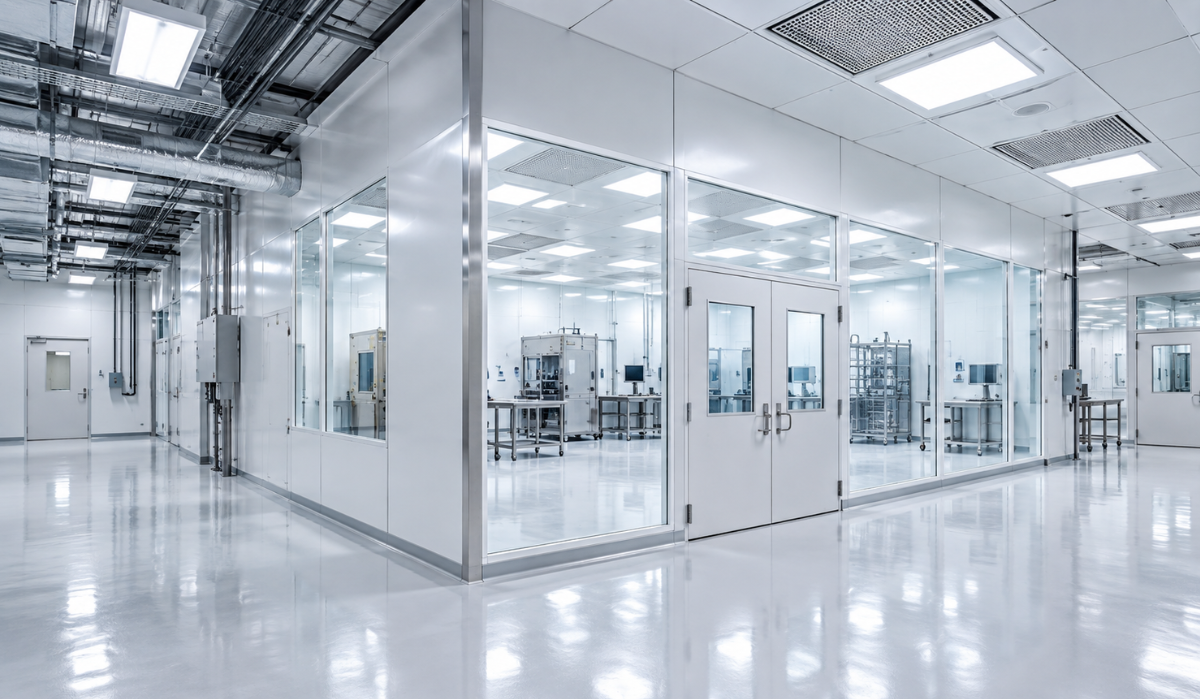
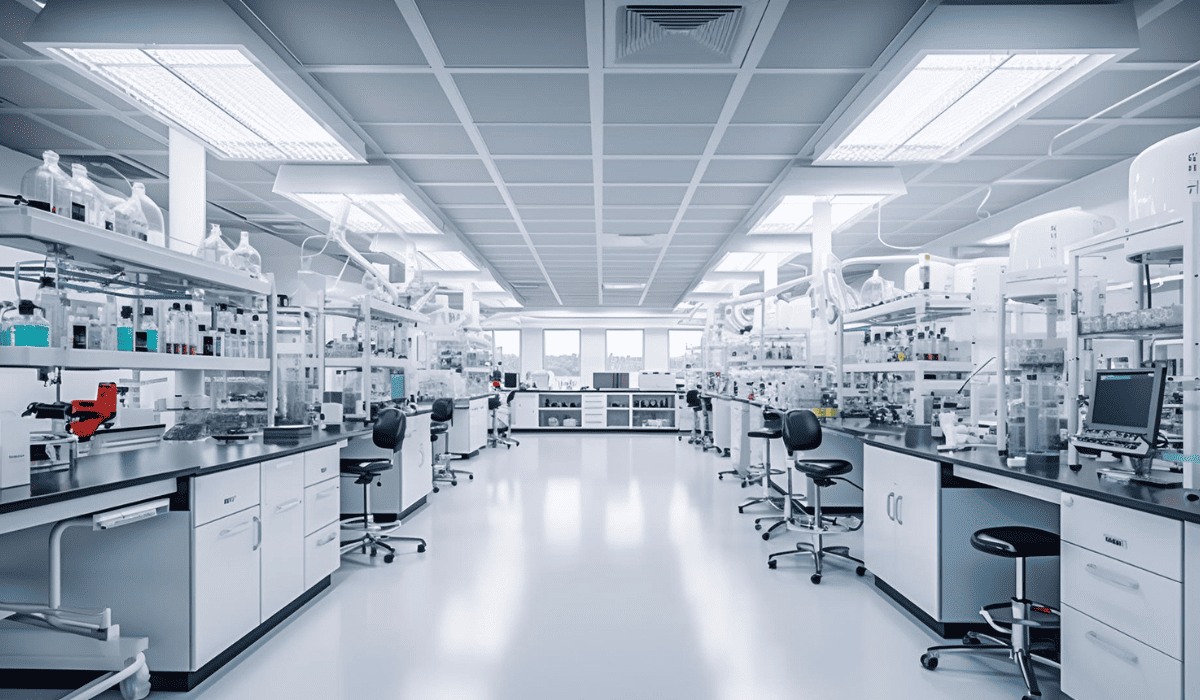
Cleanroom HVAC and filtration systems are some of the most important parts of any controlled environment.
While walls, ceilings, and flooring help contain the space, the HVAC system is responsible for maintaining the cleanliness, airflow, temperature, humidity, and pressure needed for the cleanroom to function properly.
A cleanroom cannot meet ISO classification requirements without a properly designed HVAC and filtration system.
These systems work together to remove airborne contaminants, control environmental conditions, and protect sensitive products and processes.
Different cleanrooms require different HVAC designs depending on the industry, ISO classification, room size, and contamination risks involved.
Pharmaceutical, semiconductor, medical device, aerospace cleanrooms, and laboratory cleanrooms all have unique airflow and filtration requirements.
Why HVAC Matters in Cleanroom Design
Unlike a standard commercial HVAC system, a cleanroom HVAC system is designed to do much more than heat and cool a room.
Cleanroom HVAC systems are responsible for:
- Controlling airborne particles
- Maintaining room pressure
- Supporting air change rates
- Regulating temperature
- Controlling humidity
- Preventing contamination
- Supporting ISO classification requirements
- Creating safe airflow patterns
Without the correct HVAC system, a cleanroom may struggle to maintain proper cleanliness levels and could fail testing or certification.
The HVAC system also plays a major role in long-term cleanroom performance.
Even a well-built cleanroom can develop contamination problems if the airflow, filtration, or pressure systems are not functioning correctly.
How Cleanroom Airflow Works
Cleanroom airflow is designed to move contaminants away from sensitive areas and keep airborne particles under control.
In most cleanrooms, filtered air is supplied from the ceiling and moves downward toward return air grilles located near the floor or lower wall sections.
This continuous movement helps remove particles generated by people, equipment, or manufacturing processes.
The type of airflow used depends on the cleanroom classification and application.
Common airflow patterns include:
- Unidirectional airflow
- Non-unidirectional airflow
- Laminar airflow
- Turbulent airflow
Unidirectional airflow, often called laminar airflow, moves in a single direction at a consistent speed.
This type of airflow is commonly used in stricter cleanrooms such as ISO Class 5 environments because it provides better contamination control.
Non-unidirectional airflow mixes air within the room and is often used in ISO Class 7 or ISO Class 8 cleanrooms where contamination control requirements are less strict.
Understanding Air Changes Per Hour
Air changes per hour, often called ACH, refer to the number of times the air inside a cleanroom is replaced in one hour.
Cleanrooms generally require much higher air change rates than standard commercial spaces.
More air changes help remove airborne particles more quickly and maintain the required cleanliness level.
Typical air change rates vary depending on the ISO class:
- ISO Class 8 cleanrooms may require 10 to 25 air changes per hour
- ISO Class 7 cleanrooms may require 30 to 60 air changes per hour
- ISO Class 5 cleanrooms may require 240 air changes per hour or more
Higher air change rates are usually needed for cleaner environments because there is less tolerance for airborne contamination.
However, increasing air changes also increases energy use, which is why HVAC systems must be carefully designed to balance cleanliness and operating efficiency.
HEPA Filtration in Cleanrooms
HEPA filtration is one of the most important components of a cleanroom HVAC system. HEPA stands for High Efficiency Particulate Air.
HEPA filters are designed to remove at least 99.97 percent of airborne particles at specific particle sizes.
These filters capture dust, fibers, microorganisms, and other contaminants before they enter the cleanroom environment.
HEPA filters are commonly used in:
- Pharmaceutical cleanrooms
- Medical device manufacturing facilities
- Laboratories
- Electronics manufacturing spaces
- Food processing cleanrooms
Most cleanrooms use multiple HEPA filters throughout the HVAC system to ensure consistent air quality and contamination control.
The number and size of filters required depend on the cleanroom size, airflow needs, and ISO classification.
ULPA Filtration Systems
ULPA filters provide even higher levels of filtration than HEPA filters. ULPA stands for Ultra Low Penetration Air.
These filters are designed to capture extremely small airborne particles and are commonly used in environments with stricter cleanliness requirements.
ULPA filtration is often found in:
- Semiconductor manufacturing
- Nanotechnology facilities
- Advanced electronics production
- Precision optics manufacturing
- Aerospace cleanrooms
Because ULPA filters are more restrictive, they often require more powerful HVAC systems to maintain airflow and pressure.
Not every cleanroom needs ULPA filtration. In many industries, HEPA filtration provides enough contamination control to meet ISO requirements.
Positive and Negative Pressure in Cleanrooms
Room pressure is another important part of cleanroom HVAC design.
Most cleanrooms use positive pressure, which means the air pressure inside the cleanroom is higher than the pressure in surrounding spaces.
This helps prevent dirty air from entering the room when doors are opened.
Positive pressure is commonly used in:
- Pharmaceutical cleanrooms
- Medical device facilities
- Electronics manufacturing cleanrooms
- Sterile production areas
Negative pressure is sometimes used in environments where contaminants need to be contained inside the room rather than kept out.
Negative pressure is commonly used in:
- Hazardous material handling areas
- Isolation rooms
- Certain laboratory environments
- Containment cleanrooms
Maintaining the correct pressure relationship between rooms is critical because even small pressure changes can affect contamination control and certification performance.
Temperature and Humidity Control
Temperature and humidity are closely monitored in cleanrooms because environmental changes can affect products, equipment, and personnel comfort.
For example, excess humidity may damage sensitive electronics or create microbial growth risks in pharmaceutical environments.
Low humidity can increase static electricity, which may be a concern in semiconductor or electronics manufacturing.
Temperature control is also important because certain processes require stable conditions to ensure product quality and performance.
Cleanroom HVAC systems are designed to maintain consistent environmental conditions throughout the space.
The exact temperature and humidity levels depend on the industry and the processes being performed.
Common HVAC Challenges in Cleanrooms
Cleanroom HVAC systems can face several operational challenges if they are not designed, installed, or maintained properly.
Common issues include:
- Poor airflow balance
- Uneven room pressure
- Dirty or clogged filters
- Inadequate air changes
- Temperature fluctuations
- Humidity control problems
- Air leakage around doors or wall penetrations
- Improperly sized equipment
These issues can lead to contamination risks, failed certification tests, increased operating costs, and reduced cleanroom performance.
Routine maintenance is essential for keeping HVAC systems working properly. Filters should be inspected regularly, airflow should be tested, and temperature and humidity controls should be monitored to ensure the cleanroom continues meeting ISO standards.
The Importance of Filtration Maintenance
Even the best cleanroom filtration system can lose performance over time if filters are not maintained properly.
HEPA and ULPA filters should be inspected regularly for:
- Damage
- Leaks
- Clogged media
- Worn gaskets
- Improper sealing
- Reduced airflow
Dirty filters can restrict airflow and reduce system efficiency. Leaking filters may allow contaminants to bypass the filtration system and enter the cleanroom.
Routine testing and maintenance help identify these issues early before they affect cleanroom performance or certification results.
Conclusion
HVAC and filtration systems are essential to cleanroom performance because they control airflow, particle removal, pressure, temperature, and humidity.
Without a properly designed system, a cleanroom may not be able to maintain its required ISO classification or pass certification testing.
HEPA and ULPA filtration, air change rates, pressure control, and environmental monitoring all work together to support contamination control and long-term cleanroom performance.
Ultrapure Technology helps businesses design cleanroom HVAC and filtration systems that align with industry requirements, ISO classifications, and operational goals.
FAQs
What is the difference between HEPA and ULPA filters?
HEPA filters remove at least 99.97 percent of airborne particles, while ULPA filters capture even smaller particles for stricter cleanroom environments.
Why are air changes important in a cleanroom?
Air changes help remove airborne particles and maintain cleanliness levels. Higher ISO classifications usually require more air changes per hour.
What does positive pressure do in a cleanroom?
Positive pressure helps prevent contaminated air from entering the cleanroom when doors are opened or people move between spaces.
Can dirty filters affect cleanroom performance?
Dirty or clogged filters can reduce airflow, lower filtration efficiency, and increase the risk of contamination.
Why is humidity control important in a cleanroom?
Humidity control helps protect sensitive products, reduce static electricity, and prevent moisture-related contamination issues.