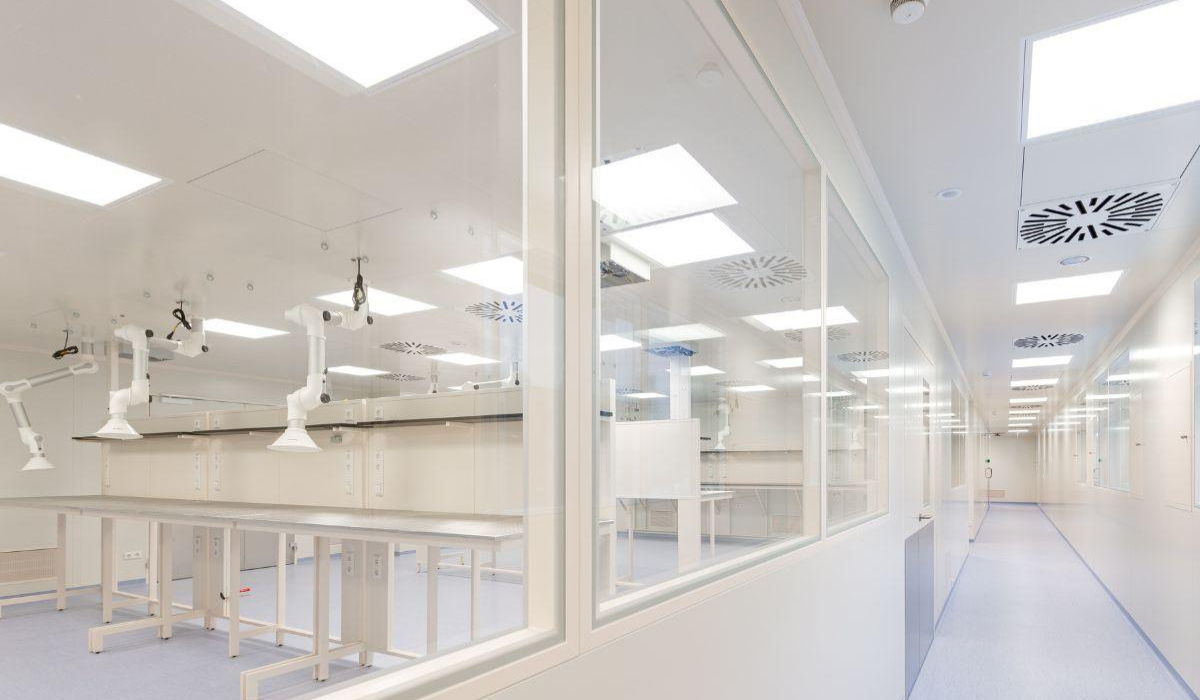
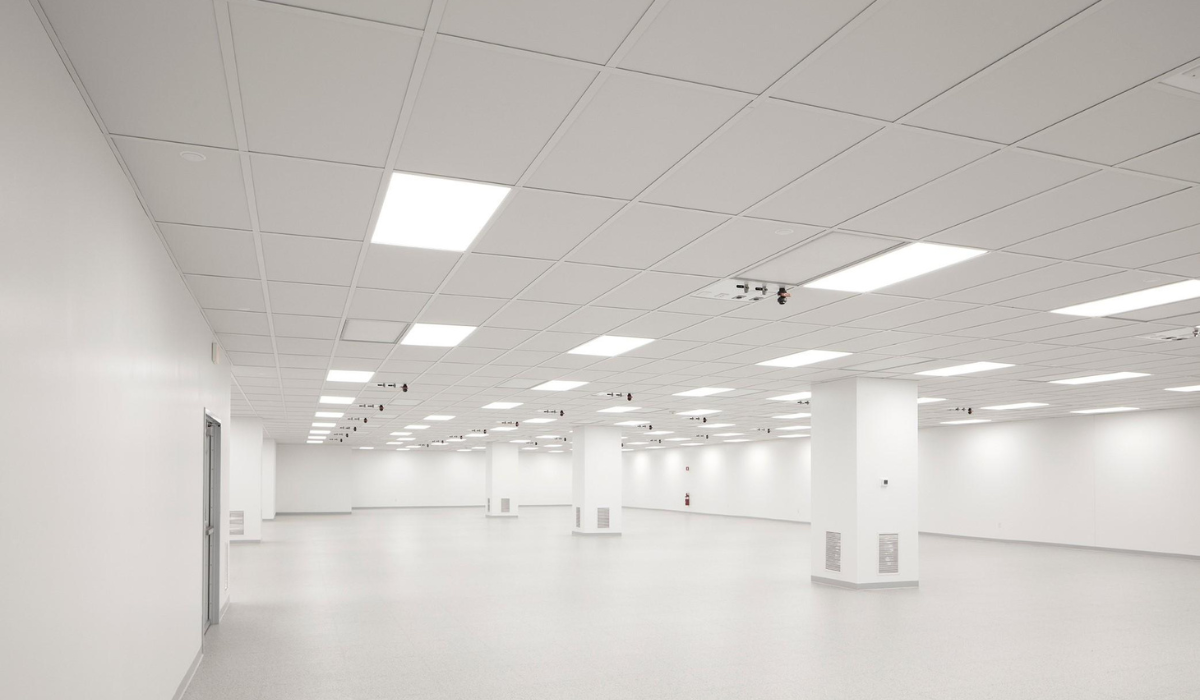
ISO cleanroom classifications are used to define the maximum allowable amount of airborne particles within a controlled environment.
These standards help businesses determine the right cleanroom design, filtration system, airflow requirements, and contamination controls for their specific industry.
Many businesses have questions about ISO cleanroom standards before starting a new cleanroom project.
Below are some of the most common questions related to ISO classifications, particle counts, airflow, and cleanroom requirements.
What is an ISO cleanroom?
An ISO cleanroom is a controlled environment design to limit airborne particles and contamination.
Cleanrooms are classified according to ISO 14644 standards, which define how many particles are allowed in the air at different cleanliness levels.
Lower ISO class numbers indicate cleaner environments with stricter contamination limits.
What is the difference between ISO 5 and ISO 7 cleanrooms?
ISO 5 cleanrooms allow far fewer airborne particles than ISO 7 cleanrooms and are used for more sensitive processes.
ISO 5 environments are often used in sterile pharmaceutical manufacturing, aseptic filling, and medical device production, while ISO 7 cleanrooms are commonly used for support spaces, buffer rooms, electronics manufacturing, and less critical operations.
Which ISO cleanroom classification is the cleanest?
ISO Class 1 is one of the cleanest controlled environments and allows the fewest airborne particles.
These cleanrooms are typically used in advanced semiconductor manufacturing, nanotechnology, aerospace, and precision optics applications where even microscopic contamination can affect product quality.
What industries use ISO cleanrooms?
ISO cleanrooms are used across many industries that need contamination control and environmental stability.
Common industries include:
- Pharmaceutical manufacturing
- Medical device production
- Biotechnology
- Semiconductor manufacturing
- Electronics assembly
- Aerospace
- Laboratory research
- Food processing
Each industry may require a different ISO classification depending on the products being handled and the sensitivity of the process.
What do particle counts mean in a cleanroom?
Particle counts measure the number of airborne particles present within the cleanroom.
ISO classifications are based on the maximum allowable number of particles of specific sizes in a cubic meter of air. Lower particle counts are required for cleaner environments with stricter ISO classifications.
Why do lower ISO numbers mean cleaner rooms?
ISO standards use lower numbers to represent stricter cleanliness levels.
For example, ISO Class 5 cleanrooms allow fewer airborne particles than ISO Class 7 cleanrooms. As the ISO number increases, the number of particles allowed in the room also increases.
How many air changes does a cleanroom need?
The number of air changes per hour depends on the required ISO classification and the contamination risks involved.
ISO Class 8 cleanrooms may require around 10 to 25 air changes per hour, while ISO Class 7 cleanrooms often require 30 to 60 air changes. ISO Class 5 cleanrooms may require much higher air change rates to maintain cleanliness standards.
Why are air changes important in cleanrooms?
Air changes help remove airborne particles and keep contamination levels under control.
Higher air change rates allow the HVAC system to replace dirty air more quickly, which helps the cleanroom maintain the required ISO classification and environmental stability.
What type of filters are used in ISO cleanrooms?
Most ISO cleanrooms use HEPA filters to remove airborne contaminants from the air.
Stricter cleanrooms such as ISO Class 3 or ISO Class 5 environments may also use ULPA filters, which can capture even smaller particles than HEPA filters.
What is positive pressure in a cleanroom?
Positive pressure means the air pressure inside the cleanroom is higher than the pressure in nearby spaces.
This helps keep contaminated air from entering the cleanroom when doors are opened or people move between rooms.
Can multiple ISO classifications exist in one facility?
Many facilities use multiple ISO classifications in different areas based on the cleanliness requirements of each process.
For example, a pharmaceutical facility may use ISO Class 5 spaces for sterile production, ISO Class 7 rooms for support areas, and ISO Class 8 spaces for gowning rooms or storage areas.
What affects the cost of an ISO cleanroom?
Cleanroom costs are influenced by room size, ISO classification, HVAC complexity, filtration systems, utility needs, construction materials, and environmental controls.
Stricter ISO classifications usually require more filtration, higher air change rates, and more advanced HVAC systems, which can increase construction and operating costs.
How often should ISO cleanrooms be tested?
ISO cleanrooms should be tested regularly to confirm they continue meeting particle count, airflow, pressure, temperature, humidity, and filtration requirements.
Many facilities schedule annual or semi-annual testing depending on their industry, ISO classification, and regulatory obligations.
Why is HVAC important for ISO cleanrooms?
HVAC systems control airflow, pressure, temperature, humidity, and air changes, all of which are necessary to maintain ISO cleanliness standards.
Without the proper HVAC design, the cleanroom may not be able to achieve or maintain its required ISO classification.
Can an existing room be upgraded to meet ISO cleanroom standards?
Existing rooms can often be upgraded with cleanroom wall systems, HVAC improvements, HEPA filtration, and pressure controls to meet specific ISO classification requirements.