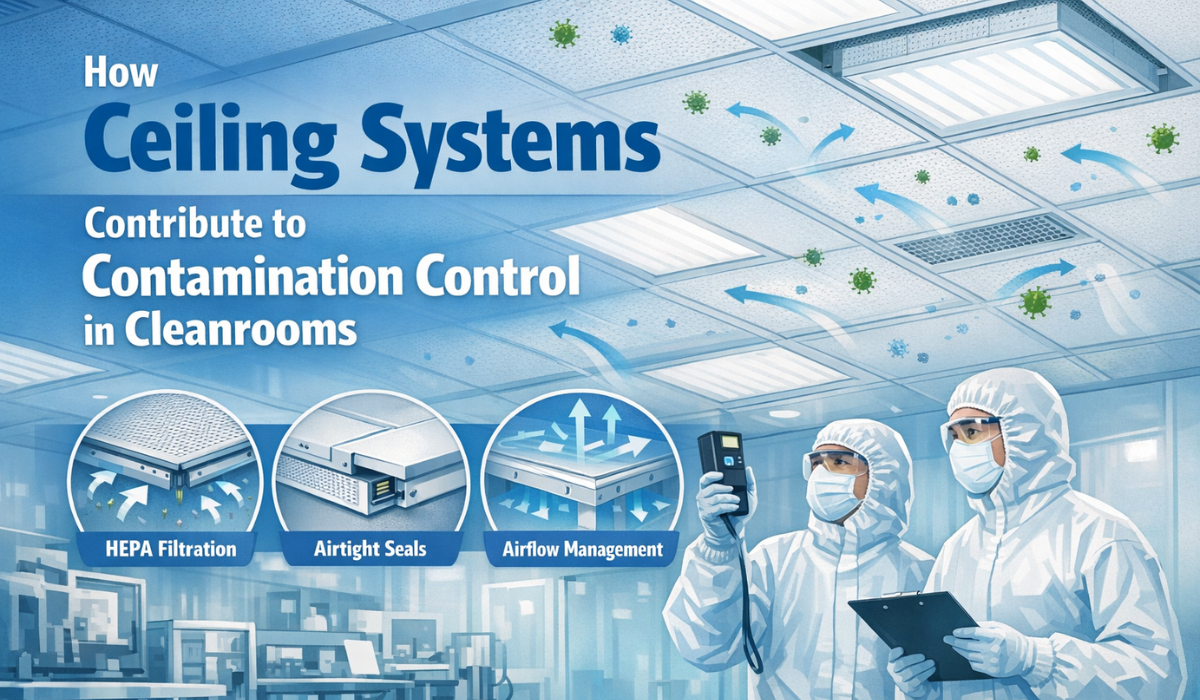
Cleanroom ceiling systems contamination control is one of the most critical yet often overlooked factors in maintaining sterile and controlled environments.
Industries such as pharmaceuticals, biotechnology, aerospace, and semiconductor manufacturing rely heavily on cleanrooms to ensure product integrity and regulatory compliance.
While walls and flooring contribute to cleanliness, the ceiling system plays a central role in controlling airborne particles, airflow patterns, and filtration efficiency.
Modern cleanroom ceiling systems are engineered to do far more than provide structural support.
They integrate advanced cleanroom air filtration systems, facilitate cleanroom airflow management, and maintain strict environmental conditions required by ISO cleanroom requirements.
These systems act as a functional interface between HVAC infrastructure and the cleanroom workspace, ensuring that air entering the environment is properly filtered and evenly distributed.
Understanding how ceiling systems contribute to contamination control is essential for designing high-performance cleanrooms that meet today’s stringent standards.
What Are Cleanroom Ceiling Systems?
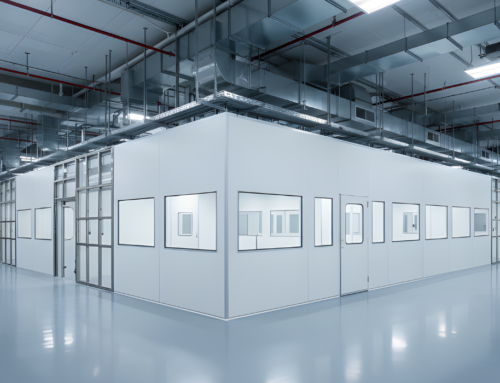
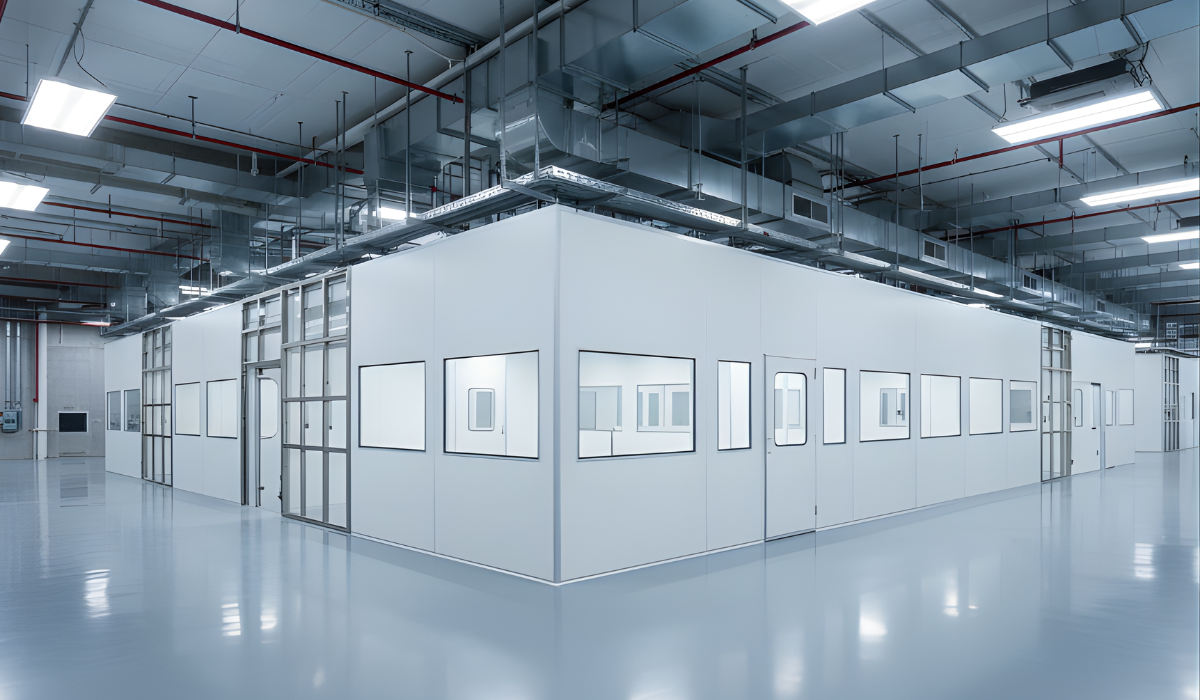
Cleanroom ceiling systems are specialized overhead structures designed to support contamination-free environments.
Unlike traditional ceilings, these systems are built with precision-engineered components that prevent particle infiltration and support critical cleanroom operations.
A typical cleanroom ceiling system consists of several integrated elements:
- Structural grid framework for support and alignment
- Cleanroom ceiling panels that create a sealed, non-porous surface
- Integrated HEPA filter ceiling systems for air purification
- Lighting fixtures designed for cleanroom compatibility
- Air diffusers and return air pathways
These components work together to form a sealed barrier that prevents contaminants from entering the cleanroom from above.
Additionally, a modular cleanroom ceiling design allows facilities to adapt to evolving operational needs, making upgrades or expansions more efficient.
By incorporating durable cleanroom construction materials, these ceiling systems ensure long-term performance while maintaining strict hygiene standards.
The Role of Ceiling Systems in Contamination Control in Cleanrooms
Ceiling systems are a cornerstone of contamination control in cleanrooms because they directly influence how air is filtered, distributed, and maintained within the environment.
One of their primary roles is to support cleanroom air filtration systems, particularly through the integration of ceiling-mounted HEPA or ULPA filters.
These filters ensure that incoming air is purified before entering the workspace.
In addition, ceiling systems help:
- Maintain consistent airflow patterns
- Prevent particle accumulation on overhead surfaces
- Support pressure differentials between cleanroom zones
- Reduce the risk of airborne contamination
By working in conjunction with cleanroom HVAC systems, ceiling systems create a controlled airflow environment that minimizes turbulence and ensures that contaminants are continuously removed.
This level of control is essential for industries where even microscopic particles can compromise product quality or safety.
Cleanroom Ceiling Panels and Their Impact
Cleanroom ceiling panels play a vital role in maintaining cleanliness and structural integrity within the cleanroom environment.
These panels are specifically designed to meet the stringent demands of contamination-sensitive applications.
Typically made from materials such as powder-coated steel, aluminum, or specialized composite materials, these panels offer several advantages:
- Non-porous surfaces that prevent microbial growth
- Smooth finishes that allow easy cleaning and disinfection
- Resistance to chemicals and environmental wear
These features are critical for effective cleanroom particle control, as they minimize the risk of particles being generated or trapped within the ceiling structure.
Additionally, the seamless integration of ceiling panels with lighting and filtration systems ensures that there are no gaps or weak points where contaminants can accumulate.
This design approach enhances both performance and durability, making ceiling panels a key component of cleanroom infrastructure.
HEPA Filter Ceiling Systems and Air Filtration
The integration of HEPA filter ceiling systems is one of the most important aspects of cleanroom design.
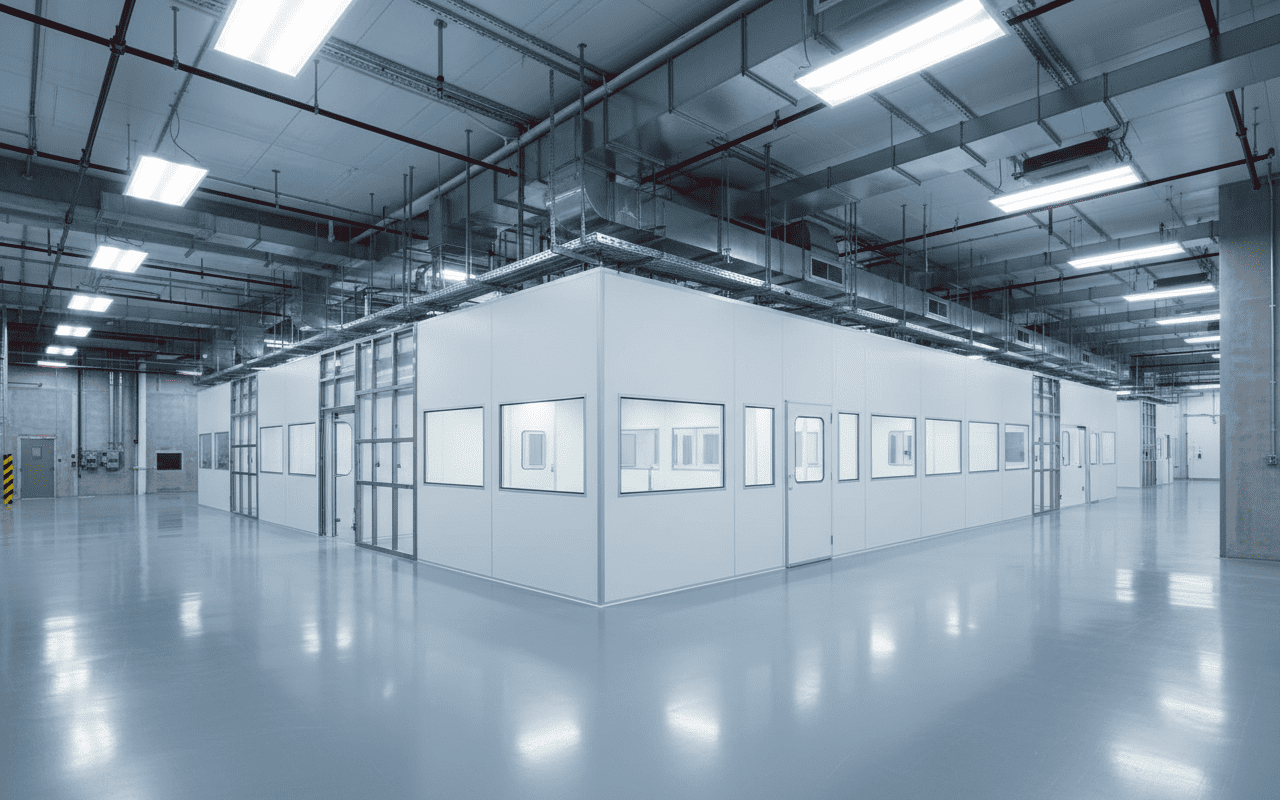
These systems are responsible for removing airborne particles and maintaining high levels of air purity.
HEPA filters are capable of capturing 99.97% of particles as small as 0.3 microns, making them essential for industries that require ultra-clean environments.
In more advanced applications, ULPA filters provide even higher filtration efficiency.
By incorporating these filters into the ceiling, cleanroom air filtration systems can deliver purified air directly into the workspace.
This approach ensures that contaminants are continuously removed and that clean air is evenly distributed.
Ceiling-mounted filtration systems also support compliance with ISO cleanroom requirements, as they help maintain the air cleanliness levels necessary for different cleanroom classifications.
Laminar Airflow and Ceiling Design
A laminar airflow ceiling is designed to create a uniform, unidirectional flow of filtered air.
This type of airflow is critical for minimizing turbulence and preventing the spread of contaminants.
In a laminar airflow system, air moves in parallel streams at a consistent velocity.
This ensures that particles are pushed downward and away from critical work areas, where they can be safely removed through return air systems.
The benefits of laminar airflow include:
- Improved contamination control
- Reduced risk of cross-contamination
- Enhanced process reliability
This design is widely used in high-precision industries such as semiconductor manufacturing, pharmaceutical production, and medical device assembly.
Modular Cleanroom Ceiling Systems for Flexibility
A modular cleanroom ceiling provides a flexible and scalable solution for modern cleanroom environments.
These systems are designed to accommodate changes in layout, equipment, and operational requirements without requiring extensive reconstruction.
Key advantages include:
- Faster installation compared to traditional systems
- Ease of maintenance and component replacement
- Adaptability for future upgrades
Modular ceiling systems also integrate seamlessly with broader cleanroom infrastructure solutions, allowing facilities to maintain efficiency while meeting evolving industry standards.
This flexibility is particularly valuable in industries where technology and regulations are constantly changing.
Compliance with ISO Cleanroom Requirements
Meeting ISO cleanroom requirements is essential for ensuring product quality and regulatory compliance.
Ceiling systems play a significant role in achieving these standards by supporting key environmental controls.
These include:
- Maintaining air cleanliness levels
- Controlling airflow velocity and direction
- Ensuring proper pressure differentials
A well-designed ceiling system helps cleanrooms meet ISO classifications, reducing the risk of contamination and ensuring consistent performance.
Failure to implement compliant ceiling systems can lead to operational inefficiencies, increased contamination risks, and potential regulatory issues.
Integration with Cleanroom HVAC Systems
Ceiling systems are closely integrated with cleanroom HVAC systems, forming a unified approach to environmental control.
This integration ensures that clean air is delivered efficiently and that environmental conditions remain stable.
Ceiling systems support HVAC operations by:
- Distributing filtered air evenly throughout the cleanroom
- Facilitating return air pathways
- Maintaining temperature and humidity control
This collaboration between ceiling systems and HVAC infrastructure enhances overall performance while reducing energy consumption and operational costs.
Key Benefits of Cleanroom Ceiling Systems
High-quality cleanroom ceiling systems provide numerous benefits that contribute to the efficiency and reliability of cleanroom operations.
These benefits include:
- Enhanced cleanroom airflow management for consistent air distribution
- Improved cleanroom particle control to minimize contamination risks
- Compliance with regulatory and industry standards
- Long-term durability and reduced maintenance requirements
- Seamless integration with filtration and HVAC systems
By investing in advanced ceiling systems, organizations can achieve better performance, improved safety, and greater operational efficiency.
Why Choose UltraPure Technology for Cleanroom Ceiling Systems
UltraPure Technology delivers advanced cleanroom ceiling systems designed to meet the unique needs of specialized industries.
Their solutions combine innovative engineering with high-quality materials to ensure optimal contamination control and long-term reliability.
With expertise in cleanroom infrastructure solutions, UltraPure Technology offers:
- Custom-designed ceiling systems tailored to specific applications
- Integrated filtration and airflow solutions
- Compliance with industry standards and regulations
Conclusion
Ceiling systems are a fundamental component of cleanroom ceiling systems contamination control, directly impacting airflow, filtration, and compliance.
From cleanroom ceiling panels to HEPA filter ceiling systems, each element plays a vital role in maintaining a controlled environment.
By prioritizing high-quality ceiling systems, organizations can ensure consistent performance, reduce contamination risks, and meet stringent regulatory requirements.
Cleanroom ceilings are not just structural elements, they are essential to achieving operational excellence.
Build a Cleaner, More Efficient Environment with UltraPure Technology
If you’re looking to improve contamination control and optimize your cleanroom performance, UltraPure Technology provides industry-leading cleanroom ceiling systems tailored to your needs.
Enhance airflow, improve filtration efficiency, and ensure compliance with expertly designed solutions built for long-term success.
FAQs
What are cleanroom ceiling systems?
Cleanroom ceiling systems are engineered structures designed to support contamination-free environments. They integrate filtration units, lighting, and airflow components to maintain air purity and prevent external contaminants from entering the cleanroom space.
How do ceiling systems help with contamination control in cleanrooms?
Ceiling systems contribute to contamination control in cleanrooms by managing airflow and housing filtration systems. They ensure that clean, filtered air is distributed evenly while preventing particles from accumulating or entering the controlled environment.
What materials are commonly used in cleanroom ceiling panels?
Cleanroom ceiling panels are typically made from materials like coated steel, aluminum, or specialized composites. These materials are non-porous, easy to clean, and resistant to chemicals, making them ideal for maintaining sterile conditions.
What is the purpose of HEPA filter ceiling systems?
HEPA filter ceiling systems remove airborne contaminants by capturing particles as small as 0.3 microns. They are essential for maintaining air quality and ensuring compliance with cleanroom standards in industries that require high levels of cleanliness.
What is laminar airflow in cleanroom ceilings?
Laminar airflow refers to a unidirectional flow of air that moves in parallel streams. This type of airflow minimizes turbulence and helps prevent contaminants from spreading, ensuring a controlled and clean environment.
Why are modular cleanroom ceiling systems beneficial?
Modular cleanroom ceiling systems offer flexibility and scalability. They allow for easy modifications, maintenance, and upgrades, making them ideal for facilities that need to adapt to changing requirements or technologies.
How do ceiling systems support ISO cleanroom requirements?
Ceiling systems help meet ISO cleanroom requirements by maintaining air cleanliness levels, supporting airflow control, and ensuring proper pressure differentials. They are essential for achieving and maintaining compliance with cleanroom standards.
How do cleanroom ceiling systems integrate with HVAC systems?
Cleanroom ceiling systems work with HVAC systems to distribute filtered air, regulate temperature, and control humidity. This integration ensures consistent environmental conditions and enhances overall contamination control.
What are the long-term benefits of investing in cleanroom ceiling systems?
Investing in high-quality cleanroom ceiling systems improves airflow management, reduces contamination risks, and ensures regulatory compliance. They also offer durability, lower maintenance costs, and improved operational efficiency over time.