Integrating cleanrooms without disrupting operations presents a critical challenge for facilities that depend on continuous production and strict environmental control.
Many organizations cannot pause manufacturing, research, or assembly processes even when expanding or upgrading cleanroom infrastructure.
Industries such as semiconductor manufacturing, pharmaceuticals, biotechnology, aerospace, and medical device production rely on uninterrupted operations to meet demand and regulatory expectations.
Cleanroom integration in existing facilities introduces complexity because construction activity occurs alongside live processes, occupied spaces, and sensitive equipment.
Risks include airborne particle generation, vibration, airflow disruption, and utility interference, all of which can affect product integrity and compliance.
Cleanroom construction in occupied buildings requires a coordinated approach that balances engineering precision with operational stability.
This guide explains how operational continuity during cleanroom installation can be achieved through careful planning, phased cleanroom construction, contamination control strategies, and disciplined validation processes.
Why Cleanroom Integration Is Challenging in Active Facilities
Cleanroom integration within active facilities presents a unique set of challenges that extend beyond standard construction concerns.
These environments must continue operating under strict performance and compliance requirements, leaving little room for disruption or error.
Construction activities introduce variables that can directly impact environmental stability, process reliability, and regulatory adherence.
Understanding the core challenges associated with integrating cleanrooms into operational spaces helps organizations plan effectively, reduce risk, and maintain control throughout the construction process.
Continuous Operations and Construction Constraints
Active facilities are designed for consistent output with limited tolerance for disruption.
Introducing cleanroom installation without downtime demands strict control over noise, dust, vibration, and access.
Even minor environmental changes can affect sensitive manufacturing or research processes.
Regulatory and Compliance Requirements
Many cleanrooms operate under ISO classifications, FDA regulations, or GMP standards.
Cleanroom retrofit challenges increase when construction activity overlaps with regulated operations.
Environmental conditions must remain stable and documented throughout the project lifecycle.
Existing Infrastructure Limitations
Older facilities may have limited ceiling heights, restricted mechanical capacity, or aging electrical systems.
Cleanroom construction planning must adapt new systems to existing infrastructure without compromising performance or reliability.
Early Planning Supports Non-Disruptive Cleanroom Integration
Early planning plays a critical role in ensuring cleanroom integration progresses without disrupting ongoing operations.
Before construction begins, facilities must evaluate existing conditions, define operational priorities, and establish controls that protect sensitive processes.
A structured planning approach allows engineering teams to anticipate risks, coordinate stakeholders, and design integration strategies that maintain environmental stability.
When planning is addressed early, cleanroom construction activities can proceed in a controlled manner that supports operational continuity and regulatory compliance.
Facility Readiness Assessment
A comprehensive facility assessment evaluates airflow patterns, pressure relationships, contamination pathways, and utility availability.
Understanding existing conditions supports cleanroom integration in existing facilities without introducing unnecessary risk.
Cross-Functional Coordination
Operational continuity during cleanroom installation depends on close collaboration between operations teams, engineers, quality personnel, and contractors.
Construction schedules align with production priorities to reduce exposure to sensitive processes.
Identification of Protected Operational Zones
Certain production areas must remain fully functional at all times.
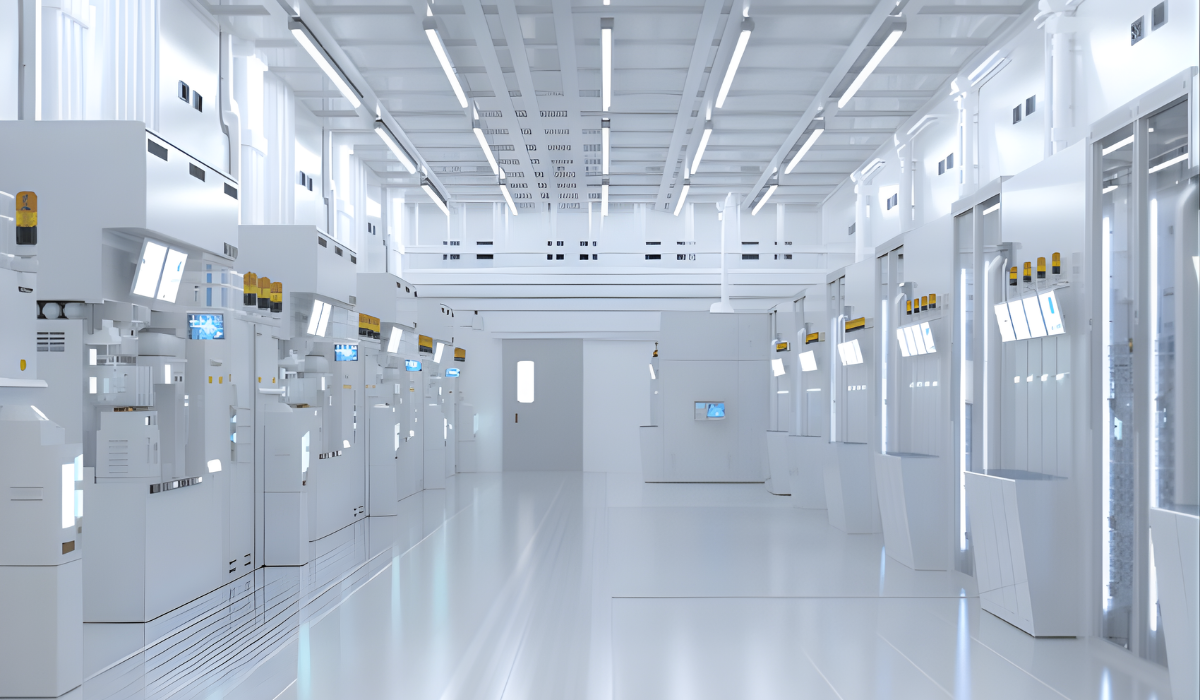
These zones require enhanced protection, controlled access, and buffer areas to prevent construction-related interference.
Phased Construction Strategies That Maintain Operations
Phased construction strategies provide a practical approach for integrating cleanrooms into facilities that must remain operational throughout the build process.
By breaking the project into manageable stages, construction activity is controlled, predictable, and isolated from critical operations.
This method reduces risk by limiting exposure to active environments and allowing environmental controls to remain stable.
When executed correctly, phased construction supports cleanroom installation without downtime and maintains continuity across production, research, or manufacturing activities.
Zone-Based Construction Planning
Phased cleanroom construction divides work into controlled sections.
Each phase progresses independently, allowing operations to continue as new areas are built, tested, and activated.
Off-Hours Construction Scheduling
Construction activities often occur during nights or weekends to reduce interaction with active operations.
This approach minimizes disruption and supports cleanroom installation without downtime.
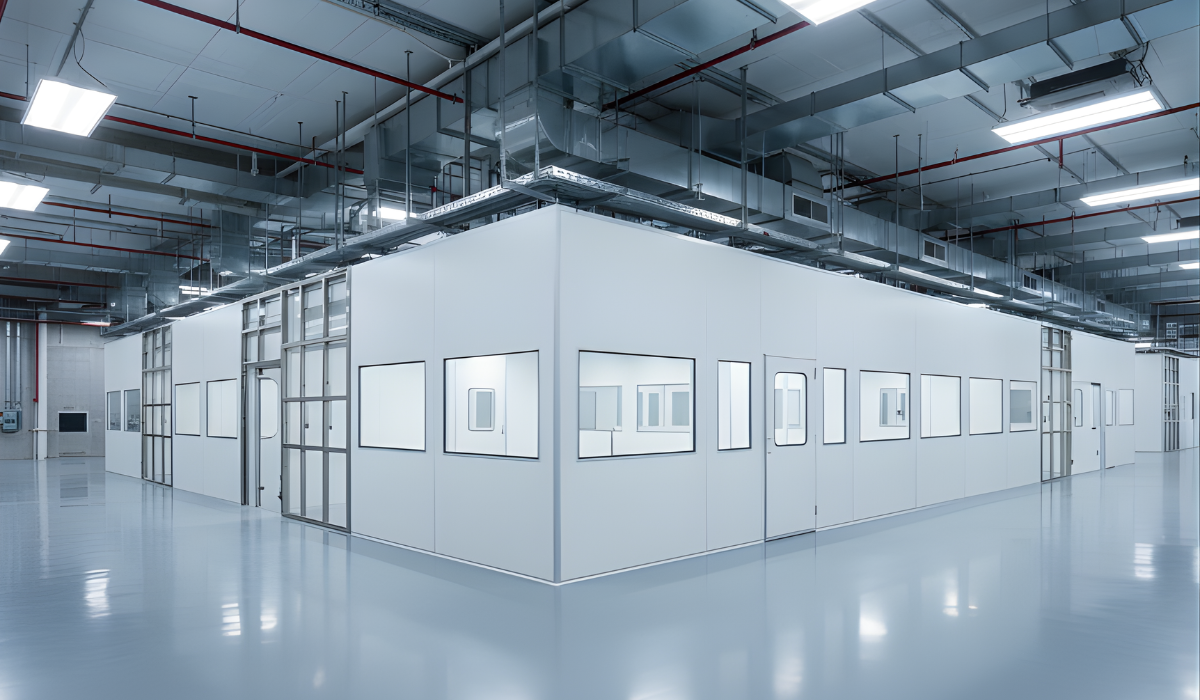
Temporary Containment Systems
Temporary barriers and containment systems isolate construction zones.
These systems play a critical role in contamination control during cleanroom construction by preventing particle migration.
Contamination Control During Cleanroom Construction
Contamination control remains one of the most critical considerations during cleanroom construction within active facilities.
Construction activity introduces particles, airflow disturbances, and environmental variability that can affect sensitive processes if not properly managed.
A disciplined contamination control strategy establishes clear safeguards that protect operational areas and preserve cleanroom conditions.
By implementing defined controls before work begins, facilities maintain environmental integrity throughout the construction process.
Airflow Control and Pressure Management
Cleanroom airflow and pressure balancing prevent contaminants from entering controlled spaces.
Maintaining proper pressure relationships between construction zones and operational areas protects clean environments.
Material Handling Protocols
All construction materials entering occupied buildings follow strict cleaning, sealing, and transport procedures.
These protocols reduce contamination risk and maintain environmental stability.
Continuous Environmental Monitoring
Real-time monitoring systems track particle counts, pressure differentials, and airflow conditions.
Immediate response to deviations helps maintain operational stability.
HVAC, Airflow, and Utilities Integration Without Downtime
Integrating HVAC, airflow, and utility systems into an active facility requires careful coordination to preserve environmental stability and operational reliability.
These systems form the foundation of cleanroom performance and must remain functional throughout construction activities.
A phased integration strategy ensures critical services continue operating without interruption and supports long-term system performance.
Proper planning and execution allow new systems to be introduced without compromising temperature control, airflow balance, or utility availability.
Temporary HVAC Support
Temporary air handling units maintain temperature and humidity control during installation of permanent systems.
This approach supports cleanroom installation without downtime.
Mechanical System Tie-Ins
Connecting new HVAC components to live systems requires redundancy planning and precise execution. Services remain uninterrupted through phased integration.
Electrical and Control System Integration
Electrical and automation systems are commissioned incrementally. Phased activation reduces risk and ensures compatibility with existing building management systems.
Modular Cleanrooms as a Low-Disruption Option
Modular cleanroom systems reduce on-site construction activity through off-site fabrication. Faster installation timelines support operational continuity during cleanroom installation.
Appropriate Use Cases for Modular Systems
Facilities with limited space or accelerated timelines often benefit from modular solutions.
These systems still require proper airflow design and integration planning.
Hybrid Modular and Custom Designs
Hybrid approaches combine modular components with custom construction to meet performance requirements and minimize disruption.
Validation and Commissioning in Active Facilities
Validation and commissioning are essential steps in cleanroom integration that confirm system performance, environmental control, and regulatory alignment.
In active facilities, these processes must be structured to protect ongoing operations and avoid unnecessary disruption.
A planned approach to validation and commissioning allows systems to be tested methodically and brought online in a controlled manner.
When executed correctly, facilities achieve compliance and operational stability without impacting production continuity.
Validation Planning
Validation strategies are developed early to avoid interference with production schedules.
Parallel testing approaches support certification without operational interruption.
Incremental Commissioning
Systems are commissioned in stages, allowing each component to be tested and verified before advancing to the next phase.
Documentation and Compliance
Detailed documentation supports regulatory compliance and audit readiness. Change management records provide long-term traceability.
Common Causes of Operational Disruption
Operational disruption during cleanroom integration is often the result of preventable planning and execution issues rather than unavoidable technical limitations.
When construction activities intersect with live operations, even small oversights can lead to contamination events, workflow interruptions, or compliance concerns.
Identifying common causes of disruption helps facilities implement controls that protect productivity and environmental integrity throughout the project.
Insufficient containment planning remains one of the most frequent challenges.
Inadequate barriers, poorly sealed temporary walls, or incorrect pressure relationships can allow particles to migrate into operational areas.
Without clearly defined containment strategies, construction zones may unintentionally affect adjacent clean environments, leading to corrective actions or temporary shutdowns.
Communication gaps between construction teams, operations staff, and quality personnel also contribute to disruption.
When schedules, access requirements, or environmental controls are not clearly aligned, construction activity may conflict with critical production processes.
Consistent coordination ensures that work sequencing, material movement, and system tie-ins occur without interfering with daily operations.
Rushed commissioning presents another significant risk.
Bringing systems online without sufficient testing or stabilization can result in airflow imbalance, temperature fluctuations, or control system errors.
These issues often surface after handover and may require rework that impacts active operations.
Incremental commissioning and verification reduce this risk by confirming performance at each stage.
Addressing cleanroom retrofit challenges early through detailed planning, containment design, and coordinated execution minimizes operational disruption.
Facilities that prioritize risk identification and disciplined implementation achieve smoother integration and maintain operational stability throughout the construction process.
Long-Term Stability After Cleanroom Integration
Long-term stability following cleanroom integration relies on more than successful construction and commissioning.
Once the cleanroom becomes operational, consistent performance depends on how well daily practices support the engineered systems.
Facilities that focus on operational discipline and preventive oversight are better positioned to maintain environmental control and compliance over time.
Staff training plays a critical role in sustaining cleanroom performance.
Personnel must understand cleanroom protocols, airflow principles, gowning procedures, and equipment usage to prevent unintended contamination.
Ongoing training ensures staff remain aligned with updated procedures and system changes introduced during integration.
Continuous environmental monitoring supports early detection of deviations that could affect cleanroom conditions.
Tracking particle levels, pressure differentials, temperature, and humidity allows facilities to identify trends and address issues before they escalate.
Consistent monitoring also supports regulatory documentation and audit readiness.
Proactive maintenance planning further reinforces cleanroom stability.
Scheduled inspections, filter replacements, and system performance checks help prevent unexpected failures that may disrupt operations.
Maintenance activities aligned with operational schedules reduce risk and support long-term system reliability.
Cleanrooms achieve sustained performance when operational practices remain closely aligned with engineered controls.
By integrating training, monitoring, and maintenance into daily operations, facilities protect cleanroom integrity and maintain stable performance well beyond initial integration.
Conclusion
Integrating cleanrooms into active facilities requires a disciplined approach that balances engineering precision with operational reliability.
Facilities that prioritize early planning, phased construction, contamination control, and coordinated system integration reduce the risk of disruption and maintain environmental stability throughout the process.
Each phase of integration plays a critical role in protecting productivity, compliance, and long-term performance.
Successful cleanroom integration extends beyond construction and commissioning.
Ongoing alignment between operational practices and engineered controls ensures cleanrooms continue to meet performance expectations.
Through structured planning, controlled execution, and continuous oversight, organizations can expand cleanroom capabilities without compromising existing operations.
Plan Your Cleanroom Integration With Confidence
Cleanroom integration within active facilities demands careful coordination, proven construction strategies, and precise environmental control.
At UltraPure Technology, we have skilled team to support your organization through every stage of cleanroom construction planning, phased execution, and system integration.
Reach out to discuss your facility requirements and explore cleanroom solutions designed to maintain operational continuity and regulatory alignment.
FAQs
Can cleanrooms be installed without stopping production?
Cleanrooms can be installed through phased construction, controlled containment, and strategic scheduling that protects active production areas. By isolating work zones and maintaining environmental controls, facilities are able to continue operations during installation.
What risks exist during cleanroom construction in occupied buildings?
Common risks include airborne contamination, airflow imbalance, vibration, and unintended utility interruptions. These risks are reduced through temporary containment systems, pressure control strategies, and continuous coordination between construction and operations teams.
How is contamination controlled during cleanroom construction?
Contamination control during cleanroom construction relies on pressure differentials, sealed barriers, controlled material movement, and strict access protocols. Continuous environmental monitoring ensures particle levels remain within acceptable limits.
Are modular cleanrooms effective for existing facilities?
Modular cleanroom systems offer reduced on-site construction activity and shorter installation timelines. These advantages make them suitable for existing facilities that require operational continuity and limited disruption during integration.
Why is airflow and pressure balancing important during integration?
Cleanroom airflow and pressure balancing prevent contaminants from moving into controlled spaces. Maintaining correct pressure relationships protects clean environments throughout construction and system commissioning.
How is validation handled in active facilities?
Validation in active facilities is completed through incremental testing and staged commissioning. This approach allows systems to be qualified without interfering with ongoing production or regulated operations.
How long does phased cleanroom construction typically take?
Project timelines depend on facility size, cleanroom classification, and integration complexity. Phased cleanroom construction may extend schedules slightly but preserves operational continuity during installation.
Can utilities be integrated without service interruptions?
Utility integration is achieved through redundancy planning, temporary systems, and phased tie-ins. These measures help maintain uninterrupted HVAC, electrical, and control system performance.
What steps reduce cleanroom retrofit challenges?
Cleanroom retrofit challenges are reduced through early facility assessments, cross-functional planning, detailed scheduling, and proactive risk management. Clear communication and containment strategies further support successful integration.