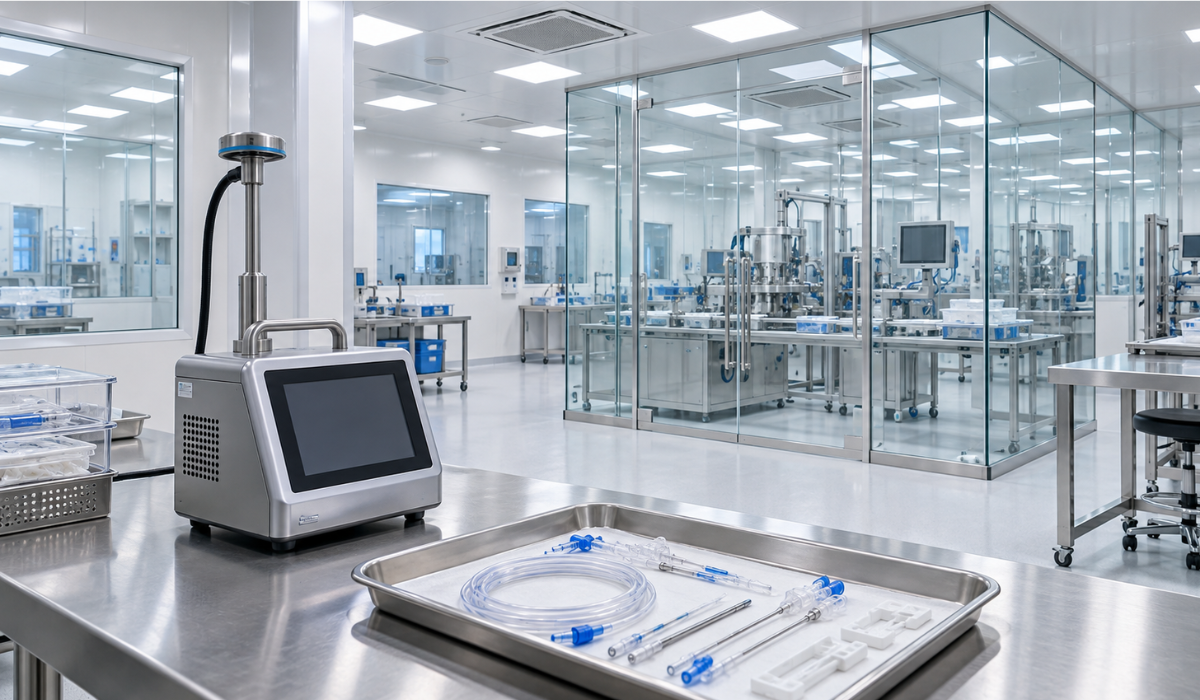
There is no single ISO classification required for every medical device cleanroom. ISO Class 7 and ISO Class 8 are commonly considered for medical device assembly, processing, and packaging, while ISO Class 5 or ISO Class 6 may be appropriate for exposed, highly contamination-sensitive operations. The correct classification must be justified by the device, process, contamination risks, sterilization method, and quality-system requirements.
- ISO Class 5 permits no more than 3,520 particles per cubic meter at 0.5 µm and larger.
- ISO Class 6 permits 35,200 particles per cubic meter at 0.5 µm and larger.
- ISO Class 7 permits 352,000 particles per cubic meter at 0.5 µm and larger.
- ISO Class 8 permits 3,520,000 particles per cubic meter at 0.5 µm and larger.
- FDA device classes I, II, and III do not directly correspond to ISO cleanroom Classes 1 through 9.
Table of Contents
- Why Can Medical Device Facilities Require Different Cleanroom Classes?
- What ISO classification is generally used for medical device manufacturing?
- How do ISO Class 5, 6, 7, and 8 cleanrooms compare?
- Does the FDA assign a cleanroom class to each medical device?
- How should a manufacturer select the correct classification?
- What should the classification assessment examine?
- Does terminal sterilization reduce the need for a cleanroom?
- Can different rooms in one facility have different ISO classes?
- What cleanroom features support the selected classification?
- What should manufacturers include in the design checklist?
- How is a medical device cleanroom classified and verified?
- Which Common Assumptions Can Lead to the Wrong Cleanroom Classification?
- What should Suwanee manufacturers decide before construction?
- What is the right next step for a medical device cleanroom project?
- Frequently Asked Questions
Why Can Medical Device Facilities Require Different Cleanroom Classes?
The required cleanroom class varies because each manufacturing activity introduces different contamination risks. A catheter assembly area, implant-coating process, diagnostic-device line, injection-molding room, and final packaging area may need different environmental controls even when they support the same medical device.
ISO 14644-1 classifies air cleanliness according to airborne particle concentrations but does not prescribe one classification for the entire medical device industry. The appropriate class must therefore reflect the product, manufacturing process, exposure points, and applicable quality requirements.
What ISO classification is generally used for medical device manufacturing?
Medical device manufacturing commonly uses ISO Class 7 or ISO Class 8 environments, but sensitive open processes may require ISO Class 5 or ISO Class 6 protection.
ISO Class 8 may be appropriate for general assembly, molding, preparation, or packaging when the process has moderate particulate-control needs.
ISO Class 7 provides a cleaner environment and may be selected for exposed components, sensitive assembly, or processes with tighter bioburden or particle limits.
ISO Class 5 is generally reserved for critical exposed operations requiring much stricter particle control. Instead of building an entire facility to ISO Class 5, a manufacturer may establish an ISO Class 5 work zone within an ISO Class 7 background room.
The final decision must come from a documented risk assessment, product specifications, validated processes, customer requirements, and applicable regulatory obligations. A typical application should not be treated as a guaranteed requirement.
How do ISO Class 5, 6, 7, and 8 cleanrooms compare?
Lower ISO class numbers represent cleaner environments because they permit fewer airborne particles.
The following limits come from ISO 14644-1 classification criteria. ISO classification concerns airborne particles. It does not, by itself, prove that a room is sterile or that a manufacturing process complies with every medical-device requirement.
| ISO Class | Maximum Particles/m³ at ≥0.5 µm | Relative Cleanliness | Potential Medical-Device Use |
|---|---|---|---|
| ISO 5 | 3,520 | Highest among these four | Critical open processing, localized clean-air zones, and highly sensitive components |
| ISO 6 | 35,200 | Very high | Sensitive manufacturing or a background supporting stricter local protection |
| ISO 7 | 352,000 | High | Controlled assembly, exposed-device processing, and component preparation |
| ISO 8 | 3,520,000 | Controlled | General assembly, molding, preparation, or pre-sterilization packaging |
These examples illustrate possible uses rather than assigning a class to a device category. Air-change rates, filter coverage, airflow patterns, recovery time, occupancy, and room pressure must be engineered to achieve the specified class under defined operating conditions.
UltraPure Technology’s Cleanroom Design and Build service considers classification, layout, airflow, pressure control, filtration, temperature, humidity, utilities, and equipment requirements before construction begins.
Does the FDA assign a cleanroom class to each medical device?
No, FDA Class I, II, and III designations do not automatically determine whether manufacturing requires an ISO Class 5, 7, or 8 cleanroom.
The two systems address different questions:
- FDA device classification concerns the device’s regulatory controls and risk.
- ISO cleanroom classification concerns the concentration of airborne particles in a room or clean zone.
A Class III implant does not automatically require an ISO Class 5 room. Conversely, a process involving a lower-risk device could require strict particle control if an exposed coating, optical surface, adhesive, sensor, or sterile barrier is vulnerable to contamination.
The FDA’s Quality Management System Regulation became effective on February 2, 2026. It incorporates ISO 13485:2016 by reference and governs methods, facilities, and controls used in device design, manufacture, packaging, labeling, storage, installation, and servicing. It does not establish a universal ISO cleanroom class for every device.
How should a manufacturer select the correct classification?
A manufacturer should select the cleanroom class through a documented assessment of the product, process, exposure points, contamination hazards, and required controls.
The selection process should occur before HVAC sizing, wall-system selection, equipment placement, and final budgeting. Over-classifying the room can increase filtration, cooling, monitoring, cleaning, gowning, maintenance, and energy requirements. Under-classifying it can expose the process to quality failures and costly redesign.
A practical classification process includes:
- Define the device and intended use. Document patient contact, duration of use, product sensitivity, and regulatory status.
- Map the manufacturing process. Identify assembly, coating, bonding, molding, testing, cleaning, packaging, and transfer stages.
- Locate open-product exposure. Determine where components or product-contact surfaces are exposed to the room.
- Identify contamination hazards. Evaluate particles, fibers, microorganisms, residues, moisture, electrostatic discharge, and process-generated contaminants.
- Review sterilization and packaging. Examine terminal sterilization, bioburden limits, packaging integrity, and sterile-barrier requirements.
- Establish measurable limits. Define particle, microbial, temperature, humidity, pressure, and recovery requirements where applicable.
- Select and document the classification. Connect the chosen ISO class to the risk assessment and quality-system controls.
- Plan qualification and monitoring. Establish how performance will be tested initially and demonstrated during operation.
What should the classification assessment examine?
The assessment should include every condition that could allow contamination to affect product quality or process consistency.
Manufacturers should examine:
- Device materials and exposed surfaces
- Open versus closed processing
- Personnel and material traffic
- Number of operators per shift
- Equipment-generated particles or heat
- Cleaning-agent compatibility
- Temperature and humidity sensitivity
- Required pressure relationships
- Bioburden or particulate limits
- Packaging and sterilization methods
- Maintenance access
- Future production volume
The role of experienced cleanroom constructors is to translate these requirements into walls, ceilings, airflow systems, penetrations, transitions, utilities, and workflows that can support the intended classification.
Planning a medical cleanroom construction project in Suwanee? Call UltraPure Technology, Inc. at 1-800-932-0309 to discuss your process, classification goals, and facility requirements.
Does terminal sterilization reduce the need for a cleanroom?
Terminal sterilization may change the required controls, but it does not automatically eliminate the need for a cleanroom or controlled environment.
Sterilization addresses viable microorganisms under validated conditions. It does not necessarily remove dust, fibers, oils, chemical residues, pyrogens, or foreign material introduced during production. Contamination can also interfere with bonding, sealing, coatings, electronics, optical performance, package integrity, or the sterilization process itself.
The manufacturer should therefore consider:
- The maximum acceptable pre-sterilization bioburden
- Whether contaminants could be trapped inside the device
- Whether particles affect its function or appearance
- Whether the package must be sealed in a controlled area
- How long exposed materials remain in the room
- Whether sterilization can damage or remove the identified contaminant
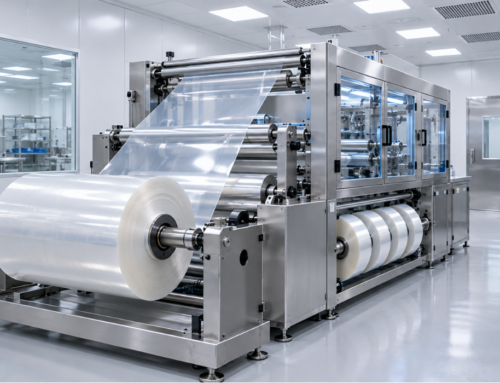
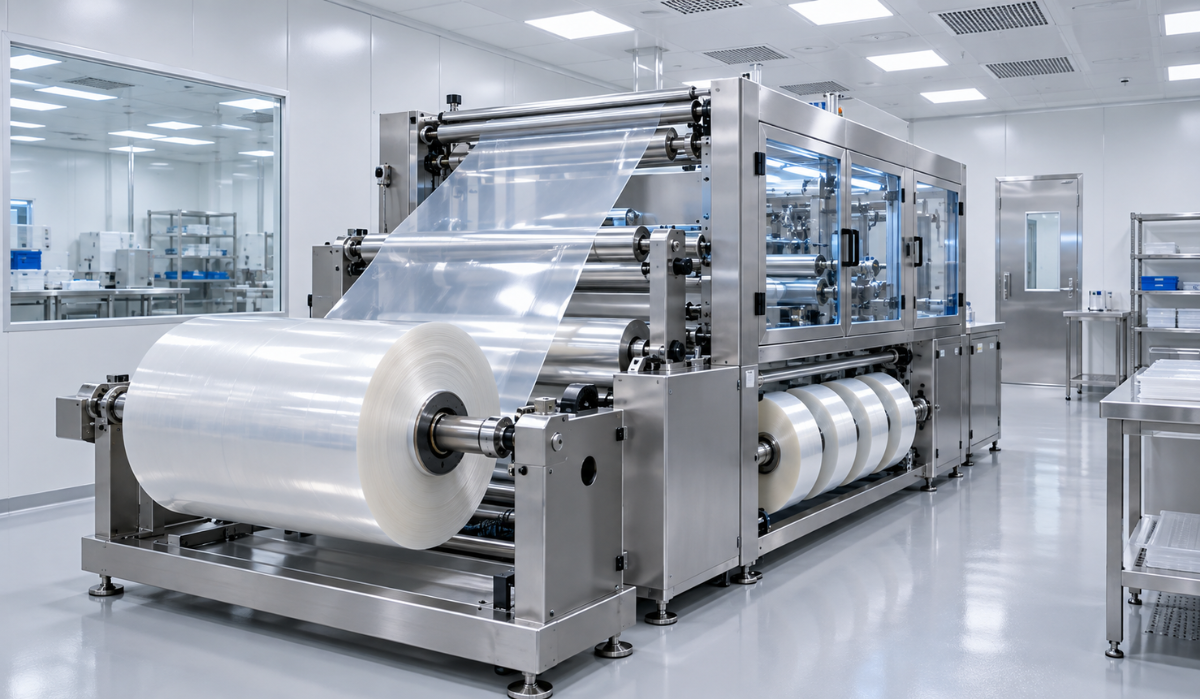
Operations such as cutting, laminating, slitting, preparing, and packaging medical materials may also require environmental controls. UltraPure Technology’s guide to cleanroom converting services explains how product sensitivity, material handling, exposure, and end use affect these decisions.
Can different rooms in one facility have different ISO classes?
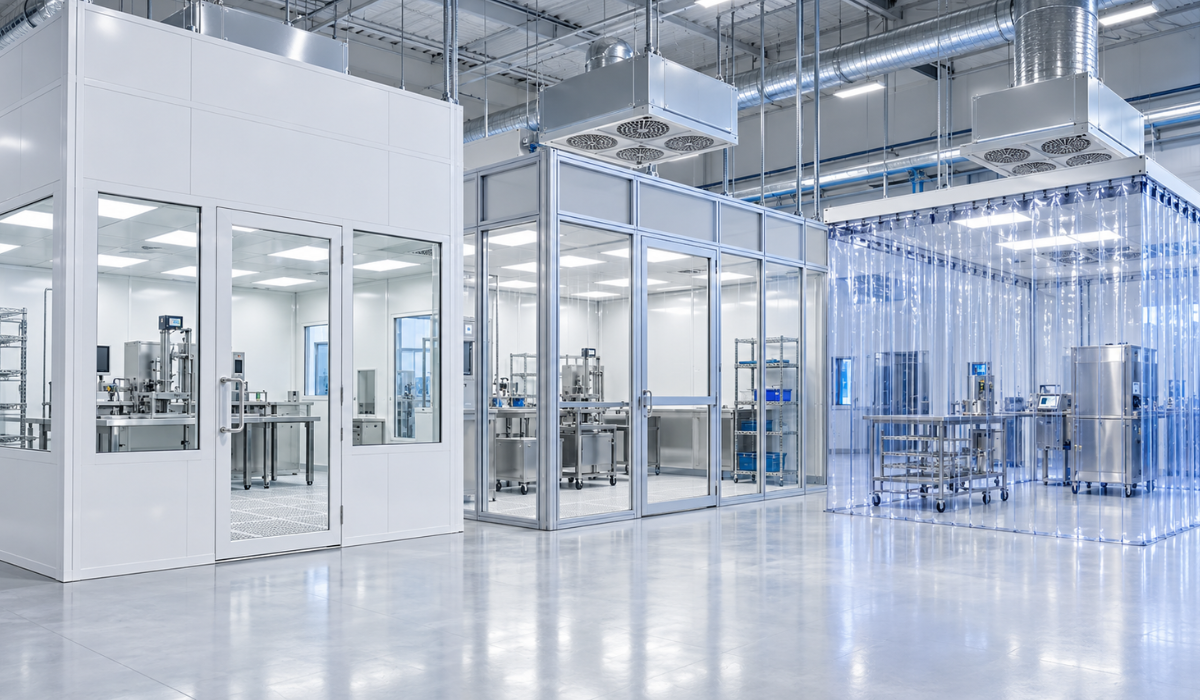
Yes. A medical device facility can use multiple classifications so that each production stage receives the level of control it requires.
For example, a facility might use:
- An unclassified support or warehouse area
- An ISO Class 8 material-preparation room
- An ISO Class 7 assembly room
- A localized ISO Class 5 zone over one exposed critical process
- Separate gowning and material airlocks between areas
This zoned approach can concentrate strict environmental controls where they add measurable value. It may also reduce the operating burden compared with classifying an entire facility at the cleanest required level.
Pressure direction should support the contamination-control objective. Cleaner rooms are commonly maintained at positive pressure relative to less-clean adjoining spaces when product protection is the priority. Negative pressure may be required where hazardous or sensitizing materials must be contained. No single pressure differential is appropriate for every medical-device process.
What cleanroom features support the selected classification?
A cleanroom reaches and maintains its classification through coordinated filtration, airflow, construction, pressure control, cleaning, gowning, and operating procedures.
The classification number alone does not define the design. Two ISO Class 7 rooms can use different air volumes, filter layouts, temperature ranges, and monitoring strategies because their equipment, occupancy, contamination loads, and recovery requirements differ.
What should manufacturers include in the design checklist?
The design checklist should connect every physical feature to the product, process, and specified environmental limits.
- HEPA or ULPA filtration selected for the application
- Airflow pattern evaluated around equipment and operators
- Pressure relationships defined between adjoining rooms
- Smooth, durable, low-shedding wall and ceiling finishes
- Sealed joints, corners, doors, windows, and service penetrations
- Cleanable flooring with suitable wall transitions
- Separate personnel and material movement where required
- Appropriate gowning and airlock arrangements
- Temperature and humidity controls based on process needs
- Space for cleaning, calibration, and filter replacement
- Particle-monitoring locations based on risk
- Alarm, documentation, and response procedures
- Expansion capacity for future equipment or production changes
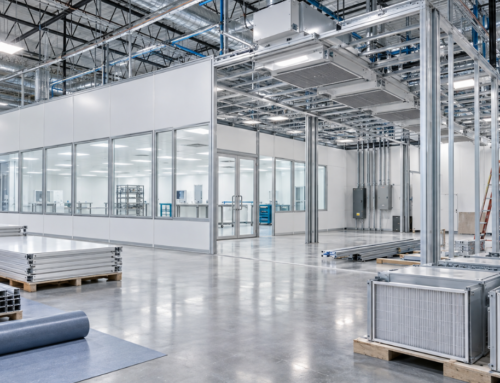
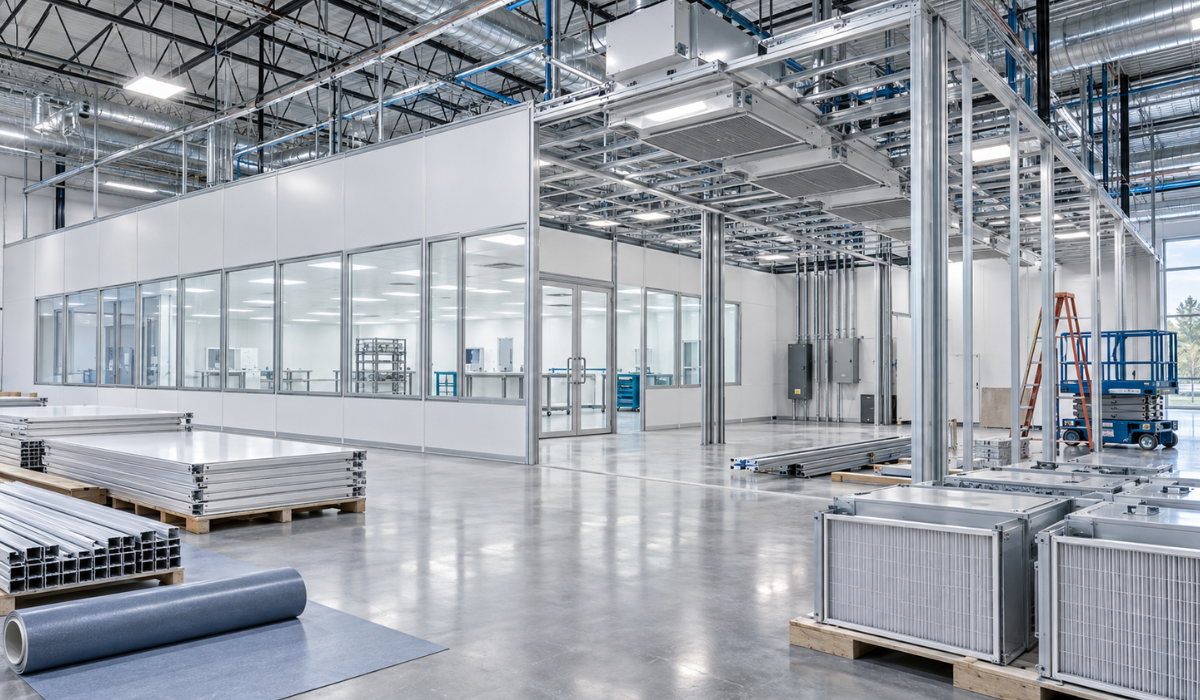
UltraPure Technology provides Cleanroom Construction for ISO-class controlled environments, including modular walls, ceilings, doors, windows, HVAC integration, filtration, lighting, fire protection, flooring, and seamless finishes.
How is a medical device cleanroom classified and verified?
The room must be tested under a defined occupancy state to show that airborne particle concentrations remain within the selected ISO class limits.
Classification is one part of a larger qualification and monitoring program. The exact tests depend on the user requirement specification, design, risk assessment, and applicable standards.
A typical verification sequence includes:
- Inspect wall, ceiling, floor, door, and penetration integrity.
- Verify installed filter locations and airflow-system operation.
- Conduct HEPA or ULPA filter integrity testing where specified.
- Measure airflow volume, velocity, and room balance.
- Confirm pressure relationships between adjoining spaces.
- Measure temperature and relative humidity.
- perform airborne particle counts at required locations.
- Evaluate recovery time or airflow visualization when relevant.
- Document results, deviations, corrections, and acceptance.
- Establish routine monitoring and periodic reclassification.
ISO 14644-2 addresses minimum requirements for a monitoring plan that provides evidence of cleanroom performance related to airborne particle cleanliness.
The article on cleanroom validation and testing after construction provides additional information about particle counting, airflow testing, pressure verification, filter-integrity testing, and documentation.
Which Common Assumptions Can Lead to the Wrong Cleanroom Classification?
Incorrect classification decisions often result from applying general industry assumptions without evaluating the actual product and manufacturing process. The following distinctions can help project teams avoid unnecessary controls or insufficient contamination protection.
| Common Assumption | What Manufacturers Should Know |
|---|---|
| Every medical device requires an ISO Class 7 cleanroom. | Classification depends on the process, product exposure, contamination risks, and quality requirements. |
| FDA Class III automatically requires ISO Class 5. | FDA device classes and ISO cleanroom classes address different types of risk. |
| Terminal sterilization removes the need for environmental controls. | Sterilization does not eliminate every particulate, chemical, packaging, or functional risk. |
| Increasing air changes guarantees a cleaner room. | Air distribution, filtration, room integrity, occupancy, cleaning, and operating practices also affect performance. |
| Passing the initial test ensures continued compliance. | Continued performance requires monitoring, maintenance, cleaning, operating procedures, and periodic testing. |
| Modular cleanrooms cannot meet strict ISO classifications. | A properly designed, installed, operated, and tested modular cleanroom can achieve the specified classification. |
| Selecting the cleanest possible class is always safer. | Over-classification may increase complexity and operating requirements without providing meaningful risk reduction. |
What should Suwanee manufacturers decide before construction?
Suwanee manufacturers should establish process requirements, facility constraints, utilities, classification criteria, and verification responsibilities before approving construction.
ISO particle limits do not change by city. However, the building design must still account for the specific property, existing HVAC capacity, electrical service, structural support, fire protection, drainage, equipment access, and applicable permitting or inspection requirements.
Before requesting a final design, the project team should be ready to answer:
- What products and processes will operate in each room?
- Which surfaces or components will be exposed?
- What contaminants could affect quality?
- How many people and machines will operate per shift?
- Will the product be terminally sterilized?
- What environmental limits appear in approved procedures?
- Which conditions must be alarmed or continuously recorded?
- Who will perform classification and qualification testing?
- Will the facility require future expansion?
- Can existing mechanical and electrical systems support the design?
These decisions affect the filter system, airflow volume, cooling load, wall and ceiling construction, gowning sequence, utility layout, controls, commissioning plan, and long-term operating requirements.
What is the right next step for a medical device cleanroom project?
The right next step is to document the manufacturing process and contamination risks before selecting an ISO classification or cleanroom system.
A successful facility does more than pass an initial particle-count test. Its design must support product quality, practical workflows, cleaning, maintenance, monitoring, documentation, and future production needs.
For medical devices cleanrooms, the correct class may be ISO 8, ISO 7, ISO 6, ISO 5, or a combination of zones. The decision should be traceable to the actual process rather than a broad assumption about the device’s FDA classification.
Frequently Asked Questions
Do All Medical Devices Need to Be Manufactured in a Cleanroom?
No, a cleanroom is needed when particles, microorganisms, moisture, residues, or other environmental conditions could affect device safety, quality, or performance. Manufacturers should determine the requirement through a documented product and process risk assessment.
What Is the Difference Between an ISO Class 7 and ISO Class 8 Cleanroom?
An ISO Class 7 cleanroom is cleaner than an ISO Class 8 cleanroom. At 0.5 µm and larger, ISO Class 7 permits up to 352,000 particles per cubic meter, while ISO Class 8 permits up to 3,520,000 particles per cubic meter.
Does an ISO Cleanroom Classification Mean the Room Is Sterile?
No, ISO classification measures airborne particle concentrations, not sterility. Sterile medical device manufacturing may require additional microbial monitoring, cleaning, disinfection, validated processes, controlled packaging, and sterilization procedures.
Can Sterile Medical Devices Be Manufactured in an ISO Class 8 Cleanroom?
Certain preparation, assembly, or packaging operations for sterile medical devices may occur in an ISO Class 8 cleanroom. Suitability depends on product exposure, contamination risks, bioburden limits, packaging requirements, and the validated sterilization process.
Does ISO 14644 Specify Air Changes per Hour for Each Cleanroom Class?
No, ISO 14644-1 defines cleanroom classes by airborne particle concentration rather than a fixed number of air changes per hour. The required airflow depends on room size, equipment, occupancy, contamination load, airflow pattern, and recovery-time goals.
Can a Modular Cleanroom Meet ISO Class 7 Requirements?
Yes, a properly designed modular cleanroom can achieve ISO Class 7 when its filtration, airflow, pressure relationships, sealed construction, cleaning procedures, and operating controls support the required particle limits. Testing is necessary to confirm performance.
How Often Should a Medical Device Cleanroom Be Recertified?
The recertification schedule should follow the facility’s monitoring plan, risk assessment, quality procedures, customer requirements, and applicable standards. Additional testing may be required after HVAC changes, filter replacement, major repairs, process changes, or unexplained particle-count failures.
What Happens When a Medical Device Cleanroom Is Over-Classified?
Over-classification can increase construction and operating demands without providing meaningful additional protection. It may require more filtration, greater cooling capacity, stricter gowning, more frequent cleaning, additional monitoring, and higher energy and maintenance use.
How Do Manufacturers Choose a Cleanroom Classification for Medical Devices?
Manufacturers select the classification by evaluating the device, manufacturing process, exposed components, contamination sensitivity, intended use, sterilization method, and packaging requirements. Medical devices cleanrooms should be classified according to documented risks rather than a general industry assumption.