
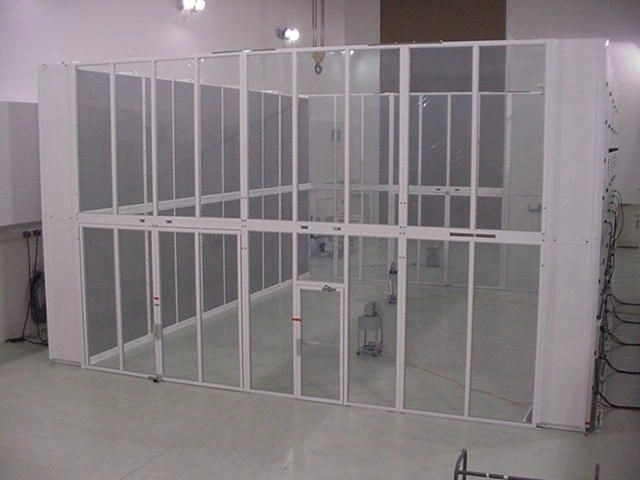
In today’s fast-paced world, industries like healthcare, pharmaceuticals, aerospace, and biotechnology require specialized environments that maintain stringent cleanliness and precision.
Modular construction and cleanrooms are becoming the go-to solution for building these high-performance spaces efficiently and affordably.
With modular systems, these industries can achieve high levels of quality control, all while meeting tight deadlines and reducing overall costs.
What is Modular Construction?
Modular construction refers to the process of building structures using prefabricated sections or modules, which are constructed off-site and then transported and assembled at the final location.
This method has revolutionized the way buildings are constructed by offering flexibility, speed, and cost-efficiency.
As compared to traditional construction methods, which require everything to be built on-site, modular construction allows for significant portions of the structure to be assembled in controlled factory conditions.
This leads to faster turnaround times, fewer on-site delays, and better quality control over the materials and processes.
Advantages of Modular Construction
Modular construction has gained significant traction in recent years due to its numerous advantages.
This method of construction, which involves the prefabrication of sections or modules off-site before they are assembled on-site, offers multiple benefits, especially when compared to traditional building techniques.
These advantages encompass speed of installation, cost efficiency, design flexibility, and a reduced environmental impact, making modular construction an ideal choice for a variety of industries.
Speed of Installation
One of the most significant advantages of modular construction is the speed of installation.
Unlike traditional construction, where the building is erected entirely on-site, modular systems are pre-constructed in a factory setting and delivered to the site ready for assembly.
This drastically reduces the overall construction timeline, allowing for buildings to be completed in a fraction of the time.
Key Factors Contributing to Speed:
Parallel Workflows
While the modules are being constructed in the factory, site preparation, such as foundation work, can occur simultaneously. This parallel process saves valuable time.
Fewer Weather Delays
As most of the construction happens indoors, the likelihood of delays caused by adverse weather conditions is minimized.
Faster Assembly
Once delivered to the site, the modules are quickly assembled, reducing the time spent on-site construction.
In industries such as healthcare, pharmaceuticals, and education, where time-sensitive projects are crucial, modular construction offers the ability to meet tight deadlines and start operations sooner than traditional building methods allow.
Cost Efficiency
Cost efficiency is another significant benefit of modular construction.
Since modular systems are prefabricated off-site, they allow for substantial savings in terms of both labor and materials.
The factory environment provides a controlled setting that reduces waste and optimizes the use of materials, leading to cost savings during production.
Cost-Saving Elements in Modular Construction:
Reduced Labor Costs
The modular approach reduces the need for large on-site labor forces.
Many aspects of the construction process, including assembly and finishing, are completed in the factory, where labor costs tend to be lower.
Faster Project Completion
As mentioned earlier, the speed of installation reduces the overall project timeline, which translates into lower overhead and financing costs for the project owner.
Efficient Use of Materials
Prefabrication allows for precise control over the materials used, reducing excess and ensuring that resources are used optimally.
This process helps minimize material waste and contributes to more affordable projects.
For businesses, reduced construction costs mean faster return on investment (ROI), making modular construction a more affordable alternative to traditional methods, especially for large-scale projects or those on a strict budget.
Design Flexibility
Design flexibility is an essential characteristic of modular construction, enabling customization to meet a wide range of needs.
Modular buildings can be tailored to fit specific industry requirements, whether it’s a cleanroom for pharmaceuticals, a classroom for education, or a manufacturing facility for production.
Ways Modular Construction Provides Flexibility:
Customizable Layouts
Modular buildings offer the ability to design layouts that best suit the space and functional needs of the project.
Whether it’s open-concept office spaces, laboratory designs, or housing units, modular construction can be adapted to suit a variety of industries.
Expandability
Modular systems allow for easy expansion. If the building needs to be enlarged in the future, additional modules can be added with minimal disruption to the ongoing operations of the facility.
Tailored to Specific Industry Needs
In industries such as healthcare or technology, modular construction allows the integration of industry-specific features, like cleanroom systems or complex electrical and HVAC setups, making the design process highly adaptable.
Aesthetic Options
While modular buildings are functional and efficient, they also come in a variety of aesthetic styles.
Whether modern, traditional, or highly specialized, modular construction can achieve the look and feel desired by the client without compromising on functionality.
This flexibility is key to industries that require specialized facilities or are anticipating future growth and change.
Reduced Environmental Impact
Another crucial benefit of modular construction is its reduced environmental impact.
Traditional construction methods generate significant waste, consume large amounts of resources, and contribute to pollution.
In contrast, modular construction minimizes waste and energy use, aligning with the growing global emphasis on sustainability and green building practices.
How Modular Construction Reduces Environmental Impact:
Minimized Waste
In a controlled factory environment, modular components are built with precision, which minimizes the amount of material waste generated.
Any leftover materials can be reused for future projects, ensuring more sustainable use of resources.
Energy Efficiency
Prefabricated modules can be designed to meet high energy efficiency standards, such as better insulation or advanced HVAC systems.
This leads to buildings that are more energy-efficient, reducing long-term operational costs and lowering their carbon footprint.
Sustainable Materials
Many modular construction companies use recycled and eco-friendly materials in the construction of their modules, further contributing to sustainability goals.
The use of renewable materials, such as bamboo or reclaimed wood, is often incorporated into the design.
Less Site Disturbance
Since most of the construction work is done off-site, there is less disruption to the local environment.
This results in fewer vehicles transporting materials to the site, reducing emissions from transportation.
For businesses looking to meet sustainability goals or reduce their environmental impact, modular construction presents a compelling option that doesn’t sacrifice quality or functionality.
Enhanced Quality Control
Quality control is a critical aspect of modular construction.
Since the majority of the work is done in a factory environment, there is a higher level of precision and quality assurance than what is typically achievable with on-site construction.
Strict quality control measures ensure that every module meets the required standards before it is shipped to the construction site.
Benefits of Enhanced Quality Control:
Consistent Results
With factory-controlled conditions, the quality of materials and craftsmanship is more consistent than in traditional on-site construction.
Less Risk of Defects
Because each module is thoroughly tested and inspected before delivery, the chances of defects or errors during the final assembly process are minimized.
Compliance with Industry Standards
Modular construction companies typically adhere to the latest building codes, safety regulations, and industry standards, ensuring that the final product is safe, reliable, and compliant.
Improved Safety
Safety is always a concern during construction projects, especially when workers are exposed to hazardous on-site conditions.
Modular construction reduces the risk of accidents by minimizing the number of workers on-site and completing much of the work in a controlled, safe environment.
How Modular Construction Improves Safety:
Fewer On-Site Workers
With much of the construction occurring off-site, there is less risk of accidents involving large machinery, scaffolding, or other dangerous construction activities.
Factory Conditions
The controlled environment of a factory setting ensures that workers are less exposed to the risks associated with on-site construction, such as weather, falling debris, and other environmental factors.
What Makes a Cleanroom?
A cleanroom is a highly controlled environment where pollutants such as dust, airborne microbes, and chemical vapors are minimized to maintain the integrity of products being produced.
Industries such as pharmaceuticals, biotechnology, electronics, and aerospace rely on cleanrooms to ensure that manufacturing processes meet stringent regulatory standards.
Cleanrooms are classified by their level of cleanliness, and they often include complex air filtration systems, temperature regulation, and other environmental controls.
Key Features of Cleanrooms
Airflow Control
Cleanrooms require specialized HVAC systems to maintain proper air circulation and filtration.
Temperature and Humidity Control
Maintaining consistent temperature and humidity levels is crucial for product integrity.
ISO Standards
Cleanrooms must meet strict ISO classification standards, which dictate the maximum allowable particle concentration in the air.
The Rise of Modular Cleanrooms
Modular cleanrooms are a game-changing innovation in cleanroom design and construction.
Unlike traditional cleanrooms, which are built from scratch at the location, modular cleanrooms are prefabricated in a factory, transported to the site, and assembled on-site.
This modular approach offers several distinct advantages.
Benefits of Modular Cleanrooms
Cost Efficiency
Modular cleanrooms are less expensive to build because of reduced labor costs and faster construction times.
Flexibility
Modular cleanrooms can be customized to meet specific needs and can be easily expanded or relocated as required.
Speed
Modular systems are faster to install, which means businesses can start operations sooner without disrupting existing workflows.
Compliance
Prefabricated cleanroom systems are built to meet regulatory standards (such as ISO and GMP), ensuring high levels of cleanliness and safety.
Modular Cleanroom Applications
Pharmaceutical Industry
Modular cleanrooms are essential for maintaining the sterility and safety of pharmaceutical manufacturing processes.
Healthcare
Cleanrooms in hospitals and research labs ensure the production of sterile products and the safety of medical treatments.
Aerospace and Electronics
Cleanrooms are crucial in preventing contamination of sensitive materials and components.
Sustainability and Modular Construction
One of the key reasons modular construction is gaining popularity is its sustainability.
Modular cleanrooms are designed with eco-friendly practices in mind, reducing the amount of waste generated during construction and optimizing energy use.
Prefabricated materials are also often more sustainable, with fewer raw materials needed compared to traditional methods.
Environmental Benefits of Modular Cleanrooms
Reduced Waste
Most modular systems are built in a controlled factory setting, which minimizes waste.
Energy Efficiency
Prefabricated materials and systems can be designed with energy-saving features, reducing operational costs.
Sustainable Materials
Many modular cleanrooms use recycled and eco-friendly materials in construction.
The Future of Modular Cleanrooms
The future of modular cleanrooms looks promising, with increasing demand across industries that require high-precision environments.
As the need for flexible, scalable, and cost-efficient cleanroom solutions grows, modular construction is poised to play a critical role in shaping the future of these industries.
Innovations in Modular Cleanroom Design
Automation and IoT
With the advancement of automation and smart technology, future modular cleanrooms will integrate advanced systems for monitoring air quality, temperature, and humidity.
Advanced Materials
New materials that offer better insulation and contamination control will enhance the effectiveness of modular cleanrooms.
Expanded Applications
As modular cleanrooms become more customizable, their use will extend beyond pharmaceuticals and healthcare into industries like food production and electronics.
Conclusion: Why Modular Cleanrooms Are the Future
As industries demand faster, more cost-effective, and flexible cleanroom solutions, modular construction is the key to meeting these needs.
Modular cleanrooms offer numerous advantages, including speed, cost savings, and environmental sustainability.
As technological advancements continue to shape the industry, modular cleanrooms will remain a vital tool for ensuring high-quality, contamination-free manufacturing environments.
Get Started with Modular Cleanroom Solutions Today
Are you ready to upgrade your facility with modular cleanroom systems?
Our team specializes in providing high-quality, customizable modular cleanrooms for various industries.
Whether you need a cleanroom for healthcare, pharmaceuticals, or aerospace, we can design and install a system that meets your exact needs.
Contact us today to discuss how we can help you create a cleanroom environment that ensures the highest standards of quality, efficiency, and compliance.
