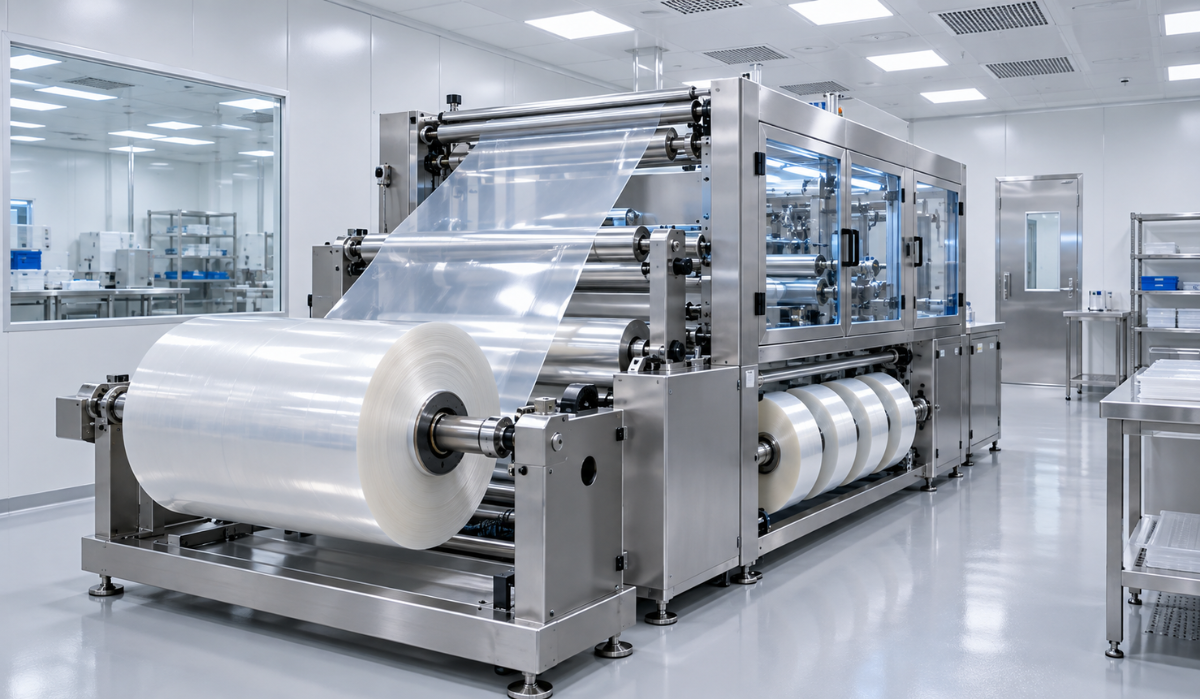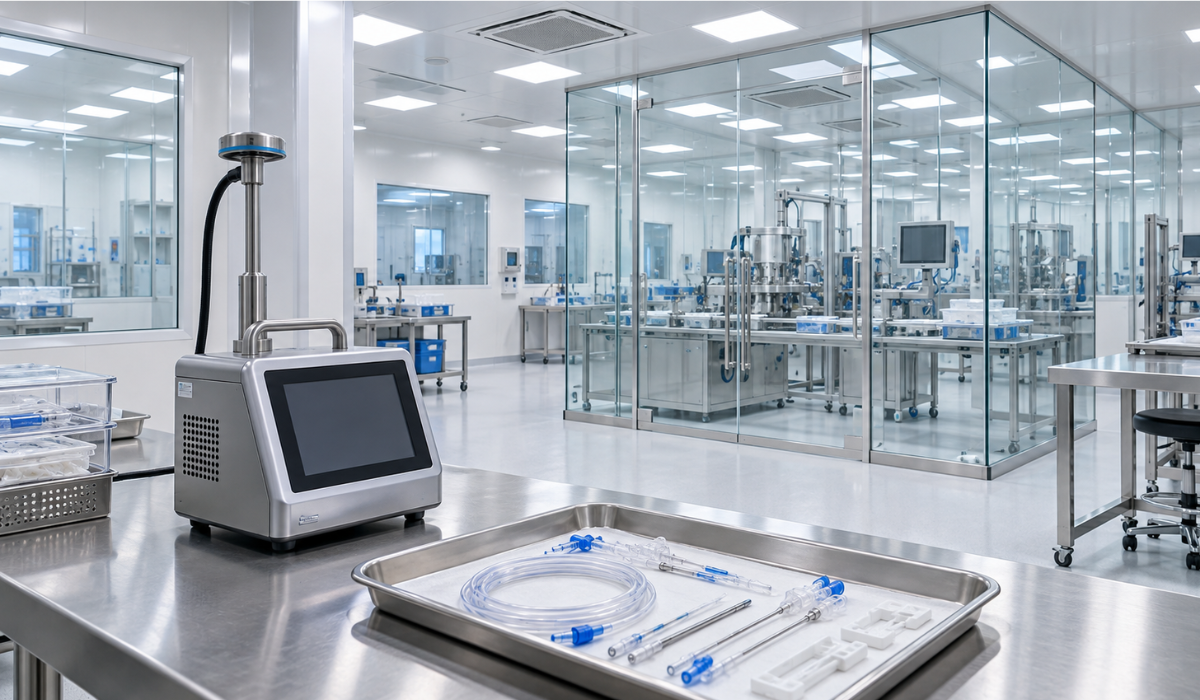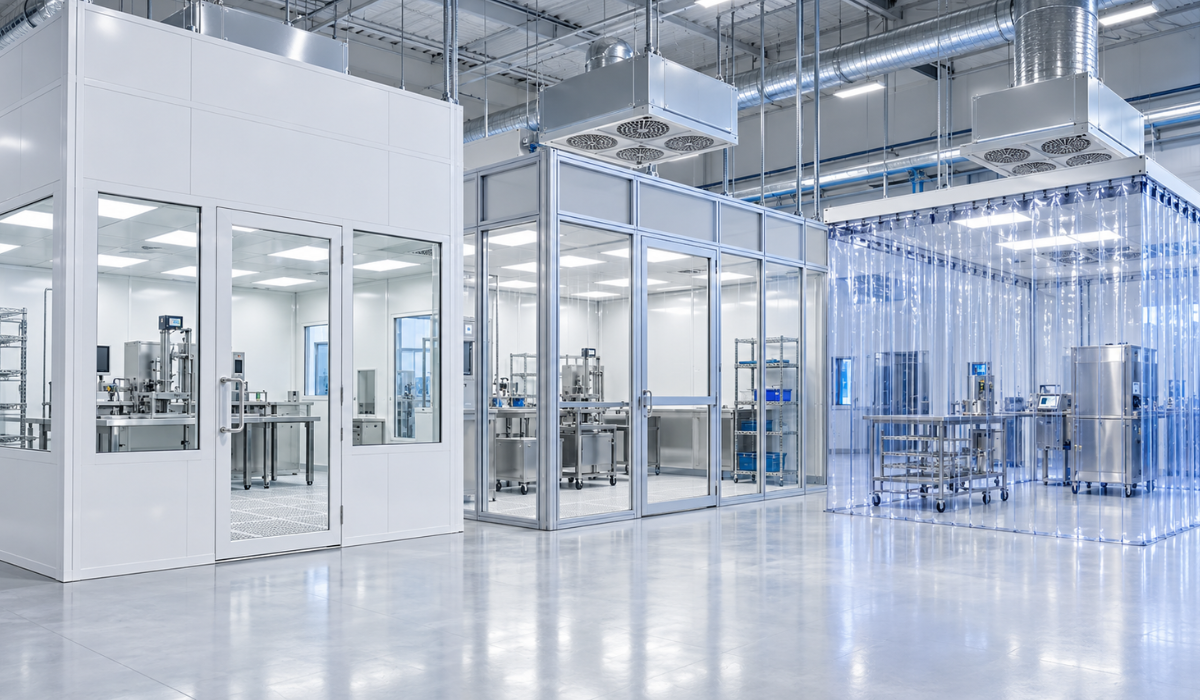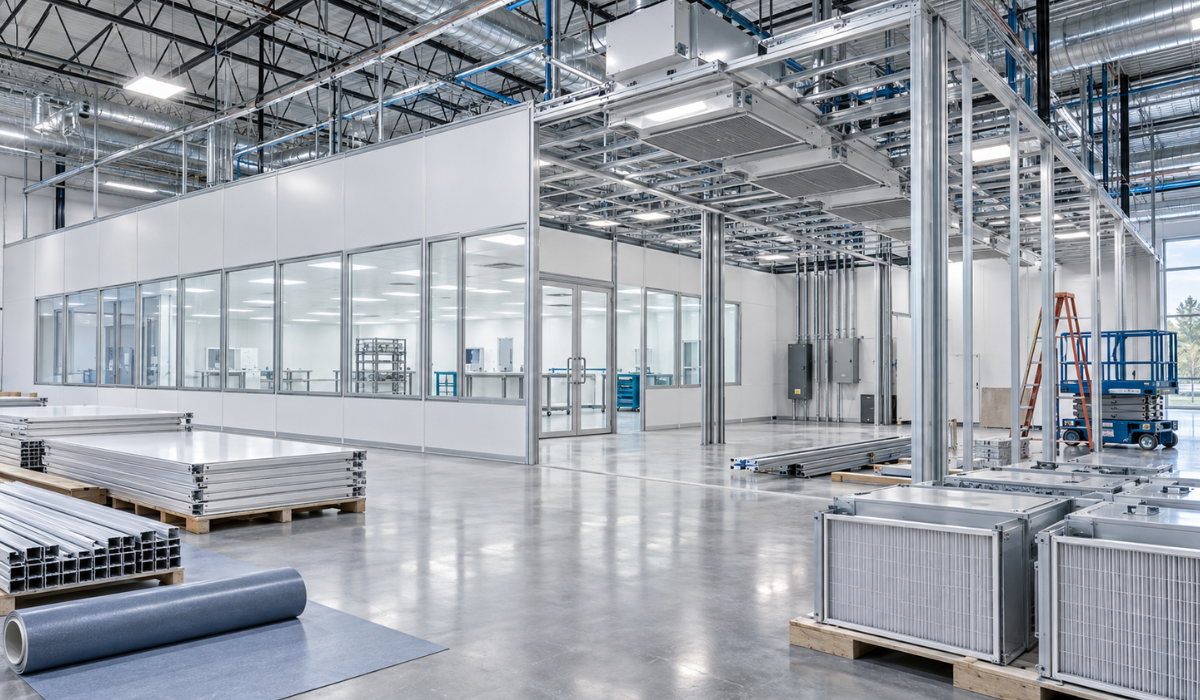
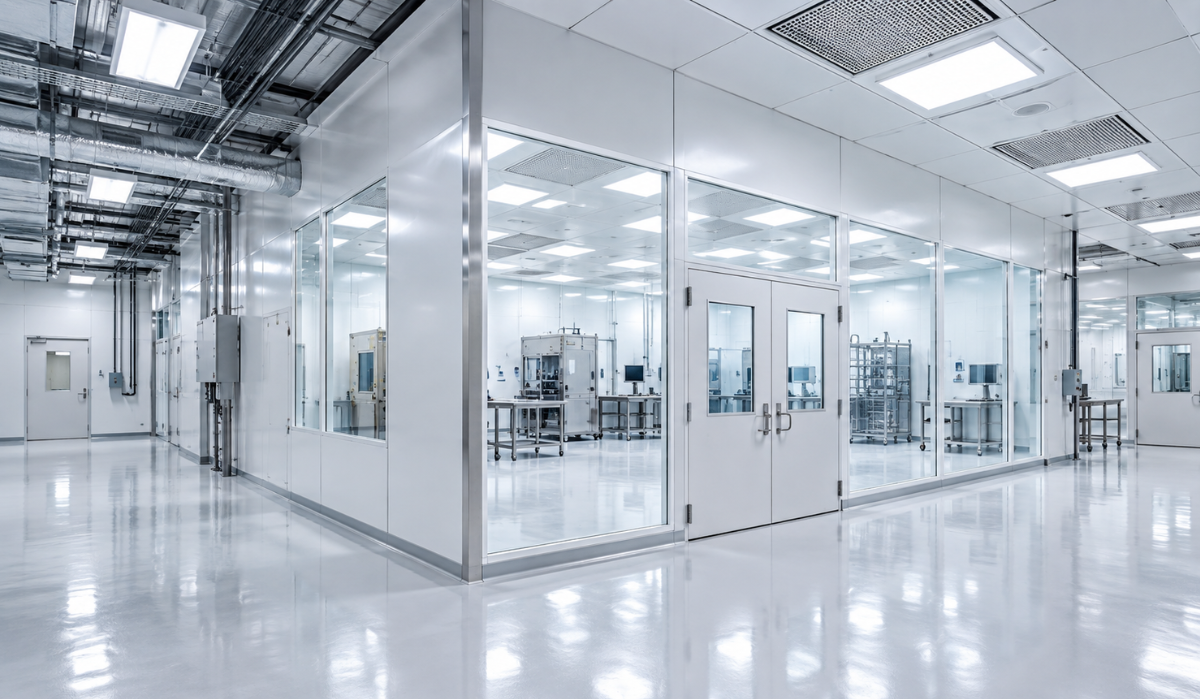
There is no official independent ranking of cleanroom construction companies serving near Atlanta. Facility owners should compare providers based on relevant project experience, engineering capabilities, construction expertise, safety training, industry knowledge, testing support, references, and responsibility for the complete project scope.
- Ultrapure Technology has provided controlled-environment solutions since 1993.
- Its website reports more than 500 completed projects.
- Its construction team has more than 170 years of combined design and build experience.
- Team members have OSHA 30 certification and forklift and scissor-lift training, according to the company.
- ISO 14644-1 classifies air cleanliness from ISO Class 1 through ISO Class 9.
Unlike a conventional interior, a cleanroom must integrate its sealed enclosure with airflow, filtration, pressure control, temperature, humidity, equipment, utilities, and monitoring systems. Facility owners should also assess proposal completeness, project management, performance testing, documentation, and post-construction accountability.
Even minor gaps between these components can affect the room’s ability to maintain its specified conditions. The strongest provider will understand how every system contributes to contamination control and operational performance.
What Makes a Cleanroom Construction Company a Top Provider?
A top cleanroom construction company can translate process requirements into a coordinated, buildable, and testable controlled environment. Its capabilities should extend from early planning and engineering through construction, system integration, performance testing, documentation, and turnover.
A qualified provider should demonstrate:
- Cleanroom-specific design and construction experience
- Experience with comparable industries and applications
- Knowledge of ISO classifications and environmental controls
- Qualified project managers and site supervisors
- Coordination of HVAC, filtration, controls, equipment, and utilities
- Established safety and quality-control procedures
- Permit and inspection coordination
- Testing and commissioning support
- Relevant project references
- Clearly defined warranties and post-construction support
A large company is not automatically the strongest choice. The proposed project team, relevant experience, technical approach, and responsibility for final performance are more useful measures.
No recognized regulator or industry association publishes an official ranking of cleanroom construction companies serving the Atlanta area. Search-engine position, company size, and promotional claims do not independently verify technical qualifications.
ISO does not approve, certify, or rank cleanroom contractors. ISO 14644-1 establishes the classification of air cleanliness based on airborne-particle concentration, but it does not maintain a list of preferred construction companies.
Facility owners should create a project-specific shortlist based on:
- Comparable completed projects
- Documented technical capabilities
- Industry experience
- Construction and safety qualifications
- References from relevant clients
- Complete and transparent proposals
- Testing and turnover responsibilities
- Ability to support the facility after completion
A contractor that performs well on one type of project may not be the right choice for every process or industry.
Why Is Cleanroom-Specific Construction Experience Important?
Cleanroom-specific experience helps a contractor recognize details that could affect particle control, airflow, pressure, cleanability, environmental stability, and certification. Conventional commercial construction experience alone does not establish this capability.
Cleanroom construction contractors must coordinate:
- Sealed walls, ceilings, doors, and windows
- Cleanable floors and coved transitions
- HEPA or ULPA filtration
- Supply and return-air locations
- Pressure relationships between adjacent rooms
- Equipment clearances and service access
- Lighting, sprinklers, alarms, and ceiling supports
- Electrical power, plumbing, exhaust, gases, and data
- Pass-throughs and utility penetrations
- Environmental monitoring and control systems
The proposed construction method also matters. This guide to stick-built cleanrooms explains the installation, maintenance, site disruption, flexibility, and workmanship considerations that facility owners should evaluate.
Need help evaluating a cleanroom project? Call Ultrapure Technology at 1-800-932-0309 to discuss your Suwanee-area facility and request a consultation.
Should You Choose a Design-Build Cleanroom Contractor?
A design-build cleanroom contractor provides one coordinated team for design and construction, which can centralize communication and project responsibility. The owner should still verify the provider’s engineering, construction, testing, safety, and project-management capabilities.
| Evaluation Factor | Design-Build Provider | Separate Design and Construction Teams |
|---|---|---|
| Coordination | Managed through one organization | Divided among multiple parties |
| Construction Input | Can begin during design | May begin after documents are completed |
| Responsibility | More centralized | Shared across separate contracts |
| Design Changes | Coordinated within one team | May require several approvals |
| Owner Administration | Fewer primary relationships | More direct owner coordination |
Neither delivery method guarantees performance. Success still depends on complete requirements, qualified personnel, coordinated drawings, effective construction controls, and objective testing.
Ultrapure Technology’s Cleanroom Design and Build service coordinates site evaluation, planning, engineering, construction, system integration, testing support, and turnover through one organization.
Which Cleanroom Industries Should the Company Understand?
The contractor should understand the product, manufacturing process, contamination risks, and quality requirements associated with the owner’s industry. Different applications may require different combinations of particle, microbial, humidity, pressure, static, temperature, and molecular-contamination control.
For example:
- A medical cleanroom construction project may require cleanable finishes, controlled product exposure, appropriate zoning, and documented environmental controls.
- Medical device cleanrooms may vary according to the device, manufacturing stage, sterilization method, and contamination risk.
- Pharmaceutical facilities may require defined personnel and material flows, pressure relationships, microbial controls, and current good manufacturing practice considerations.
- Semiconductor cleanrooms may require strict particle, temperature, humidity, vibration, and electrostatic-discharge control.
- Aerospace environments may need particle control together with humidity, static, or molecular-contamination management.
Contractors working with medical device manufacturers should understand how these factors affect the facility. Ultrapure Technology’s resource on cleanroom requirements for medical device manufacturing explains how product exposure, process risk, airflow, materials, classification, and environmental controls influence design decisions.
A contractor should not assign the same ISO classification or environmental conditions to every facility within an industry.
How Should You Compare Cleanroom Construction Proposals?
Compare proposals according to their complete technical scope, responsibilities, exclusions, testing, and lifecycle value instead of price alone. Two bids for the same floor area can include substantially different engineering, HVAC, utility, and documentation packages.
| Proposal Component | What to Confirm |
|---|---|
| Design Criteria | ISO class, occupancy state, temperature, humidity, pressure, and process conditions |
| Enclosure | Walls, ceilings, doors, windows, floors, seals, and penetrations |
| HVAC and Filtration | Air handling, ductwork, filters, returns, exhaust, balancing, and controls |
| Utilities | Electrical, plumbing, drainage, gases, vacuum, data, and equipment connections |
| Permitting | Drawings, applications, review comments, inspections, and fees |
| Testing | Required tests, testing provider, acceptance limits, and retesting |
| Documentation | Final drawings, manuals, reports, warranties, and training |
| Site Work | Demolition, temporary barriers, cleaning, structural work, and restoration |
| Schedule | Submittals, approvals, lead times, shutdowns, construction, and testing |
| Exclusions | Work, materials, fees, or services assigned to the owner |
A lower proposal may omit engineering, controls, equipment connections, freight, permits, testing, cleaning, or final documentation. These omissions can increase the final cost and delay operational readiness.
For a Project-Specific Scope and Quote
What Questions Should You Ask Cleanroom Constructors?
Ask every shortlisted contractor the same technical and commercial questions so you can compare their capabilities consistently. Request documented examples and contract language instead of relying solely on verbal assurances.
- How many comparable cleanrooms have you completed?
- Which services will your employees perform directly?
- Who will manage the project and supervise daily construction?
- How will the required environmental conditions be documented?
- How will HVAC, filtration, equipment, controls, and utilities be coordinated?
- Which responsibilities will be subcontracted?
- How will construction contamination be controlled?
- Who will coordinate permits and inspections?
- Which commissioning and performance tests are included?
- Who is responsible if the room fails an acceptance test?
- Which turnover documents will be provided?
- What warranty and ongoing support are included?
Contractors should also explain why they recommend a particular airflow strategy. A single-pass cleanroom sends filtered air through the controlled space before discharging it rather than returning it to the room. Whether single-pass or recirculating airflow is appropriate depends on the process, contaminants, environmental controls, and facility systems.
How Should Safety, Testing, and Documentation Be Evaluated?
A cleanroom contractor should document its safety program, quality-control process, testing responsibilities, and turnover requirements before construction begins. These obligations should appear in the contract with clearly assigned responsibilities.
Depending on the project, performance verification may include:
- HEPA or ULPA filter integrity testing
- Airflow volume or velocity measurements
- Room-pressure verification
- Airborne-particle concentration testing
- Temperature and relative-humidity checks
- Airflow-visualization studies
- Control and alarm testing
- System-balancing reports
- Correction and retesting of deficiencies
The project documents should distinguish between commissioning, certification, qualification, and validation. Commissioning verifies that systems have been installed and operate as intended. Cleanroom certification evaluates specified environmental conditions, while qualification and validation may involve additional documentation for regulated operations.
Ultrapure Technology’s Cleanroom Construction service includes preconstruction planning, material coordination, onsite assembly, system integration, testing, and certification support. The company reports that its team members have OSHA 30 certification and forklift and scissor-lift training.
What Myths Can Lead to the Wrong Contractor Decision?
The most common myths confuse contractor size, bid price, filtration quantity, and ISO terminology with proven cleanroom capability. Replacing these assumptions with documented comparisons can reduce project risk.
| Myth | Fact |
|---|---|
| The largest contractor is automatically the best choice. | Relevant cleanroom experience and project-team capability matter more than company size alone. |
| The lowest bid provides the best value. | A low bid may exclude important engineering, mechanical work, testing, or documentation. |
| Any commercial contractor can manage the entire cleanroom project. | Controlled environments require specialized coordination of enclosure, airflow, filtration, pressure, utilities, and testing. |
| More HEPA filters always produce better performance. | Filter quantity must be coordinated with airflow, cooling, pressure, return paths, and process needs. |
| ISO classification confirms regulatory compliance. | ISO 14644-1 addresses airborne-particle concentration and does not establish complete regulatory compliance. |
| Modular cleanrooms never require permits. | Building, mechanical, electrical, plumbing, and fire requirements may still apply. |
Is Ultrapure Technology a Cleanroom Construction Option Near Atlanta?
Ultrapure Technology is headquartered in Suwanee and provides cleanroom design, construction, modular systems, renovations, equipment, supplies, and continuing support. This makes the company a relevant option for facilities comparing cleanroom builders serving the Atlanta area.
According to its website, Ultrapure Technology:
- Has provided controlled-environment solutions since 1993
- Has completed more than 500 projects
- Offers design and construction through one organization
- Uses an in-house cleanroom construction team
- Reports more than 170 years of combined team experience
- Works with modular cleanroom systems
- Serves pharmaceutical, medical device, biotechnology, aerospace, microelectronics, semiconductor, and other applications
- Supports testing and certification
- Supplies cleanroom equipment and consumable products
Facility owners should evaluate these company-reported qualifications alongside a project-specific technical proposal, schedule, references, defined responsibilities, and performance criteria.
How Should You Select a Cleanroom Construction Company?
Select the company that presents the strongest documented match for the process, facility, performance requirements, project risks, and complete scope. A consistent evaluation process is more dependable than relying on search position, company size, or promotional claims.
Follow this selection process:
- Define the product, process, contamination risks, equipment, workflow, and environmental conditions.
- Create one request-for-proposal package for all shortlisted companies.
- Prequalify providers based on relevant experience, safety, personnel, and references.
- Arrange site evaluations with qualified contractors.
- Compare technical approaches and proposed construction methods.
- Identify assumptions, exclusions, allowances, and owner responsibilities.
- Contact references from comparable projects.
- Review schedules, material lead times, testing, warranties, and turnover requirements.
- Interview the proposed project manager and field supervisor.
- Select the provider offering the strongest complete-project value.
The selected contractor should provide a solution based on the actual manufacturing process instead of proposing a generic room from square footage and ISO classification alone.
Conclusion
Finding a top cleanroom construction company requires more than reviewing a search-results page or comparing proposal totals. The provider must understand how the manufacturing process, contamination risks, enclosure, airflow, filtration, pressure, equipment, utilities, controls, and testing requirements work together.
Compare qualified companies using consistent project information, documented experience, technical proposals, safety qualifications, references, and clearly assigned responsibilities. This approach helps identify the provider best equipped to deliver a cleanroom that supports the facility’s operational and performance requirements.
Ready to discuss your project with a Suwanee-based Cleanroom Specialist?
Frequently Asked Questions
How Many Cleanroom Construction Companies Should I Compare?
Compare at least three qualified cleanroom construction companies when practical. Give each provider the same process requirements, equipment information, environmental criteria, and project scope to evaluate experience, technical approach, exclusions, scheduling, and pricing consistently.
Should I Choose the Cleanroom Contractor With the Lowest Bid?
Choose a contractor based on complete project value rather than the lowest bid alone. Confirm that the proposal covers engineering, HVAC, filtration, controls, utility connections, permits, freight, testing, documentation, warranties, and responsibility for correcting performance deficiencies.
Can a General Contractor Build a Cleanroom?
A general contractor can participate when qualified cleanroom specialists manage the controlled-environment work. The project requires specialized knowledge of airflow, filtration, pressure relationships, sealed enclosures, utilities, system integration, and performance testing.
Who Determines the Required ISO Cleanroom Classification?
The product, manufacturing process, contamination risks, and applicable quality requirements determine the appropriate ISO classification. A qualified contractor can translate these requirements into specifications for airflow, filtration, pressure control, enclosure systems, and testing.
Can Cleanroom Construction Take Place Inside an Operating Facility?
Cleanroom construction can often be phased while surrounding operations continue. The project plan must address worker access, temporary barriers, dust control, equipment deliveries, utility shutdowns, cleaning, noise, and protection of nearby production areas.
Should Cleanroom Testing Be Included in the Construction Contract?
Cleanroom testing should be clearly defined in the construction contract. The agreement should identify required tests, acceptance limits, occupancy conditions, testing responsibilities, reporting requirements, corrective work, and retesting procedures.
Can a Modular Cleanroom Be Expanded or Reconfigured?
Many modular cleanrooms can be expanded or reconfigured when sufficient space, HVAC capacity, filtration, utilities, and pressure control are available. Including future production requirements in the original design can reduce later reconstruction and operational disruption.
What Documents Should I Receive When Construction Is Complete?
The turnover package should include approved drawings, equipment information, operating manuals, balancing reports, test results, warranties, training records, and maintenance recommendations. Define the required documents and formats in the contract before construction begins.