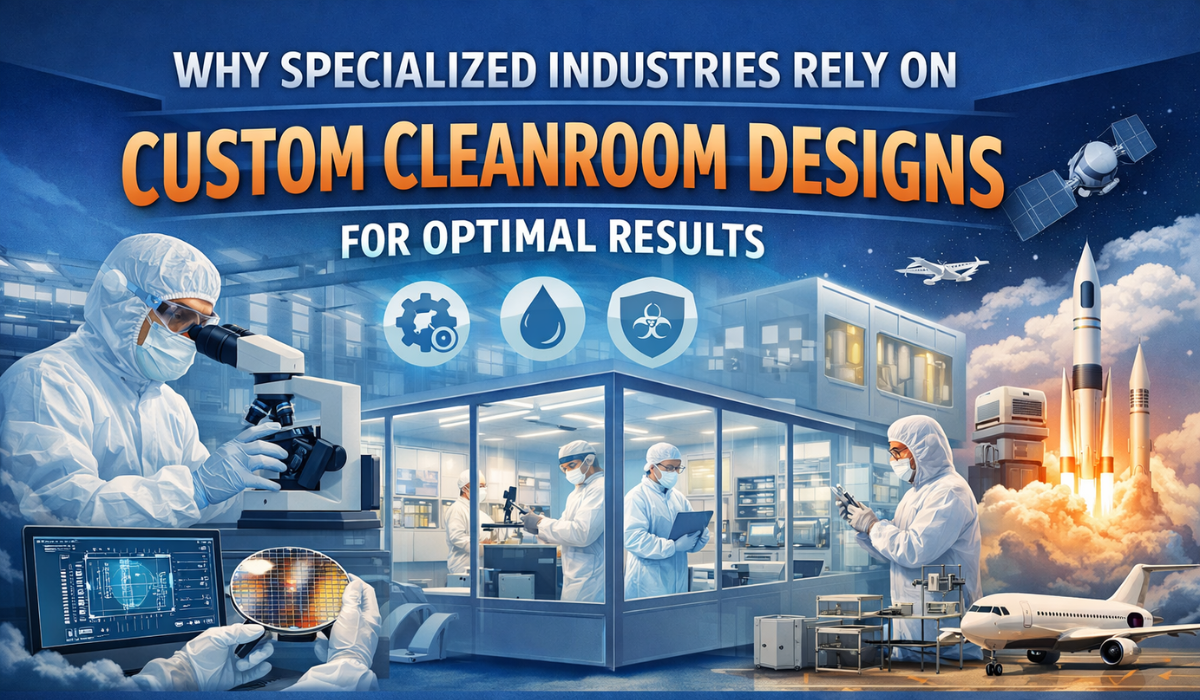
Cleanroom customization is essential for specialized industries that require precise environmental control to achieve optimal results.
In industries such as pharmaceuticals, biotechnology, aerospace, electronics, and nanotechnology, even minor contamination can affect product quality, safety, and performance.
Standard cleanroom solutions often fail to meet the unique operational demands of these sectors.
This is where custom built cleanrooms and custom ISO cleanrooms become critical.
By tailoring every element from airflow systems to material selection, organizations can create environments that meet strict ISO cleanroom standards while supporting efficiency and scalability.
Working with experienced cleanroom companies and a reliable cleanroom contractor ensures that every aspect of cleanroom construction is aligned with industry requirements.
Through advanced cleanroom engineering solutions, businesses can maintain consistent performance, reduce risks, and support long-term innovation.
What Is Cleanroom Customization?
Cleanroom customization refers to the process of designing and building controlled environments tailored to the specific needs of an industry or application.
As opposed to standard cleanrooms, customized solutions are engineered to address precise operational requirements, including contamination control, airflow management, and environmental stability.
This approach allows organizations to optimize their cleanroom design solutions based on factors such as workflow, equipment sensitivity, and regulatory standards.
Customization ensures that every component of the cleanroom supports performance and compliance.
By implementing cleanroom customization, businesses can achieve a higher level of control, ensuring that their processes remain consistent and reliable.
Why Standard Cleanrooms Are Not Enough for Specialized Industries
Standard cleanrooms are designed to meet general contamination control requirements, but they often lack the flexibility needed for specialized applications.
Industries with complex processes require environments that go beyond basic cleanliness levels.
For example, pharmaceutical production may require strict humidity control, while semiconductor manufacturing demands ultra-low particle counts.
Generic cleanrooms cannot always accommodate these variations effectively.
Custom built cleanrooms address these challenges by offering tailored solutions that align with specific operational needs.
Cleanroom customization ensures that the environment supports both precision and efficiency, making it a preferred choice for specialized industries.
Key Benefits of Custom Built Cleanrooms
Precision Environmental Control
Custom built cleanrooms provide precise control over temperature, humidity, and airflow.
This level of control is essential for maintaining product integrity and ensuring consistent results.
Regulatory Compliance
Custom ISO cleanrooms are designed to meet strict ISO cleanroom standards.
This ensures compliance with industry regulations and reduces the risk of non-compliance issues.
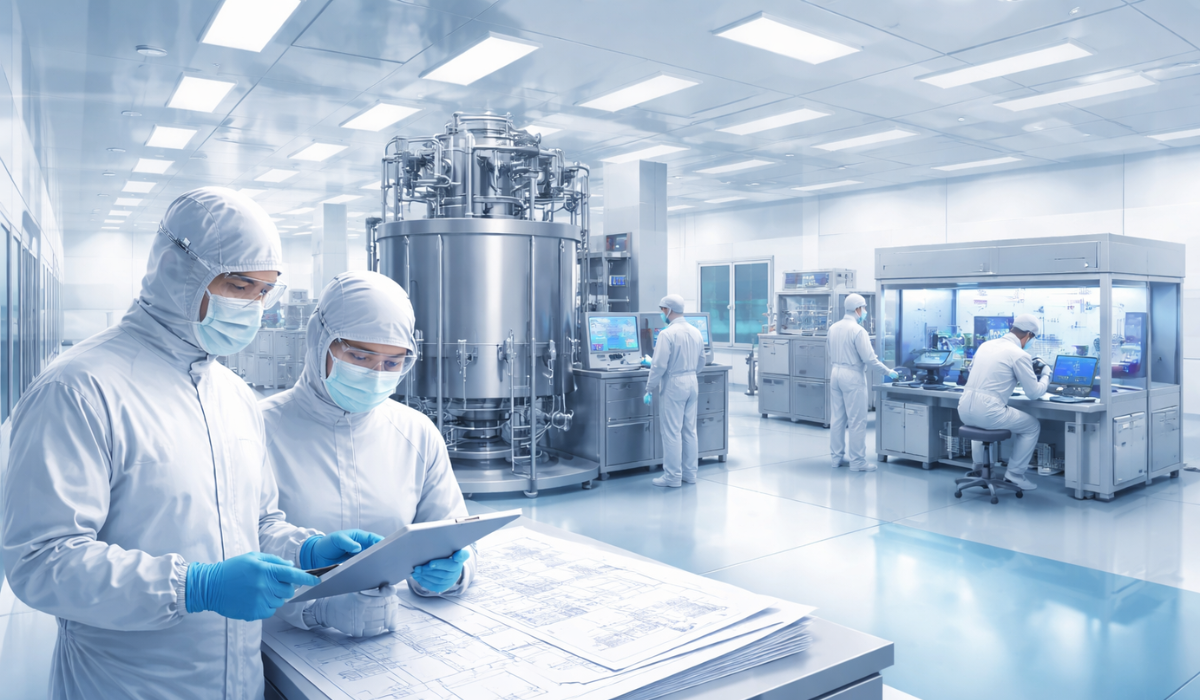
Enhanced Efficiency and Productivity
Optimized layouts and workflows improve operational efficiency.
Cleanroom engineering solutions help streamline processes and reduce downtime.
Scalability and Flexibility
Custom solutions allow for future expansion and upgrades. Businesses can adapt their cleanroom as their needs evolve.
Reduced Contamination Risks
Advanced filtration systems and controlled environments minimize contamination, improving product quality and reliability.
Features of Custom ISO Cleanrooms
Custom ISO cleanrooms are equipped with advanced features that ensure optimal performance and compliance.
Advanced Filtration Systems
HEPA and ULPA filters remove airborne particles, maintaining high levels of cleanliness required for specialized industries.
Controlled Airflow Systems
Laminar airflow systems ensure that air moves in a consistent direction, preventing contamination.
Specialized Materials and Surfaces
Non-shedding materials and smooth surfaces reduce particle generation and simplify cleaning processes.
Environmental Monitoring Systems
Real-time monitoring systems track temperature, humidity, and particle levels, ensuring consistent conditions.
These features make custom ISO cleanrooms an essential component of modern cleanroom construction.
Industries That Depend on Cleanroom Customization
Cleanroom customization is critical for a wide range of specialized industries.
Pharmaceutical and biotechnology companies rely on controlled environments to ensure product safety and efficacy.
Semiconductor and electronics industries require ultra-clean conditions for manufacturing sensitive components.
Aerospace and defense sectors use cleanrooms for precision engineering and testing.
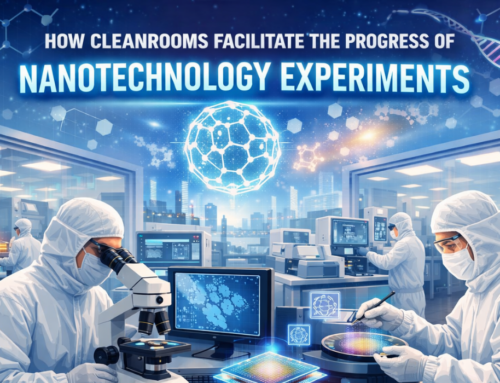
Nanotechnology and research laboratories depend on contamination-free environments for accurate experimentation.
Medical device manufacturers also require cleanrooms to maintain strict quality standards.
Cleanroom companies develop tailored solutions for each of these industries, ensuring optimal performance and compliance.
The Role of Cleanroom Companies and Contractors
Cleanroom companies and a skilled cleanroom contractor play a vital role in the success of cleanroom projects.
They provide expertise in design, construction, and installation, ensuring that every aspect of the cleanroom meets industry standards.
A professional cleanroom contractor manages the entire process, from initial planning to final validation.
This includes selecting appropriate materials, designing airflow systems, and ensuring compliance with ISO cleanroom standards.
By working with experienced providers, businesses can ensure that their cleanroom construction project is completed efficiently and meets all regulatory requirements.
Modular Cleanrooms vs Fully Custom Cleanrooms
Modular cleanrooms offer a flexible and cost-effective solution for many applications.
These prefabricated systems can be quickly installed and easily modified to meet changing requirements.
Fully custom cleanrooms, on the other hand, are designed from the ground up to meet specific operational needs. They provide a higher level of customization and precision.
In many cases, businesses choose a hybrid approach, combining the flexibility of modular cleanrooms with the precision of custom built cleanrooms.
Key Considerations Before Investing in Cleanroom Customization
Before investing in cleanroom customization, businesses should carefully evaluate several critical factors to ensure the environment is designed for long-term performance, compliance, and scalability.
A well-planned cleanroom is not just a construction project, it is a strategic investment that directly impacts operational efficiency and product quality.
Industry requirements and ISO cleanroom standards must be clearly defined at the outset.
Different industries have unique cleanliness classifications, airflow requirements, and environmental controls.
Understanding these specifications ensures that the cleanroom meets regulatory expectations and supports the intended application without costly modifications later.
Budget and scalability should also be evaluated to ensure long-term value.
While initial costs are important, businesses should consider lifecycle costs, including maintenance, energy consumption, and future expansion.
Custom solutions that allow for scalability provide flexibility as operational needs evolve, making them a more sustainable investment.
Technology integration is another key consideration. Modern cleanrooms increasingly rely on advanced monitoring systems, automation, and data-driven controls to maintain consistent environmental conditions.
Real-time monitoring of temperature, humidity, and particle levels helps prevent deviations and ensures continuous compliance with ISO cleanroom standards.
Layout and workflow design also play a crucial role in overall efficiency.
A properly designed cleanroom should support seamless movement of personnel, materials, and equipment while minimizing contamination risks.
Cleanroom design solutions that prioritize workflow optimization can significantly improve productivity and reduce operational bottlenecks.
Material selection and construction quality should not be overlooked. Using non-shedding, durable, and easy-to-clean materials helps maintain cleanliness and extends the lifespan of the cleanroom.
Proper sealing, surface finishes, and structural integrity are essential for maintaining controlled conditions.
Finally, working with a trusted cleanroom contractor is essential to ensure that all these factors are addressed during the planning and design phase.
Experienced cleanroom companies bring technical expertise, industry knowledge, and end-to-end project management, ensuring that the cleanroom construction process is efficient, compliant, and tailored to specific operational goals.
Future Trends in Cleanroom Design and Customization
The future of cleanroom customization is being shaped by innovation and technology.
Smart cleanrooms with real-time monitoring capabilities are becoming increasingly common.
Automation and AI-driven systems are improving precision and reducing human error. Energy-efficient designs and sustainable materials are also gaining popularity.
These advancements are enhancing cleanroom engineering solutions and supporting the evolving needs of specialized industries.
Conclusion
Cleanroom customization is a critical investment for specialized industries seeking precision, compliance, and efficiency.
By implementing custom built cleanrooms and custom ISO cleanrooms, businesses can create environments that support innovation and consistent performance.
Working with experienced cleanroom companies and a reliable cleanroom contractor ensures that every aspect of the cleanroom is designed for success.
These controlled environments enable industries to meet strict standards while maintaining operational excellence.
Get Custom Cleanroom Solutions Tailored to Your Industry
At UltraPure Technology, we specialize in delivering advanced cleanroom engineering solutions designed to meet the unique needs of specialized industries.
As a trusted cleanroom contractor, we provide custom built cleanrooms, modular cleanrooms, and custom ISO cleanrooms tailored for precision and compliance.
Contact us today to explore how our cleanroom customization solutions can help you achieve optimal results with high-performance, scalable, and fully controlled environments.
Frequently Asked Questions
What is cleanroom customization and why is it important?
Cleanroom customization involves designing controlled environments tailored to specific industry needs. It is important because it ensures precise control over contamination, airflow, and environmental conditions, which are critical for maintaining product quality and performance.
How do custom built cleanrooms improve operational efficiency?
Custom built cleanrooms are designed to optimize workflow and environmental control. This reduces errors, improves productivity, and ensures consistent results, making them more efficient than standard cleanroom solutions.
What are custom ISO cleanrooms?
Custom ISO cleanrooms are tailored environments designed to meet specific ISO cleanroom standards. They provide precise control over contamination and environmental factors, ensuring compliance and high performance.
Which industries benefit from cleanroom customization?
Industries such as pharmaceuticals, biotechnology, electronics, aerospace, and nanotechnology benefit from cleanroom customization. These sectors require controlled environments to maintain precision and quality.
What role does a cleanroom contractor play?
A cleanroom contractor oversees the design, construction, and installation of cleanrooms. They ensure that the environment meets regulatory standards and performs efficiently.
What are the advantages of modular cleanrooms?
Modular cleanrooms offer flexibility, faster installation, and scalability. They can be customized and expanded as business needs evolve, making them a cost-effective solution.
How do cleanroom companies ensure compliance with ISO standards?
Cleanroom companies follow strict design and validation processes. They conduct testing and certification to ensure that the cleanroom meets ISO cleanliness and performance requirements.
What are cleanroom engineering solutions?
Cleanroom engineering solutions involve the design and implementation of systems that control contamination and environmental conditions. These solutions improve efficiency, safety, and performance.
What factors should be considered before building a cleanroom?
Key factors include industry requirements, ISO standards, budget, scalability, and technology integration. Working with a professional cleanroom contractor ensures that all these aspects are addressed effectively.