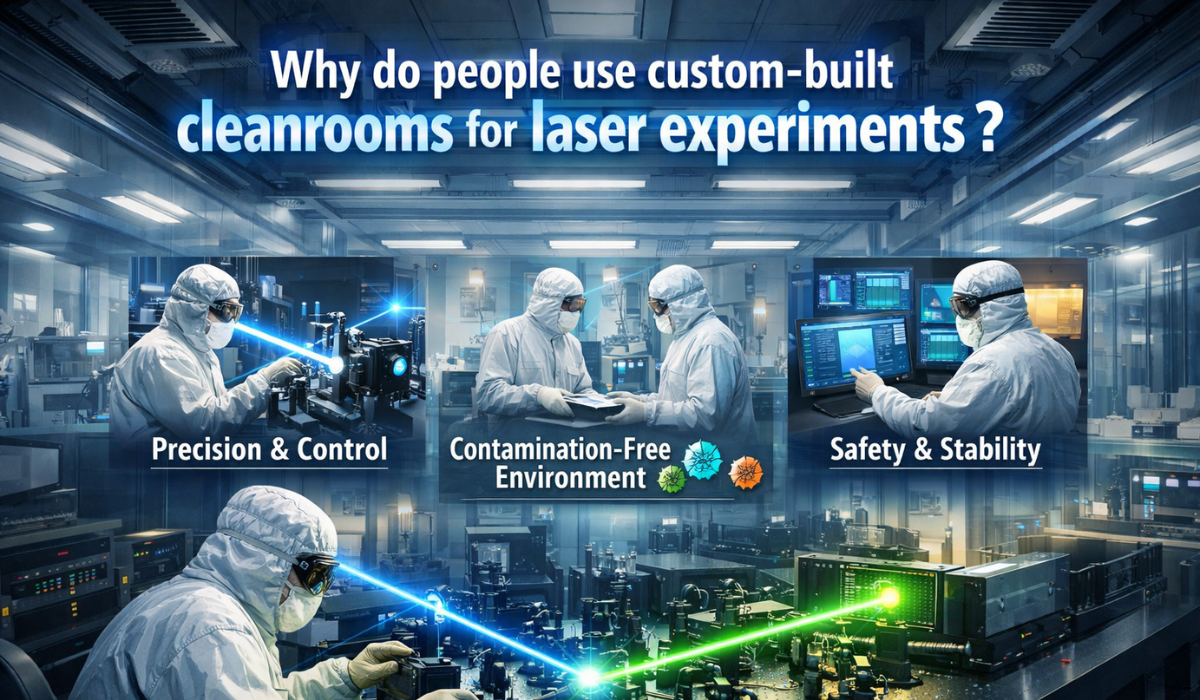
Custom built cleanrooms are essential for maintaining the precision and environmental control required in advanced laser experiments.
In industries such as photonics, semiconductor research, and medical device development, even the smallest environmental fluctuation can impact results, making controlled environments critical.
Laser systems are highly sensitive to airborne particles, temperature shifts, humidity changes, and even minor vibrations.
Standard solutions often fail to meet these strict requirements, which is why cleanroom customization plays a vital role.
By working with experienced cleanroom companies, organizations can design spaces that align with their exact operational and technical needs.
A professional cleanroom company ensures that every component from airflow to structural stability is engineered for performance, safety, and compliance.
In this article, we explore why laser cleanrooms are necessary and how custom solutions improve efficiency, accuracy, and long-term reliability.
What Are Laser Cleanrooms?
Laser cleanrooms are specialized controlled environments designed to support laser-based applications by minimizing contamination and environmental interference.
As compared to traditional cleanrooms, these spaces are tailored to meet the unique demands of laser systems, including precise temperature control, vibration isolation, and optical stability.
These environments are commonly used in research labs, manufacturing facilities, and testing centers where laser accuracy is critical.
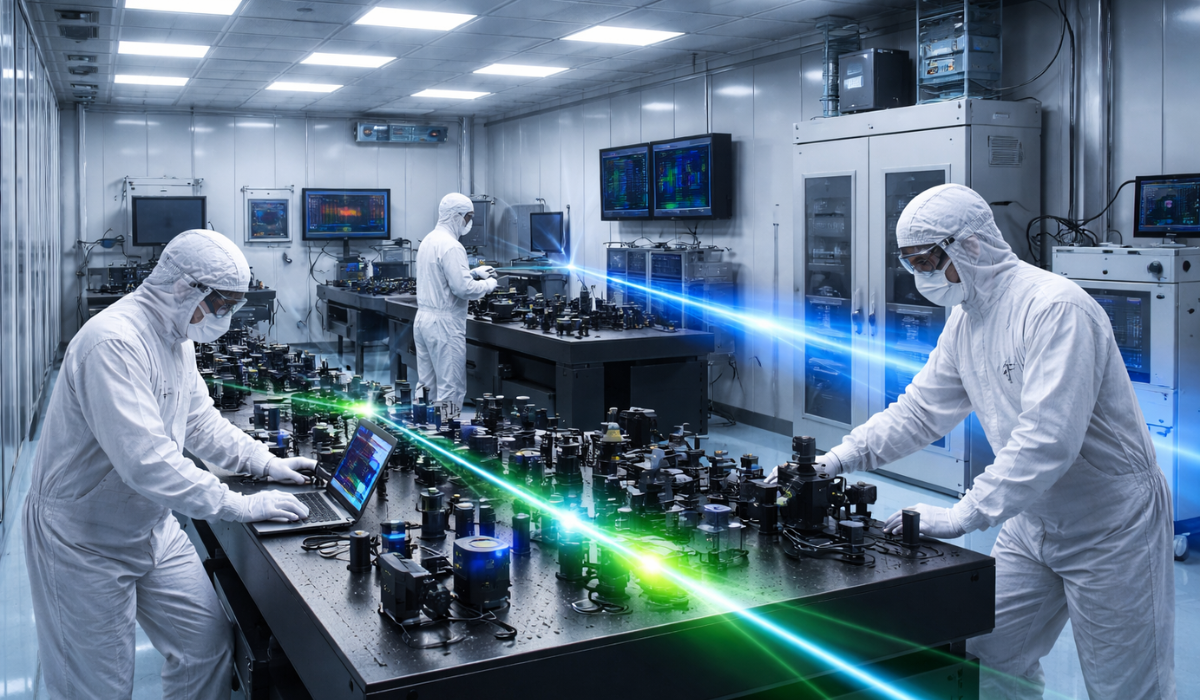
A cleanroom for laser experiments ensures that external variables do not interfere with beam alignment, energy output, or measurement precision.
By incorporating advanced filtration systems, controlled airflow, and structural enhancements, laser cleanrooms provide the stability required for consistent and repeatable results.
Why Standard Cleanrooms Are Not Enough for Laser Experiments
Standard cleanrooms are designed to control airborne particles and maintain general environmental stability.
However, laser experiments require a much higher level of precision that goes beyond basic contamination control.
Laser systems can be affected by even the slightest vibration or temperature fluctuation.
Generic cleanrooms often lack the structural and environmental controls needed to address these challenges.
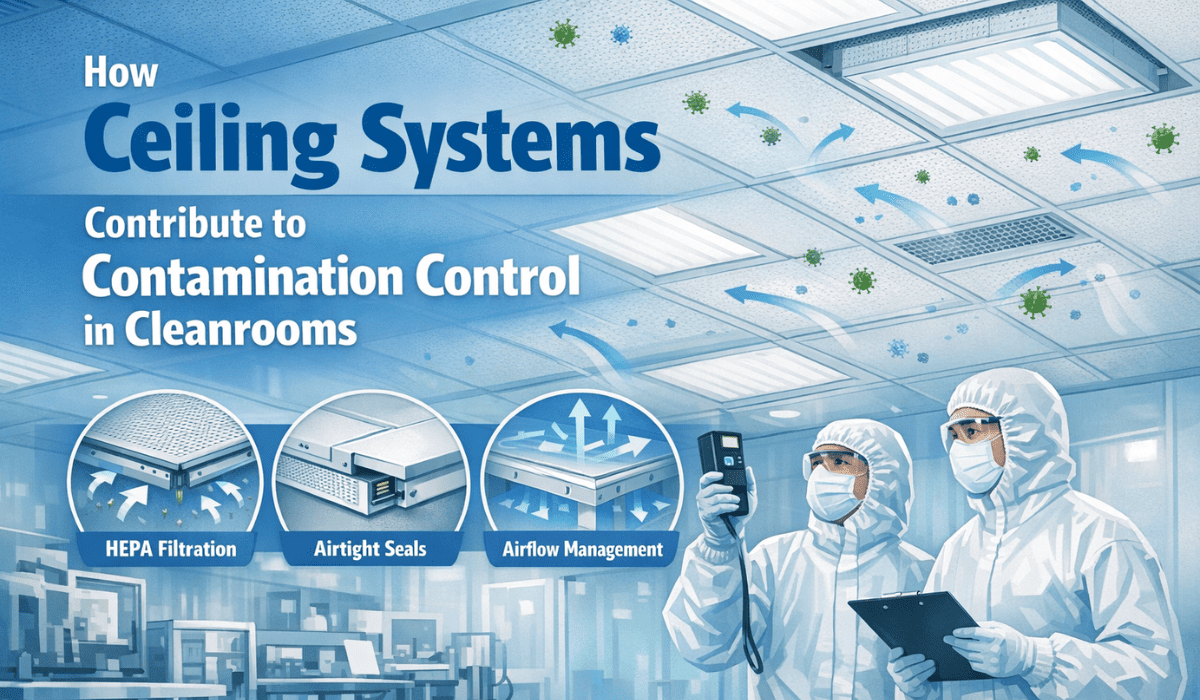
For example, airflow patterns in standard environments may introduce turbulence that interferes with laser paths.
This is where cleanroom customization becomes critical. Custom-built cleanrooms are specifically engineered to eliminate these risks by addressing every variable that could impact performance.
Cleanroom companies design solutions that ensure stability, precision, and consistency something standard environments cannot guarantee.
Key Benefits of Custom Built Cleanrooms for Laser Experiments
Precision Environmental Control
One of the main advantages of specially designed cleanrooms is the ability to maintain strict environmental conditions.
Temperature, humidity, and airflow are carefully regulated to ensure optimal laser performance.
Vibration and Noise Reduction
Laser systems require stable platforms for accurate operation.
Custom cleanroom design includes vibration-dampening structures and isolated flooring systems to prevent disruptions.
Enhanced Safety Measures
Laser environments can pose safety risks if not properly managed.
A cleanroom company integrates safety features such as laser shielding, controlled access, and compliance with industry standards.
Improved Experiment Accuracy
By eliminating external interference, precision-engineered cleanrooms provide a controlled environment that supports consistent and reliable results.
This is especially important in research and high-precision manufacturing.
Scalability and Flexibility
Many modular cleanrooms can be customized to meet specific needs while allowing for future expansion.
This flexibility ensures that the cleanroom can adapt as technology evolves.
Core Features of a Custom Cleanroom Design for Laser Applications
A well-designed cleanroom for laser experiments includes several advanced features that support performance and compliance.
Advanced Air Filtration Systems
High-efficiency HEPA or ULPA filters remove airborne particles and maintain cleanroom standards. These systems are critical for protecting sensitive laser equipment.
Temperature and Humidity Stability
Precision HVAC systems are used to maintain consistent environmental conditions. Even small variations can impact laser accuracy, making this feature essential.
Anti-Vibration Flooring and Structural Design
Specialized flooring systems help isolate the cleanroom from external vibrations. This is particularly important for applications involving high-precision lasers.
Specialized Lighting and Optical Controls
Laser cleanrooms often require controlled lighting conditions to prevent interference. Custom designs include lighting solutions that support optical clarity and stability.
Electrostatic Discharge (ESD) Protection
ESD-safe materials and systems are used to protect sensitive components from electrical discharge, ensuring safe and reliable operation.
Industries That Rely on Laser Cleanrooms
Several industries depend on precision-engineered cleanrooms to support their laser-based processes.
Semiconductor manufacturing requires precise laser applications for microfabrication and inspection.
Medical device companies use laser systems for cutting and shaping delicate components.
Aerospace and defense industries rely on laser technology for testing and development.
Photonics and optics research facilities also depend on stable environments for experimentation.
Cleanroom companies tailor solutions to meet the unique needs of each industry, ensuring optimal performance and compliance.
The Role of Cleanroom Companies in Customization
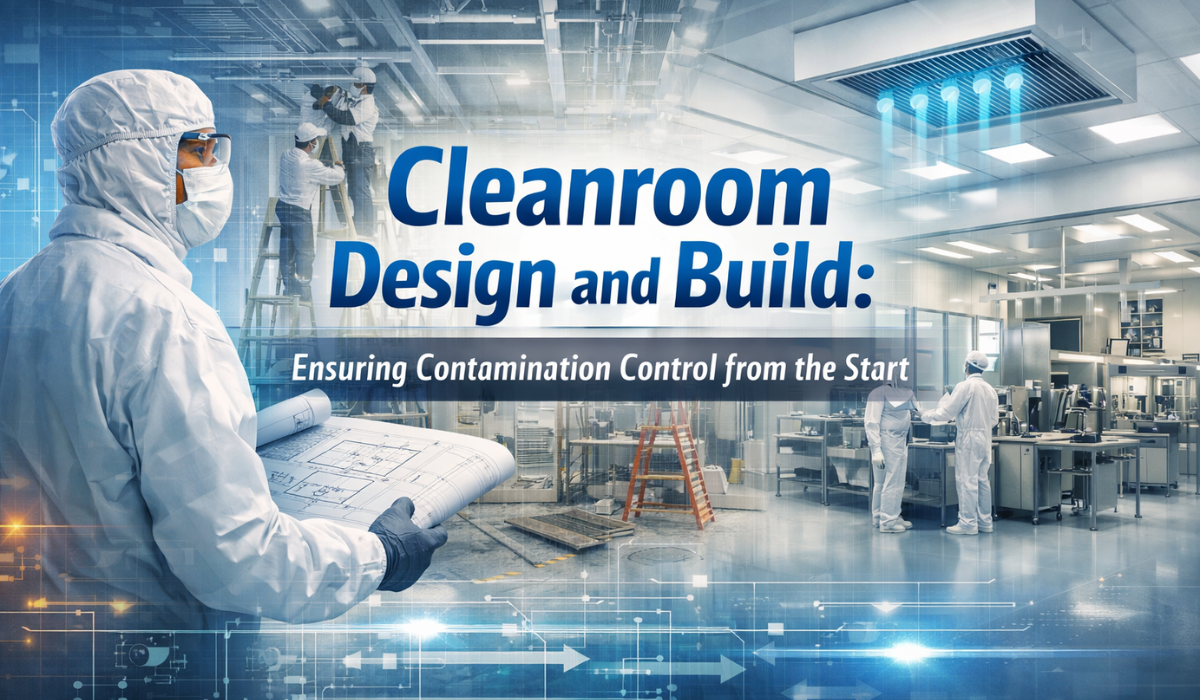
Experienced cleanroom companies play a critical role in designing and building environments that meet exact specifications.
From initial consultation to final installation, a professional cleanroom company provides end-to-end solutions.
These services include design planning, engineering, material selection, and compliance with ISO standards.
By understanding the specific requirements of laser applications, cleanroom companies create environments that enhance performance and efficiency.
Choosing the right partner ensures that your investment delivers long-term value and reliability.
Custom Cleanroom vs Modular Cleanroom: Which Is Better?
Both tailor-made cleanrooms and modular cleanrooms offer unique advantages.
Fully custom solutions provide highly specialized designs tailored to exact requirements.
Modular cleanrooms, on the other hand, offer flexibility and faster installation.
For laser applications, a hybrid approach is often ideal. Modular cleanrooms can be customized to include advanced features such as vibration control and precise environmental systems.
Cleanroom customization allows organizations to balance cost, flexibility, and performance.
Key Considerations Before Building a Laser Cleanroom
Before investing in a cleanroom for laser experiments, several factors should be considered.
The type of laser application will determine the level of environmental control required.
Cleanliness standards must align with industry regulations. Space planning is also critical to ensure efficient workflow and equipment placement.
Budget and scalability should be evaluated to support future growth. Working with a trusted cleanroom company ensures that all these factors are addressed during the design phase.
Future Trends in Laser Cleanroom Technology
Advancements in technology are shaping the future of laser cleanrooms.
Smart monitoring systems are being integrated to provide real-time data on environmental conditions.
Energy-efficient designs are reducing operational costs while maintaining performance.
Automation and AI-driven controls are improving precision and reducing human error. New materials are also being developed to enhance contamination control and durability.
These innovations highlight the growing importance of tailor-made cleanrooms in modern industries.
Conclusion
Customized-based cleanrooms are a critical investment for organizations working with laser technology.
They provide the environmental stability, safety, and precision needed to achieve consistent and accurate results.
By leveraging cleanroom customization and partnering with experienced cleanroom companies, businesses can create environments that support innovation and long-term success.
At UltraPure Technology, we are a reliable cleanroom company, which ensures that every aspect of the design meets industry standards and operational goals.
Get Expert Custom Cleanroom Solutions for Your Laser Applications
If you are planning a cleanroom for laser experiments, working with a specialized provider is essential.
Our team delivers advanced cleanroom engineering solutions tailored to your exact requirements, ensuring precision, compliance, and long-term efficiency.
Contact us today to explore how our custom built cleanrooms can support your laser applications with high-performance, scalable, and fully optimized environments.
Frequently Asked Questions
What are custom-designed cleanrooms used for in laser experiments?
Cleanrooms are designed to control environmental factors such as airborne particles, temperature, and vibrations. These conditions are essential for maintaining laser precision and ensuring accurate experimental outcomes. By minimizing interference, they help improve consistency and reliability in sensitive applications.
Why is cleanroom customization important for laser applications?
Laser systems are highly sensitive to even minor environmental changes. Cleanroom customization ensures that every aspect of the environment is tailored to support stable operation. This includes airflow control, vibration isolation, and temperature stability, all of which are critical for optimal performance.
How do cleanroom companies design laser cleanrooms?
Cleanroom companies begin by evaluating the specific requirements of the laser system and application. They then design a controlled environment that includes advanced filtration, precise HVAC systems, and structural enhancements. The goal is to create a space that supports both performance and compliance.
What industries use laser cleanrooms?
Industries such as semiconductor manufacturing, medical device production, aerospace, and photonics rely heavily on laser cleanrooms. These environments are essential for maintaining precision and ensuring high-quality results in sensitive processes.
What is the difference between modular and purpose-built cleanrooms?
Modular cleanrooms are pre-engineered systems that offer flexibility and faster installation. purpose-built cleanrooms, however, are designed specifically for unique requirements. For laser applications, custom solutions often provide better performance and precision.
How do cleanroom companies ensure compliance with standards?
A professional cleanroom company follows strict ISO standards and industry regulations during design and construction. They also perform testing and validation to ensure the cleanroom meets required performance benchmarks and safety guidelines.
What features are essential in a laser cleanroom?
Key features include high-efficiency air filtration systems, precise temperature and humidity control, anti-vibration structures, and ESD protection. These elements work together to create a stable environment for laser operations.
Are bespoke cleanrooms scalable for future needs?
Yes, many bespoke cleanrooms are designed with scalability in mind. They can be expanded or modified as operational requirements change, making them a long-term solution for growing industries.
How long does it take to build a custom cleanroom?
The timeline depends on the complexity of the design and requirements. However, experienced cleanroom companies streamline the process through efficient planning, engineering, and installation, reducing overall project time.