Design & Build Cleanroom Approach is a strategic project delivery method that integrates cleanroom design and construction under one accountable team to reduce risk, improve compliance alignment, and accelerate facility readiness.
In highly regulated industries where ISO cleanroom classification, GMP cleanroom design, and contamination control strategy must function seamlessly together, fragmented project models often create costly delays and coordination gaps.
An integrated design-build structure eliminates these disconnects by aligning engineering, cleanroom HVAC system design, modular cleanroom construction, and cleanroom project management from concept through validation.
For pharmaceutical manufacturing, biotechnology, aerospace, semiconductor, and advanced research facilities, this approach provides greater cost predictability while streamlining cleanroom compliance standards integration and supporting a more efficient cleanroom validation process.
Instead of managing multiple vendors with competing priorities, organizations benefit from a unified, performance-driven delivery model focused on long-term operational success.
What Is a Design & Build Cleanroom Approach?
A Design & Build Cleanroom Approach consolidates engineering, architectural planning, modular cleanroom construction, and commissioning into one coordinated process.
Instead of separating designers from contractors, a single team manages layout planning, cleanroom HVAC system design, ISO cleanroom classification strategy, procurement, installation, and the cleanroom validation process.
This structure improves cleanroom project management by eliminating disconnects between design intent and field execution.
Why a Design & Build Cleanroom Approach Outperforms Traditional Delivery Models
Traditional cleanroom delivery models often separate design from construction, creating gaps between engineering intent and field execution.
In highly regulated environments, these disconnects can lead to schedule delays, cost overruns, and compliance risks.
A Design & Build Cleanroom Approach eliminates those inefficiencies by integrating cleanroom design and build under a single accountable team, ensuring alignment from concept through commissioning.
Limitations of Fragmented Cleanroom Project Models
When architects, engineers, and contractors operate independently, misalignment frequently occurs between engineering drawings and real-world installation conditions.
Changes to airflow design, utility routing, or structural coordination can result in change orders and extended timelines.
If cleanroom compliance standards or GMP cleanroom design requirements are introduced late in the process, redesigns may become necessary, increasing both cost and risk.
An integrated delivery structure embeds contamination control strategy and regulatory alignment into the earliest planning stages, reducing uncertainty and improving coordination.
Unified Cleanroom Design and Construction Coordination
When one entity oversees cleanroom design and construction, collaboration improves significantly.
Architectural planning, mechanical engineering, and modular cleanroom construction are developed in parallel rather than in isolation.
Utility routing, workflow optimization, and system integration are addressed holistically, reducing field conflicts.
This unified structure strengthens coordination between structural systems and cleanroom HVAC system design, improving construction efficiency while minimizing rework.
Accelerated Project Delivery Through Overlapping Phases
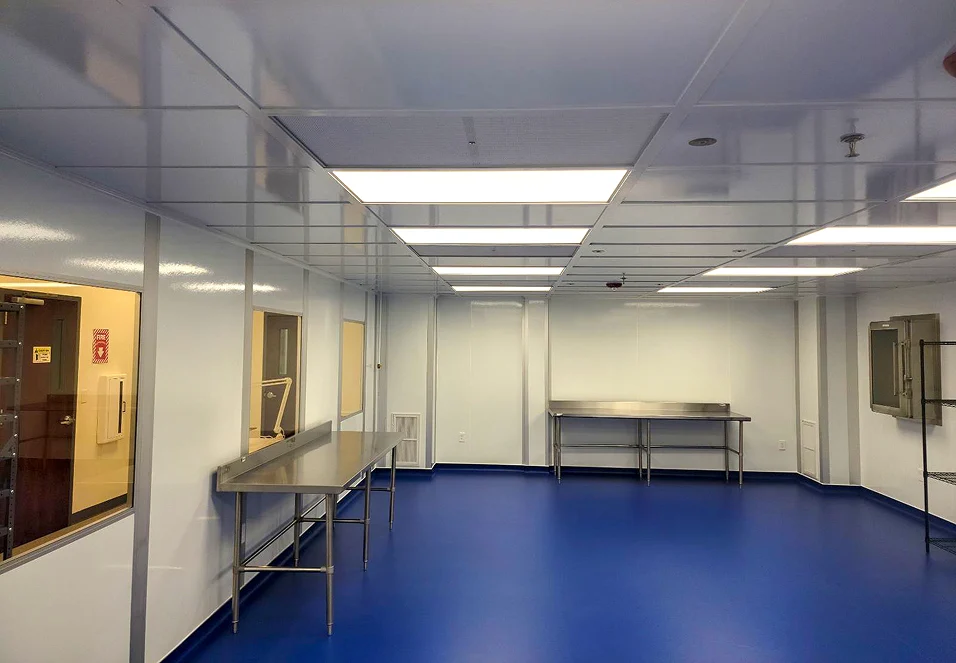
A Design & Build Cleanroom Approach allows procurement, fabrication, and site preparation to progress alongside engineering development.
Modular components can be manufactured while mechanical layouts are finalized, shortening overall project timelines.
This parallel workflow supports faster operational readiness without compromising ISO cleanroom classification targets or GMP cleanroom design integrity.
Greater Budget Predictability and Cost Control
Clear alignment between cleanroom design and construction also improves procurement planning and minimizes unexpected cost escalation caused by late-stage modifications.
Early coordination between engineering teams and construction specialists allows value-driven decisions without compromising ISO cleanroom classification or GMP cleanroom design requirements.
By integrating cleanroom HVAC system design and modular cleanroom construction strategies at the outset, organizations gain more accurate forecasting of labor, materials, and commissioning timelines.
This structured approach strengthens financial control while maintaining regulatory compliance and operational performance standards.
Stronger Compliance Alignment from Day One
Meeting cleanroom compliance standards requires consistent coordination between layout planning, airflow design, and system performance expectations.
In an integrated model, ISO cleanroom classification levels, environmental controls, and GMP cleanroom design criteria are embedded into architectural and mechanical planning from the outset.
This proactive approach improves regulatory readiness and simplifies inspection and certification processes.
Integrated Risk-Based Cleanroom Design
By incorporating risk analysis early in cleanroom design and construction, engineering teams can tailor ISO cleanroom classification levels to the actual criticality of the process rather than applying uniform standards across all zones.
This targeted approach supports smarter resource allocation and more efficient system performance.
Integrated risk-based cleanroom design also improves coordination between cleanroom HVAC system design and spatial planning.
Airflow patterns, pressure cascades, and filtration strategies are developed around real operational risk, strengthening contamination control strategy without inflating capital or energy costs.
Over time, this disciplined framework enhances regulatory confidence, simplifies the cleanroom validation process, and ensures the environment remains adaptable as production requirements evolve.
Coordinated Cleanroom HVAC System Design
Air handling systems define the performance of any controlled environment.
Pressure cascades, filtration systems, temperature stability, and airflow patterns must function in harmony with equipment placement and room layout.
Within a Design & Build Cleanroom Approach, cleanroom HVAC system design is coordinated directly with structural and architectural elements, reducing installation conflicts and improving long-term operational stability.
Seamless Modular Cleanroom Construction Integration
Modular cleanroom construction provides flexibility, scalability, and reduced installation time.
When incorporated within turnkey cleanroom solutions, wall panels, ceiling grids, and integrated utility systems are planned alongside mechanical infrastructure.
This coordination enables efficient future expansion while maintaining compliance with ISO cleanroom classification and regulatory expectations.
Streamlined Cleanroom Validation Process
The cleanroom validation process confirms that environmental systems perform according to design intent.
Installation Qualification, Operational Qualification, and Performance Qualification testing are more efficient when the same team manages engineering and construction.
Integrated documentation enhances traceability, simplifies audit preparation, and supports long-term regulatory compliance.
Long-Term Operational Performance Benefits
The advantages of a Design & Build Cleanroom Approach extend beyond construction.
Coordinated engineering improves energy efficiency, simplifies maintenance access, and enhances airflow stability over time.
Facilities developed through integrated cleanroom design-build services typically experience fewer operational disruptions and smoother regulatory inspections, reinforcing long-term value.
Scalability and Future Expansion Planning
Cleanroom environments must often adapt to evolving production requirements, new technologies, or regulatory updates.
A design and build cleanroom supports scalability by integrating expansion planning into the original engineering framework.
Through coordinated cleanroom project management and modular cleanroom construction, infrastructure can be designed to accommodate future airflow increases, additional processing areas, or upgraded equipment.
Utility capacity, pressure cascades, and contamination control strategy can be engineered with expansion flexibility in mind.
This forward-thinking approach protects capital investment and reduces the complexity of future renovations.
Rather than retrofitting constrained systems, facilities built with integrated cleanroom design-build services are positioned to scale efficiently without compromising cleanroom compliance standards or validation requirements.
Conclusion: Integration Reduces Risk and Improves Performance
Modern regulated environments demand precision, coordination, and accountability.
A design & build cleanroom strategy aligns cleanroom design and construction, cleanroom project management, contamination control strategy, and compliance requirements within one cohesive framework.
By integrating risk-based cleanroom design, modular cleanroom construction, ISO cleanroom classification planning, and cleanroom HVAC system design, organizations gain both efficiency and confidence throughout the facility lifecycle.
Partner with UltraPure Technology for Integrated Cleanroom Solutions
UltraPure Technology provides comprehensive cleanroom design-build services tailored to highly regulated industries.
Our team delivers turnkey cleanroom solutions that integrate engineering, modular cleanroom construction, compliance alignment, and full cleanroom validation process support.
If you are planning a new controlled environment or upgrading an existing facility, UltraPure Technology can implement a Design & Build Cleanroom Approach that protects your investment and supports long-term operational success.
Contact our experts to discuss your cleanroom project management requirements and begin building with confidence.
Frequently Asked Questions
What defines a Design & Build Cleanroom Approach?
A Design & Build Cleanroom Approach unifies cleanroom design and construction under one accountable team. Engineering, HVAC planning, contamination control strategy, and installation are coordinated from concept through validation. This integrated structure reduces miscommunication and strengthens project efficiency.
How does this approach support cleanroom compliance standards?
Compliance requirements are embedded into early planning rather than added later. ISO cleanroom classification targets, GMP cleanroom design criteria, and environmental monitoring considerations are incorporated into layout and system design, improving regulatory readiness and inspection outcomes.
Is modular cleanroom construction suitable for this model?
Modular cleanroom construction integrates seamlessly within turnkey cleanroom solutions. Panels, ceilings, and utility systems are coordinated alongside mechanical engineering, allowing efficient installation, scalability, and future expansion without compromising compliance.
Why is cleanroom HVAC system design critical?
Cleanroom HVAC system design governs airflow control, filtration efficiency, pressure relationships, and temperature stability. Integrating HVAC planning with architectural and construction decisions improves system reliability and reduces field conflicts during installation.
How does risk-based cleanroom design improve efficiency?
Risk-based cleanroom design evaluates operational sensitivity before determining ISO cleanroom classification levels. This prevents unnecessary overengineering while maintaining compliance, improving both cost control and environmental performance.
What is included in the cleanroom validation process?
The cleanroom validation process confirms that systems meet required performance criteria. Testing includes airflow verification, particle count measurement, pressure differential confirmation, and documentation review to support compliance with regulatory expectations.
Are turnkey cleanroom solutions more predictable financially?
Turnkey cleanroom solutions often provide stronger financial control because budgeting, engineering, procurement, and construction are managed under one coordinated structure. This reduces change orders and improves overall cost transparency.
How does integrated cleanroom project management reduce delays?
Integrated cleanroom project management aligns engineering decisions with construction sequencing in real time. Early collaboration prevents scheduling conflicts, supports proactive procurement, and accelerates issue resolution throughout the project lifecycle.