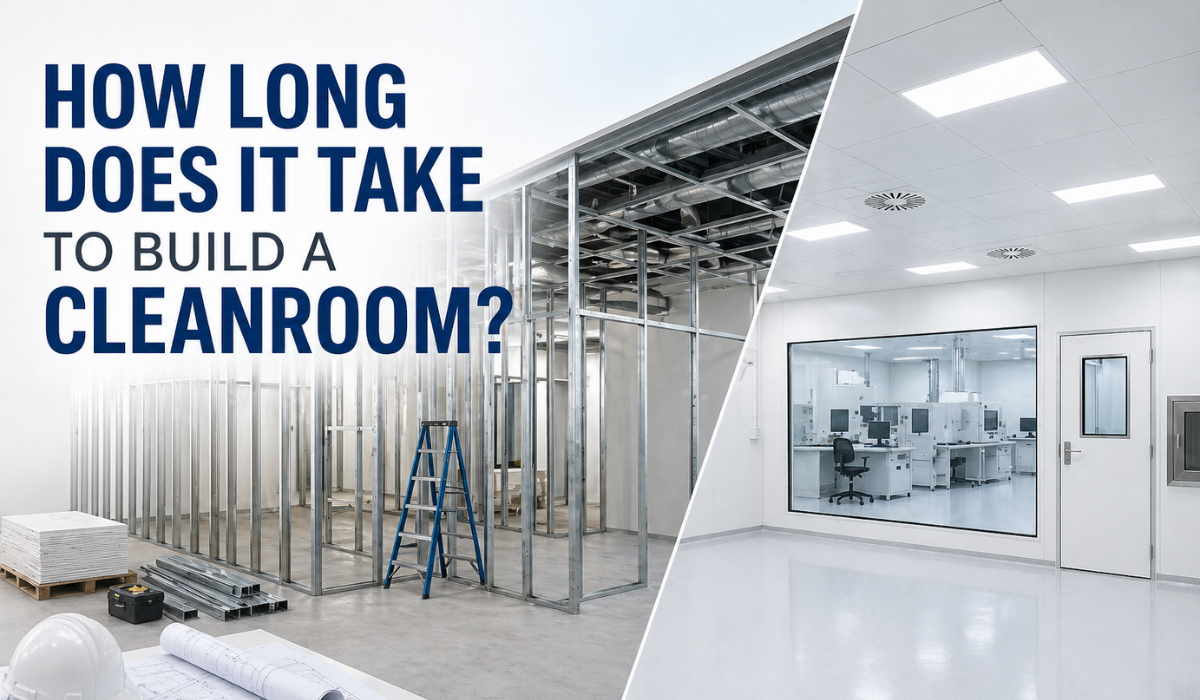
Building a cleanroom is a detailed process that requires careful planning, technical expertise, and close coordination between design, construction, and certification teams.
Businesses in industries such as pharmaceuticals, medical devices, biotechnology, aerospace, semiconductor manufacturing, and laboratory research often need a cleanroom environment that meets strict contamination control standards.
Because of the complexity involved, many companies want to know how long the process will take before they begin.
A typical cleanroom project can take anywhere from a few months to more than a year depending on the size, classification level, regulatory requirements, and complexity of the environment being built.
Working with an experienced provider for cleanroom construction and design-build services can help reduce delays, improve coordination, and keep the project moving efficiently from concept to completion.
Why Cleanroom Construction Timelines Vary
Every cleanroom project is different.
A small modular cleanroom built inside an existing facility may take far less time than a large ISO-classified manufacturing environment with specialized HVAC systems, pass-through chambers, gowning rooms, and process utilities.
Several factors influence the overall cleanroom construction timeline, including:
- Cleanroom size and layout
- ISO classification requirements
- Industry-specific regulations
- Existing building conditions
- HVAC and filtration requirements
- Utility needs such as compressed air, gases, or purified water
- Availability of materials and equipment
- Permit approvals and inspections
- Testing and certification requirements
Projects with more technical systems and higher cleanliness standards usually take longer because each component must be carefully designed, installed, tested, and documented.
Initial Planning and Discovery Phase
The first stage of any cleanroom project is planning and discovery.
This phase often takes between two and six weeks depending on the project scope.
During this phase, the cleanroom team works with the client to understand:
- The purpose of the cleanroom
- The target ISO classification
- Process flow requirements
- Staffing needs
- Equipment placement
- Material transfer needs
- Regulatory compliance expectations
- Budget and timeline goals
For example, a pharmaceutical cleanroom may need to meet stricter airflow and contamination control standards than a basic electronics assembly space.
A laboratory cleanroom may require specialized casework, gas lines, and safety equipment that add more complexity.
The planning phase is important because it establishes the foundation for the rest of the project.
If requirements are unclear early on, changes later in the process can lead to delays, added costs, and construction challenges.
Cleanroom Design Phase
After the initial planning phase, the project moves into design.
This stage generally takes four to eight weeks, although larger and more complex projects can require additional time.
The cleanroom design phase includes:
- Floor plan development
- Wall and ceiling system selection
- HVAC and airflow design
- HEPA or ULPA filtration planning
- Electrical layouts
- Lighting design
- Utility planning
- Door and pass-through placement
- Material flow and personnel flow analysis
- Compliance planning for ISO standards and industry regulations
For many companies, this is one of the most important phases because design decisions affect both project cost and long-term cleanroom performance.
Airflow design is especially important because it directly impacts cleanliness levels.
Cleanrooms require precise air changes, pressure relationships, filtration, and temperature control.
Improper design can result in contamination risks, failed certifications, and expensive rework.
During this stage, clients often review drawings, provide feedback, and approve final plans before construction begins.
Working with a cleanroom design-build partner can help speed up this process because the design and construction teams are already aligned.
Permitting and Procurement
Once the design is finalized, the next stage involves obtaining permits and ordering materials.
This phase often overlaps with the design process and can take anywhere from two to eight weeks.
Permits may be required for:
- Structural modifications
- Electrical work
- Mechanical systems
- Plumbing systems
- Fire suppression systems
- Occupancy approvals
At the same time, the project team begins ordering cleanroom panels, ceiling systems, lighting, HVAC equipment, HEPA filters, doors, windows, flooring, and specialized equipment.
Material lead times can significantly affect the project schedule.
Certain HVAC units, filtration systems, cleanroom doors, and specialty components may have long manufacturing times. Supply chain issues can also impact when products arrive on-site.
Early procurement is important because waiting too long to order critical materials can create construction delays.
Experienced cleanroom contractors typically identify long-lead items early in the project so they can keep the schedule on track.
Site Preparation and Pre-Construction Work
Before the cleanroom itself can be built, the site often requires preparation work.
This stage typically takes one to four weeks depending on the condition of the existing facility.
Site preparation may include:
- Demolition of old walls or equipment
- Utility relocation
- Floor repairs
- Structural modifications
- Electrical upgrades
- HVAC preparation
- Framing and support work
If the cleanroom is being installed inside an existing building, the contractor may need to coordinate around ongoing operations.
This can make the schedule more complex because work may need to happen in phases or during off-hours.
In new construction projects, the cleanroom timeline may also depend on the completion of the surrounding building shell and infrastructure.
Cleanroom Construction Phase
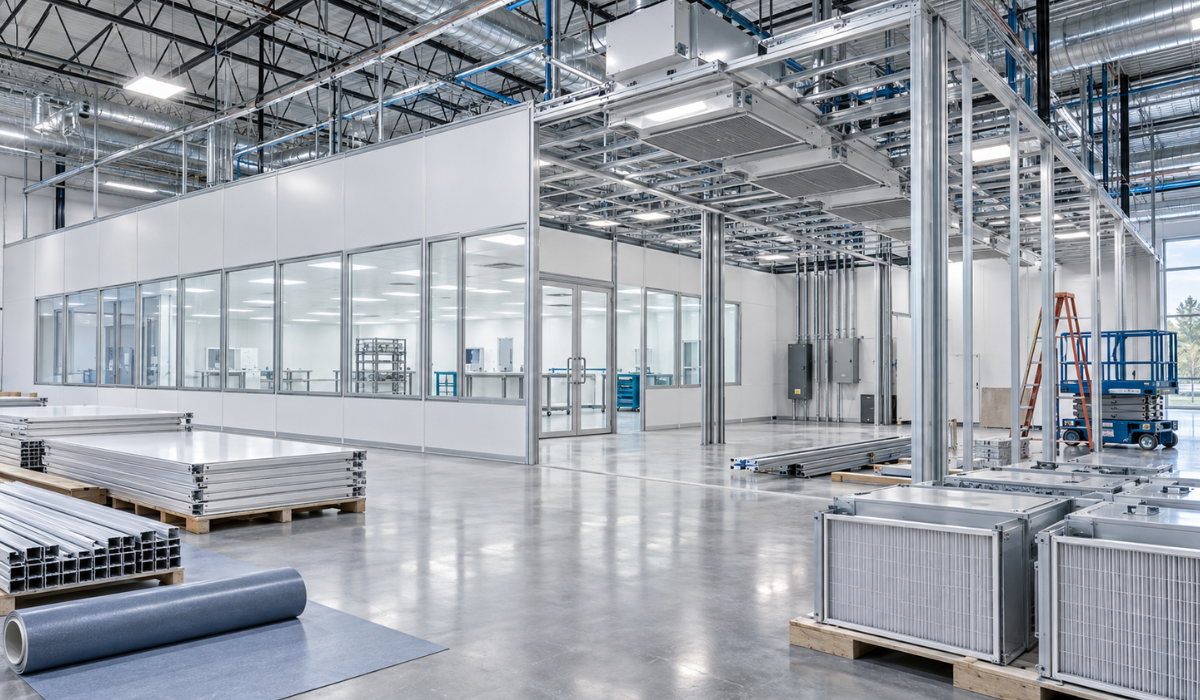
The actual cleanroom construction phase generally takes four to twelve weeks for most projects.
Larger or highly specialized environments can take several months. During this phase, the construction team installs:
- Cleanroom wall panels
- Ceiling grid systems
- Windows and doors
- Flooring systems
- Lighting fixtures
- HVAC ductwork
- HEPA or ULPA filtration systems
- Air handling units
- Electrical systems
- Plumbing and process utilities
- Pass-through chambers
- Gowning areas
- Airlocks and pressure control systems
The complexity of the cleanroom has a major impact on construction time.
A simple modular cleanroom with standard wall panels and basic filtration may be completed quickly.
A pharmaceutical manufacturing cleanroom with multiple rooms, specialized finishes, process piping, and environmental monitoring systems will require much more time.
Coordination between trades is essential during this phase.
Electrical, mechanical, plumbing, and cleanroom installation teams often need to work in sequence to avoid delays and ensure systems are installed properly.
HVAC, Filtration, and Environmental Controls
HVAC and filtration systems are some of the most important components in any cleanroom project.
These systems often require additional time because they must be carefully designed, installed, balanced, and tested.
Cleanrooms depend on:
- Controlled airflow patterns
- Positive or negative room pressure
- Air change rates
- Temperature control
- Humidity control
- HEPA or ULPA filtration
- Contamination control measures
The more advanced the cleanroom environment, the longer this stage may take.
High-classification cleanrooms often require more filtration units, more air changes, and more complex pressure control systems.
Testing airflow performance is also critical because even small issues with pressure differentials or filtration can affect certification results later in the project.
Testing, Validation, and Certification
Once construction is complete, the cleanroom must be tested and certified before it can be used.
This phase generally takes one to three weeks depending on the size and complexity of the environment.
Testing and certification may include:
- Particle count testing
- Airflow velocity testing
- Air change verification
- Pressure differential testing
- Temperature and humidity testing
- Filter integrity testing
- Recovery testing
- Room pressurization testing
- Lighting level verification
- Sound level testing
Many cleanrooms must meet ISO 14644 standards, while others may also need to comply with FDA, USP, GMP, or other industry-specific regulations.
If any part of the cleanroom does not meet the required standards, adjustments may need to be made before the space can pass certification. This can add additional time to the schedule.
Because of this, it is important to work with a contractor that understands certification requirements from the start.
Designing and building the cleanroom correctly the first time helps reduce the risk of delays during testing.
Typical Cleanroom Timeline by Project Type
While every project is unique, the following timeline ranges can provide a general idea of how long different cleanroom projects may take:
- Small modular cleanroom: 8 to 12 weeks
- Medium cleanroom renovation: 3 to 5 months
- Large cleanroom buildout: 6 to 9 months
- Pharmaceutical or GMP cleanroom: 9 to 12 months or longer
- Complex semiconductor or advanced manufacturing cleanroom: 12 months or more
These timelines include planning, design, procurement, construction, and certification.
Projects with strict regulatory oversight or highly customized systems usually take longer because of the additional documentation, inspections, and performance requirements involved.
How to Keep a Cleanroom Project on Schedule
There are several ways companies can reduce delays and improve project efficiency.
First, define project goals clearly from the beginning.
Unclear requirements often lead to design changes, construction rework, and longer schedules.
Second, involve all stakeholders early in the process.
Operations teams, facility managers, engineers, and compliance staff should all provide input during planning and design.
Third, work with an experienced cleanroom contractor that offers both cleanroom construction services and cleanroom design-build services.
When design and construction teams work together, communication improves and problems can often be resolved more quickly.
Fourth, identify long-lead equipment and materials early so they can be ordered before construction begins.
Finally, build time into the schedule for testing, balancing, and certification. Rushing the final stages can increase the risk of failed inspections or performance issues.
Conclusion
The timeline for building a cleanroom depends on the project scope, cleanliness requirements, regulatory standards, and technical systems involved.
While smaller cleanrooms may be completed in a few months, larger and more complex facilities can take a year or more from initial planning through final certification.
The best way to keep a project moving efficiently is to work with a team that understands every phase of cleanroom design, construction, testing, and certification.
An experienced partner can help streamline communication, identify potential delays early, and ensure the cleanroom is built to meet both operational and compliance requirements.
Companies planning a new cleanroom should start by evaluating their space, process requirements, cleanliness goals, and long-term growth needs. With the right planning and support, it is possible to create a cleanroom that meets performance expectations while staying on schedule and within budget.
Frequently Asked Questions
How much does it cost to build a cleanroom?
Cleanroom costs vary based on square footage, ISO classification, airflow requirements, HVAC capacity, finishes, utilities, and process equipment. A site assessment and preliminary design are generally needed to develop an accurate project estimate.
Can a cleanroom be built inside an existing facility?
Yes, a cleanroom can often be added inside an existing warehouse, laboratory, or manufacturing facility. The building must be evaluated for ceiling clearance, structural support, electrical capacity, utilities, HVAC access, and available floor space.
Can construction continue without stopping facility operations?
In many cases, installation can be phased or isolated from active production areas. The contractor must develop a plan for controlling construction dust, noise, personnel movement, material delivery, and potential contamination risks.
Do I need a specialized cleanroom contractor?
A general contractor may handle standard building work, but cleanrooms require specialized knowledge of airflow, filtration, pressure control, cleanable finishes, and certification requirements. An experienced cleanroom contractor can coordinate these systems throughout the project.
Can a cleanroom be expanded after it is built?
Expansion may be possible if sufficient space, utility capacity, and HVAC capacity are available. Modular cleanroom construction is particularly suitable for facilities that may need future reconfiguration, relocation, or additional production space.
What information is needed to get a cleanroom construction quote?
A contractor will generally need the desired room size, application, ISO classification, equipment layout, personnel count, environmental conditions, utilities, and project location. Existing facility drawings and a target completion date can also support a more accurate proposal.
Is a modular or stick-built cleanroom better?
The right option depends on the facility, budget, cleanliness requirements, and long-term operating plans. Modular systems generally offer easier modification and expansion, while stick-built construction may suit projects requiring permanent or highly customized integration.
Do I need to hire cleanroom specialists for construction?
Yes, experienced cleanroom specialists understand airflow, HEPA filtration, pressure control, cleanable materials, and certification requirements. They can coordinate these critical systems and help reduce the risk of performance problems, costly rework, or failed testing.