
Cleanroom contractor services are essential for enabling the progress of nanotechnology experiments by creating highly controlled environments where precision is critical.
At the nanoscale level, even the smallest particle or environmental fluctuation can disrupt results, making contamination control a top priority.
Nanotechnology research depends heavily on stable conditions, including controlled airflow, temperature, and humidity.
This is why cleanrooms for nanotechnology are not optional but necessary.
By working with experienced cleanroom companies, organizations can develop custom ISO cleanrooms that meet strict industry standards.
A professional cleanroom builder, along with skilled cleanroom installers, ensures that every component is carefully designed and installed for optimal performance.
From advanced filtration to structural stability, these environments support the accuracy, reliability, and efficiency required in modern nanotechnology applications.
What Is Nanotechnology and Why Does It Require Cleanrooms?
Nanotechnology involves working with materials at the atomic and molecular scale, typically between 1 and 100 nanometers.
At this level, even a tiny airborne particle can be significantly larger than the structures being studied or developed.
Because of this extreme sensitivity, a controlled environment for nanotechnology is essential.
Dust, humidity changes, or static electricity can interfere with experiments and lead to inaccurate results.
Cleanrooms eliminate these risks by maintaining strict environmental conditions.
Cleanrooms for nanotechnology provide the stability required for precise measurements and consistent outcomes.
They allow researchers and manufacturers to work confidently, knowing that external factors will not compromise their work.
The Role of Cleanrooms in Nanotechnology Experiments
Cleanrooms play a critical role in ensuring the success of nanotechnology experiments by minimizing contamination and maintaining environmental stability.
These environments are designed to control airborne particles, temperature, humidity, and pressure.
In nanotechnology, even microscopic contaminants can alter chemical reactions or damage delicate structures.
Cleanroom solutions for nanotechnology prevent these issues by maintaining ultra-clean conditions.
Additionally, cleanrooms support high-precision instruments that are sensitive to environmental changes.
By providing a stable and controlled setting, they ensure that experiments produce accurate and repeatable results.
Why a Cleanroom Contractor Is Essential for Nanotechnology Projects
A cleanroom contractor brings specialized expertise that is crucial for designing and building environments tailored to nanotechnology applications.
Compared to general construction providers, they understand the technical requirements of controlled environments.
From initial planning to final installation, a cleanroom contractor ensures that every aspect of the project aligns with ISO cleanroom standards.
This includes airflow design, filtration systems, and environmental controls.
Cleanroom companies also integrate advanced technologies such as monitoring systems and energy-efficient HVAC solutions.
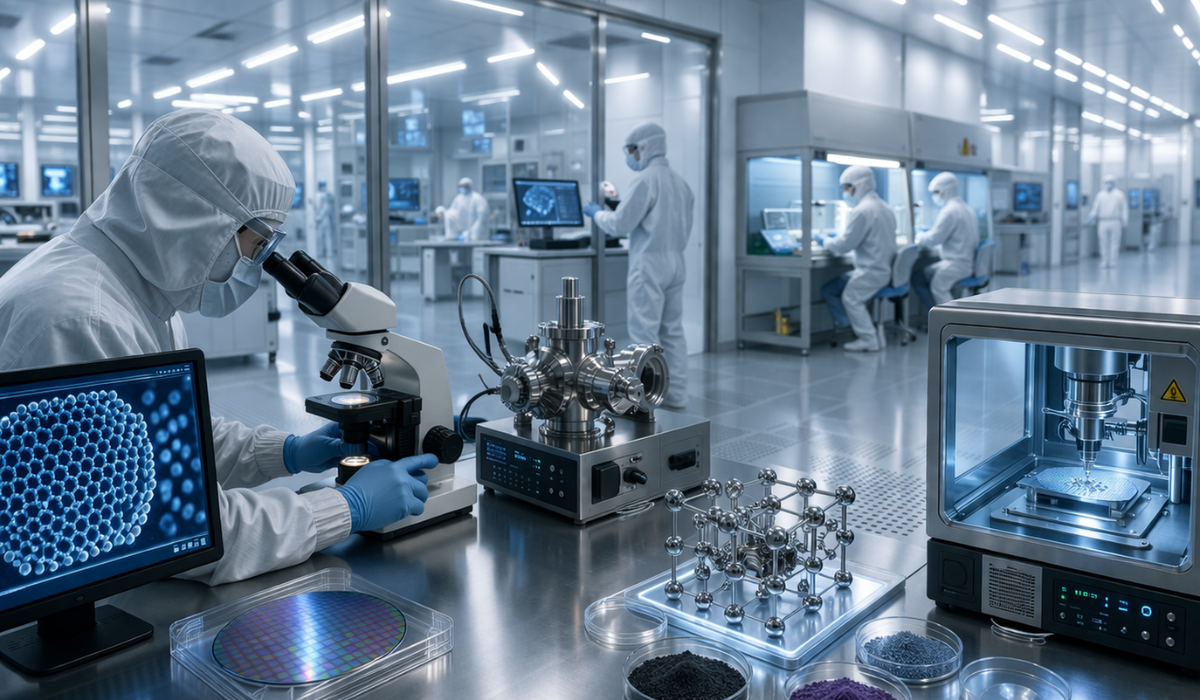
Their experience ensures that the cleanroom not only meets regulatory requirements but also supports long-term operational efficiency.
Key Features of Custom ISO Cleanrooms for Nanotechnology
Custom ISO cleanrooms are specifically designed to meet the unique demands of nanotechnology experiments.
These environments incorporate advanced features that ensure precision and reliability.
Ultra-High Filtration Systems
HEPA and ULPA filters are used to remove microscopic particles from the air.
These systems are essential for maintaining cleanliness levels required for nanoscale work.
Precise Temperature and Humidity Control
Even slight variations in temperature or humidity can affect nanotechnology processes.
Custom ISO cleanrooms use advanced HVAC systems to maintain consistent conditions.
Airflow and Pressure Control
Laminar airflow systems ensure that air moves in a controlled manner, preventing contamination.
Pressure differentials help keep contaminants out of critical areas.
Electrostatic Discharge (ESD) Protection
ESD can damage sensitive materials and equipment. Cleanrooms are equipped with ESD-safe materials and grounding systems to prevent static buildup.
Specialized Materials and Finishes
Surfaces are designed to be non-shedding and easy to clean, reducing the risk of contamination and ensuring long-term durability.
The Role of Cleanroom Builder and Cleanroom Installers
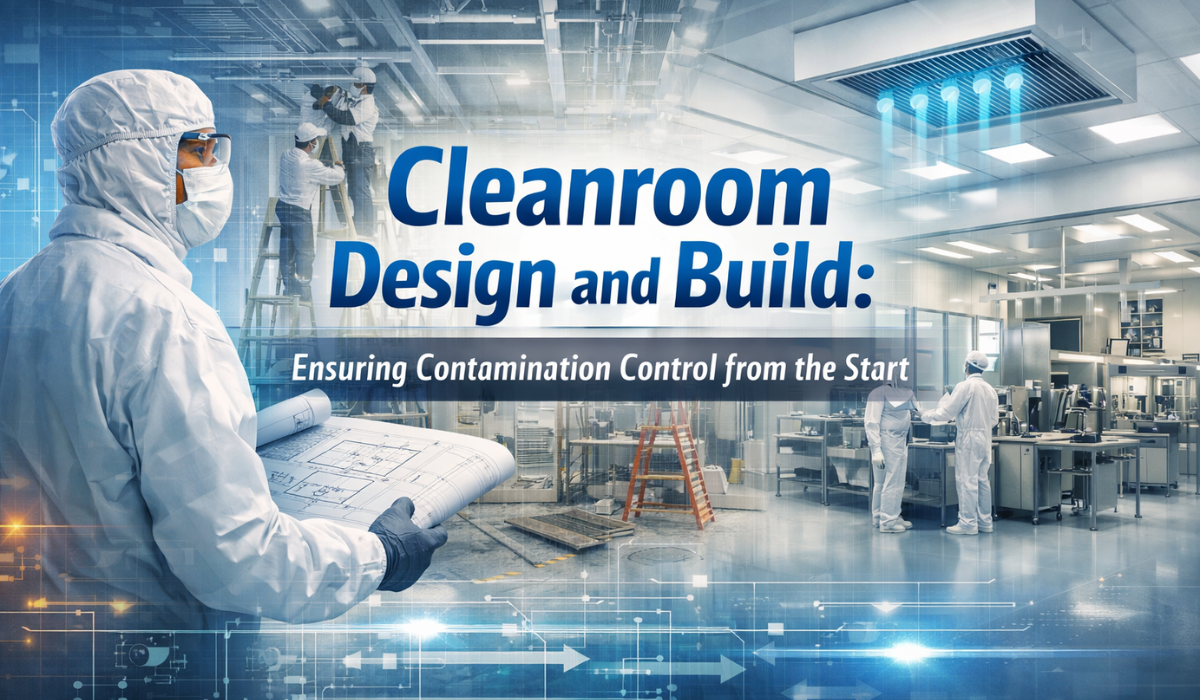
A cleanroom builder is responsible for designing and constructing the cleanroom structure, ensuring that it meets all technical and regulatory requirements.
Their expertise ensures that the layout supports efficient workflow and equipment placement.
Cleanroom installers play a critical role in assembling and implementing the design.
They ensure that all components, including filtration systems and structural elements, are installed correctly.
The collaboration between a cleanroom builder and cleanroom installers ensures that the cleanroom operates efficiently and meets performance expectations.
Modular Cleanrooms in Nanotechnology Applications
Modular cleanrooms have become increasingly popular in nanotechnology due to their flexibility and efficiency.
These systems are prefabricated and can be quickly assembled, reducing construction time.
Modular cleanrooms can be customized to meet specific requirements, making them a practical solution for evolving research environments.
They also allow for easy expansion or modification as needs change.
For organizations looking for scalable cleanroom solutions for nanotechnology, modular cleanrooms offer a balance between performance and adaptability.
Industries Advancing Through Nanotechnology Cleanrooms
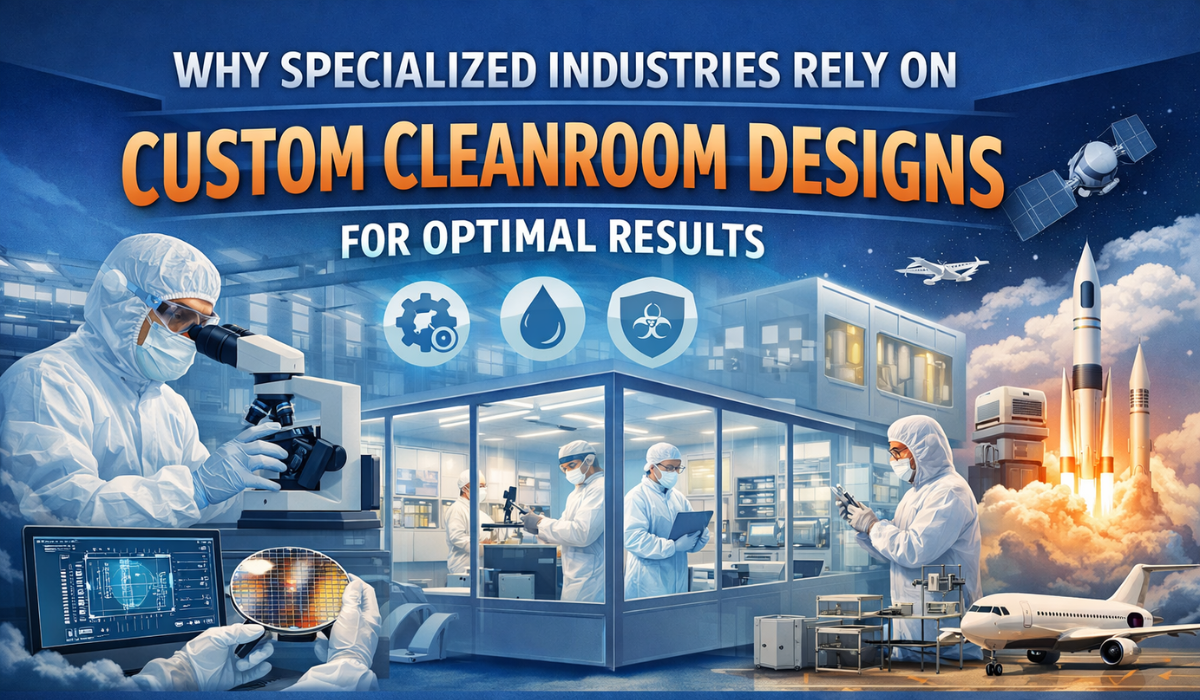
Several industries rely on nanotechnology cleanrooms to support their research and manufacturing processes.
The semiconductor industry uses nanoscale technologies for chip fabrication.
Pharmaceutical and biotechnology companies rely on nanotechnology for drug development and delivery systems.
Aerospace and defense industries use it for advanced materials and coatings.
Cleanroom companies design tailored environments for each industry, ensuring that their unique requirements are met.
Challenges in Nanotechnology Experiments Without Cleanrooms
Without cleanrooms, nanotechnology experiments face significant challenges that can directly impact accuracy, reliability, and overall research outcomes.
At the nanoscale level, even the smallest airborne particles, often invisible in standard environments can be larger than the materials being studied.
This makes contamination one of the most critical risks in nanotechnology applications.
Contamination can lead to inaccurate results, compromised product quality, and failed experiments.
Particles, dust, or chemical impurities can interfere with reactions, alter material properties, or damage delicate nanoscale structures.
In manufacturing environments, this can result in defective components, increased waste, and higher operational costs.
Environmental instability is another major concern. Fluctuations in temperature, humidity, and airflow can significantly affect the performance of sensitive instruments and processes.
Nanotechnology experiments often require extremely stable conditions to ensure precision, and even minor variations can lead to inconsistent data or measurement errors.
Inconsistent conditions also make it difficult to achieve repeatable outcomes, which is essential for both research validation and large-scale production.
Without a controlled environment, researchers may struggle to reproduce results, slowing down innovation and development.
Additionally, electrostatic discharge (ESD) poses a serious risk in uncontrolled environments.
Static buildup can damage sensitive nanoscale components and disrupt experimental processes, further compromising results.
These challenges highlight the importance of cleanroom solutions for nanotechnology and the role of a professional cleanroom contractor in addressing them.
By providing a controlled environment for nanotechnology, cleanrooms eliminate contamination risks, stabilize environmental conditions, and support consistent, high-precision outcomes essential for advancement in this field.
Choosing the Right Cleanroom Contractor for Nanotechnology
Selecting the right cleanroom contractor is essential for the success of your project.
At UltraPure Technology, we have experienced in designing custom ISO cleanrooms.
Being a reliable contractor, we will provide end-to-end services, including design, construction, and validation.
We have a strong understanding of ISO cleanroom standards and industry requirements.
Working with trusted cleanroom companies ensures that your cleanroom is built to support precision, compliance, and long-term performance.
Future Trends in Nanotechnology Cleanroom Design
The future of nanotechnology cleanrooms is being shaped by innovation and technology.
Smart monitoring systems are enabling real-time tracking of environmental conditions.
Automation and AI are improving precision and reducing human error.
Sustainable designs are also becoming more common, helping organizations reduce energy consumption.
These advancements are enhancing the capabilities of custom ISO cleanrooms and supporting the continued growth of nanotechnology.
Conclusion
At UltraPure Technology, we are a cleanroom contractor with many years of experience supporting the advancement of nanotechnology experiments.
These highly controlled environments provide the precision, stability, and contamination control required for nanoscale research.
By investing in custom ISO cleanrooms and working with experienced cleanroom builders and cleanroom installers, organizations can achieve consistent and reliable results.
Cleanroom companies play a vital role in enabling innovation by delivering environments that meet the strict demands of nanotechnology.
Get Advanced Cleanroom Solutions for Nanotechnology Applications
If you are planning a nanotechnology project, partnering with an experienced cleanroom contractor is the key to success.
Our team specializes in designing and building custom ISO cleanrooms, modular cleanrooms, and advanced controlled environments tailored to your specific needs.
Get in touch with us today to explore how our cleanroom engineering solutions can support your nanotechnology experiments with precision, compliance, and long-term efficiency.
Frequently Asked Questions
What is the role of a cleanroom contractor in nanotechnology projects?
A cleanroom contractor designs and builds controlled environments tailored to nanoscale applications. They ensure compliance with ISO standards and integrate advanced systems for filtration, airflow, and environmental stability.
Why are custom ISO cleanrooms important for nanotechnology?
Custom ISO cleanrooms provide precise control over contamination and environmental conditions. This is essential for nanotechnology experiments, where even minor variations can affect results.
What do cleanroom builders and installers do?
A cleanroom builder designs and constructs the cleanroom structure, while cleanroom installers assemble and implement the system. Together, they ensure the cleanroom meets performance and compliance standards.
How do cleanroom companies support nanotechnology research?
Cleanroom companies provide tailored solutions that meet the specific needs of nanotechnology applications. They offer design, construction, and maintenance services to ensure optimal performance.
What are modular cleanrooms used for in nanotechnology?
Modular cleanrooms offer flexible and scalable solutions for nanotechnology applications. They can be quickly installed and easily modified to meet changing research requirements.
What industries use cleanrooms for nanotechnology?
Industries such as semiconductors, pharmaceuticals, biotechnology, and aerospace rely on cleanrooms for nanotechnology. These environments ensure precision and high-quality outcomes.
What happens if nanotechnology experiments are conducted without cleanrooms?
Without cleanrooms, contamination and environmental instability can lead to inaccurate results and equipment damage. This can compromise research and production processes.
How do cleanroom contractors ensure compliance with ISO standards?
Cleanroom contractors follow strict design and validation processes. They conduct testing and certification to ensure the cleanroom meets ISO cleanliness and performance requirements.
How long does it take to build a nanotechnology cleanroom?
The timeline depends on the complexity of the project. However, experienced cleanroom contractors streamline the process through efficient planning, design, and installation.